MEDINDIA
 English
 हिन्दी
 Español
 français
 中文
中文
Healthy adults who participated in cognitive training demonstrated positive changes in executive brain function as well as increase in global brain flow.

Higher Brain Connectivity Behind Higher Intelligence And Creativity
Higher neural connectivity is being observed in parts of brain that are associated with learning and development compared to visual, auditory and sensory-motor areas
Higher neural connectivity is being observed in parts of brain that are associated with learning and development compared to visual, auditory and sensory-motor areas
TOP INSIGHT

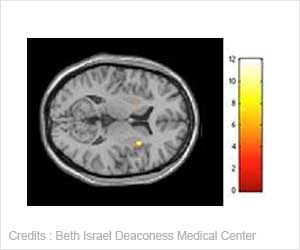
Healthy adults who participated in cognitive training demonstrated positive changes in executive brain function as well as a 7.9 percent increase in global brain flow.
For the study, 36 sedentary adults ages 56-75 years were randomized into either a cognitive training or a physical training group. Each group took part in training three hours per week over 12 weeks. Neurocognitive, physiological, and MRI data were taken before, during and after training. The cognitive group received Strategic Memory Advanced Reasoning Training (SMART), a manualized brain training developed at the Center for BrainHealth. The strategy-based training focuses on three executive functions: strategic attention (prioritizing brain resources); integrative reasoning (synthesizing information at a deeper level); and innovation (encouraging fluid thinking, diverse perspective-taking, and problem solving). The physical training group completed three, 60-minute sessions per week that included five minutes of warmup and cool down with 50 minutes of either walking on a treadmill or cycling on a stationary bike while maintaining 50-75 percent of maximum heart rate.
"Most people tell me that they want a better memory and notice memory changes as they get older," said Dr. Mark D'Esposito, study co-author and professor of neuroscience and psychology, and director of the Henry H. Wheeler Jr. Brain Imaging Center at the Helen Wills Neuroscience Institute at the University of California, Berkeley. "While memory is important, executive functions such as decision-making and the ability to synthesize information are equally, if not more so, but we often take them for granted. The takeaway: Aerobic activity and reasoning training are both valuable tools that give your brain a boost in different ways."

Brain Stimulation May Help Reduce Food Cravings
Calorie-dense snack foods are often implicated in the development of obesity, thus it's so difficult to lose weight by dieting.
Calorie-dense snack foods are often implicated in the development of obesity, thus it's so difficult to lose weight by dieting.
The aerobic exercise group did not show significant global blood flow gains, however the exercisers with improved memory performance showed higher cerebral blood flow in the bilateral hippocampi, an area underlying memory function and particularly vulnerable to aging and dementia.

Role of Estrogen Receptor Activation in Brain Region at Puberty
Testosterone is involved in the formation and organization of male neural pathways, on which it then acts to regulate various behaviors in adulthood.
Testosterone is involved in the formation and organization of male neural pathways, on which it then acts to regulate various behaviors in adulthood.
Dr. Laura DeFina, chief executive officer of The Cooper Institute in Dallas and collaborator on the study, says the findings are encouraging.
Toxic Alzheimer's Protein Spreads Through Extracellular Space in Brain
The spread of tau protein may explain why only one area of the brain is affected in the early stages of Alzheimer's but progresses with the disease.
The spread of tau protein may explain why only one area of the brain is affected in the early stages of Alzheimer's but progresses with the disease.
Source-Eurekalert
 Email
Email