MEDINDIA
 English
 हिन्दी
 Español
 français
 中文
中文
Testosterone is involved in the formation and organization of male neural pathways, on which it then acts to regulate various behaviors in adulthood.


Estrogen Patch may Reduce Alzheimer's Risk In Postmenopausal Women
A rapid decline in estrogen with menopause may be associated with an increased risk of Alzheimer's disease risk in women.
A rapid decline in estrogen with menopause may be associated with an increased risk of Alzheimer's disease risk in women.
TOP INSIGHT

Inhibiting estrogen receptor alpha (ERα) in the MeA before puberty in male mice reduces both sexual and aggressive behavior in adults.
Behavioral responses to sexually receptive females such as mounting, and toward intruder males such as biting and attacks, were recorded in adult mice. The reduction of both sexual and aggressive behavior by ERα silencing in the MeA before puberty but not in adults suggests the importance of the receptor in this location during puberty. "ERα knockdown in the MeA may even have affected the onset of puberty itself", first author Dr. Kazuhiro Sano says.
"This contrasts with the silencing of ERα in the MPOA, which reduced sexual but not aggressive behavior in mice, regardless of the time of knockdown treatment." These findings suggest that ERα gene expression in the MPOA does not control male aggression through either the organizational role of testosterone at puberty, or its regulatory role in adulthood.

Fetal BPA Exposure Linked to Estrogen-Related Diseases After Adolescence
The genome is permanently altered in the uterus of mice that have been exposed to BPA during their fetal development.
The genome is permanently altered in the uterus of mice that have been exposed to BPA during their fetal development.
Source-Eurekalert
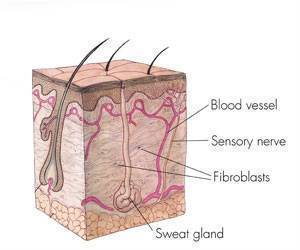
Blocking Estrogen may Help Fight Scleroderma
Scleroderma, which means 'hardskin' is an autoimmune disease affecting multiple organs and which predominantly affects women.
Scleroderma, which means 'hardskin' is an autoimmune disease affecting multiple organs and which predominantly affects women.

Estrogen Levels Decline Rapidly In Migraine Sufferers
Women with a migraine history had a faster rate of estrogen decline regardless of whether they had a migraine during that cycle or not.
Women with a migraine history had a faster rate of estrogen decline regardless of whether they had a migraine during that cycle or not.
 Email
Email