MEDINDIA
 English
 हिन्दी
 Español
 français
 中文
中文
Real-time 3D imaging shows the embryo forcefully burrowing into the uterus- discover this fertility breakthrough.
Highlights:
For the very first time, scientists have captured live 3D images of one of the most mysterious and critical stages of human life- the moment a tiny embryo attaches itself to the wall of the uterus. This breakthrough, led by researchers at the Institute for Bioengineering of Catalonia (IBEC) in collaboration with Dexeus University Hospital in Barcelona, offers an unprecedented window into the earliest days of human development (1✔ ✔Trusted Source- Most infertility and miscarriage cases are caused by failed embryo implantation in the uterus
- New 3D imaging reveals embryos actively burrow into uterine tissue, showing remarkable force
- Lab models of embryo implantation may boost IVF outcomes and fertility treatments
Traction force and mechanosensitivity mediate species-specific implantation patterns in human and mouse embryos
Go to source).

Analysis Links Female Obesity to Lower Rates of Live Birth and Embryo Implantation in the Uterus
Female obesity reduces the receptivity of the uterus to embryo implantation and thereby compromises reproductive outcome, according to an analysis.
Female obesity reduces the receptivity of the uterus to embryo implantation and thereby compromises reproductive outcome, according to an analysis.
TOP INSIGHT

Did You Know?
The human embryo burrows deep into the uterus—using enzymes and force for successful implantation! #EmbryoImplantation #IVF #InfertilityBreakthrough #medindia
Why Embryo Implantation is Critical for Pregnancy
Implantation is the process that allows a fertilized egg, or embryo, to “settle in” the uterus. This step is one of the biggest hurdles in reproduction: nearly 60% of miscarriages result from failed implantation. Until now, scientists knew very little about its real-time dynamics because the process takes place deep inside the uterus.
New Fertility Culture Medium Improves Embryo Implantation
IVF could receive a boost with the development of a new fertility culture medium. The medium can substantially improve embryo plantation, it has been found.
IVF could receive a boost with the development of a new fertility culture medium. The medium can substantially improve embryo plantation, it has been found.
Human Embryo Uses Force to Burrow into the Uterus
Research revealed that implantation isn’t a gentle landing- it’s a forceful invasion. Human embryos actively burrow into the uterine lining, using both enzymes to break down tissue and mechanical pushing to penetrate the collagen-rich uterine wall. Once embedded, the embryo links with maternal blood vessels, ensuring nutrients and oxygen flow.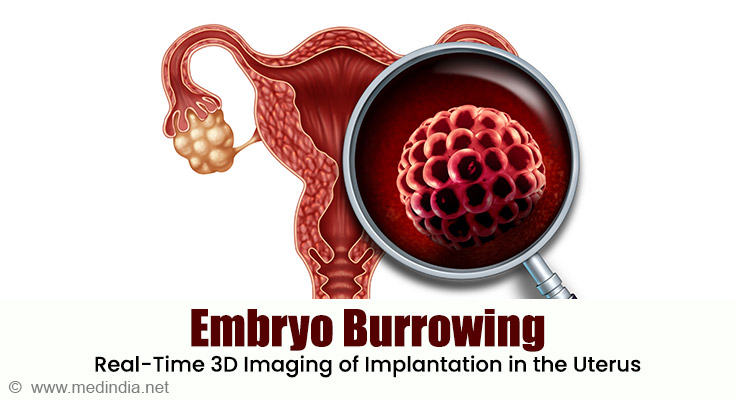

How Human Cells Can Pause Growth- And What It Means for IVF
Can humans pause their development? Scientists have found clues that human cells might have a hidden "pause button" during early growth.
Can humans pause their development? Scientists have found clues that human cells might have a hidden "pause button" during early growth.
The Role of Mechanical Forces in Successful Implantation
The team found that implantation depends not only on enzymes but also on physical forces. The embryo reorganizes the uterine matrix and responds to external mechanical cues such as uterine contractions. Effective implantation correlates with proper tissue displacement, showing that mechanics are as important as biochemistry.
Prostaglandin Receptors: New Hope for Women with Infertility
Prostaglandin receptors enhance embryo implantation in the uterus by paving a new way for infertility treatments.
Prostaglandin receptors enhance embryo implantation in the uterus by paving a new way for infertility treatments.
A Laboratory Platform to Study Implantation in Real Time
IBEC scientists developed a specialized gel platform that mimics uterine tissue, complete with collagen and essential proteins. This innovation allowed embryos to implant outside the uterus under controlled conditions. Using live fluorescence microscopy, researchers were able to capture every movement of the embryo as it interacted with its environment.Differences Between Human and Mouse Embryo Implantation
Comparing human and mouse embryos revealed fundamental differences. In mice, embryos attach to the uterine surface and are later enclosed by it, forming a crypt. Human embryos, however, fully penetrate the uterine lining and expand outward from within, reshaping the tissue around them. This highlights why direct human studies are vital, as animal models cannot always reflect human biology.Implications for Infertility and IVF Treatment
Implantation failure is one of the leading challenges in assisted reproduction. By understanding the mechanics and biology of implantation, doctors may improve IVF success rates, enhance embryo selection, and reduce the time it takes for couples to conceive. The findings may also provide insights into recurrent miscarriages and unexplained infertility.The Future of Fertility Research
This research marks a major milestone in reproductive science. By witnessing implantation unfold in real time, scientists are closer than ever to understanding how life takes root. With further study, this knowledge could transform fertility treatments and offer new hope to families worldwide.Reference:
- Traction force and mechanosensitivity mediate species-specific implantation patterns in human and mouse embryos - (https://www.science.org/doi/10.1126/sciadv.adr5199)
Source-Medindia
 Email
Email