MEDINDIA
 English
 हिन्दी
 Español
 français
 中文
中文
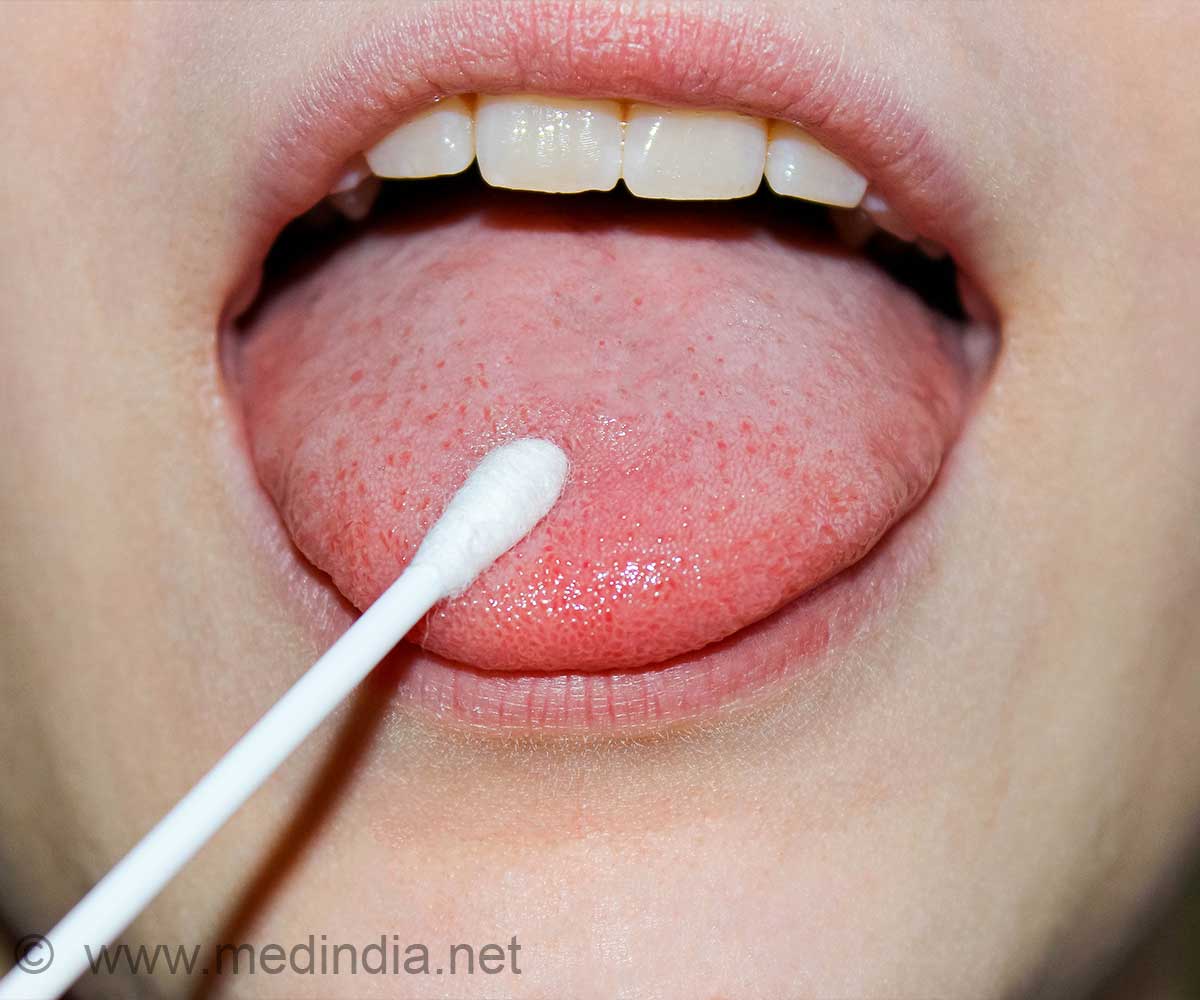
In a one-pot approach, a swab sample in test-ready tube shows colored bands in 45 minutes to signal TB infection.
Sensitive pathogen DNA detection by a multi-guide RNA Cas12a assay favoring trans- versus cis-cleavage
Go to source).
Researchers from Tulane University developed this groundbreaking method for high-volume screenings of harmful infectious diseases over traditional sputum test. The study was published in Nature Communications.
In sputum test, mucus from lungs is collected for further testing, which is often a difficult process, especially for children. The novel CRISPR test can detect TB bacteria even in the tongue swab samples, cerebrospinal fluid, and stool samples.
Tuberculosis - Spread - Symptoms - Diagnosis - Treatment - FAQs
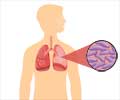
Tuberculosis, caused by Mycobacterium tuberculosis, primarily affects the lung. It may spread to other organs.
Tuberculosis, caused by Mycobacterium tuberculosis, primarily affects the lung. It may spread to other organs.
TOP INSIGHT

Did You Know?
A novel #gene_detection_test achieved high precision (93%) in respiratory and adult spinal fluid samples, offering a cutting-edge #TB diagnosis for #children and #HIV patients. #crispr #hiv #tb #childhealth #pulmonolgy #medindia
Statistical Findings and Clinical Efficacy in Diverse Samples
Clinical testing showed markedly enhanced detection of TB in tongue swabs over traditional testing (74% compared to 56%).The test also showed high sensitivity in detecting TB in respiratory (93%), pediatric stool (83%) and adult spinal fluid samples (93%). With children, HIV patients and those with extrapulmonary TB unable to produce sputum, the research marks a significant step forward toward offering effective diagnoses via a variety of samples.
“More than 10 million people worldwide fall ill with tuberculosis every year, but 40% of those cases are considered missing as people go undiagnosed,” said corresponding author Tony Hu, PhD, Weatherhead Presidential Chair in Biotechnology Innovation and director of the Tulane Center for Cellular & Molecular Diagnostics.
“To find those missing cases, testing needs to be less invasive and more accessible to reach as many people as possible who may not otherwise be tested.”

Quiz on Tuberculosis
Tuberculosis is a major health care concern, especially in Africa and South East Asia. Brush up your information on tuberculosis by taking this quiz. ...
Tuberculosis is a major health care concern, especially in Africa and South East Asia. Brush up your information on tuberculosis by taking this quiz. ...
A One-Pot Approach for Large-Scale Screenings
Lead author Zhen Huang, an assistant professor at Tulane University School of Medicine, said developing a viable tuberculosis tongue swab test could transform testing in low-resource communities.“Tongue swabs are painless, easy to collect, and don’t require trained medical staff,” Huang said. “That opens the door to large-scale screenings.”
The new CRISPR method, called the ActCRISPR-TB, increases amplification and detection of genetic signals from TB bacteria DNA and offers a rapid, streamlined approach that can return a diagnosis in under an hour.
To administer the test without need for a lab or trained medical staff, researchers developed a “one pot” approach. Like a COVID-19 test, a swabbed sample is added to a tube pre-loaded with a test strip and reagent. That tube is incubated, and after 45 minutes, colored bands on the strip will indicate presence of an infection.

Quiz on Allergy
Every season can be an allergy season, depending on what you're allergic to. - Clara ...
Every season can be an allergy season, depending on what you're allergic to. - Clara ...
A More Accurate Test Than Conventional Sputum Tests
While there is a clear need for developing non-sputum based detection methods, clinical testing also showed the test to be faster and more accurate than traditional tests when testing for TB in sputum nucleic acid.The study marks the latest step in Hu’s effort to move TB testing out of the lab and into the community. In addition to showing TB can be detected from simple samples beyond sputum, Hu’s lab has also developed rapid tests that deliver results in less than an hour on portable devices, one the size of a smartphone and another that requires no electricity.

Interesting Facts and Statistics about Tuberculosis
Tuberculosis began to decline with the invention of the tuberculosis vaccine. Statistics show that the problem resurfaced with the HIV epidemic and the current crisis of drug resistant tuberculosis.
Tuberculosis began to decline with the invention of the tuberculosis vaccine. Statistics show that the problem resurfaced with the HIV epidemic and the current crisis of drug resistant tuberculosis.
A Holistic Approach Through Rapid Testing to End TB
His team has also used artificial intelligence to flag drug resistance so patients get the right medicines faster. Together, these advances outline a practical pathway for fighting TB: screen widely, confirm quickly at the point of care and connect positive results to effective treatment.While more research and development is needed, Hu and Huang said this study represents significant progress.
“If we want to end TB, we need tools that work outside the lab and in the communities where the disease spreads,” Hu said.
Reference:
- Sensitive pathogen DNA detection by a multi-guide RNA Cas12a assay favoring trans- versus cis-cleavage - (https://www.nature.com/articles/s41467-025-63094-x)
Source-Eurekalert
 Email
Email