MEDINDIA
 English
 हिन्दी
 Español
 français
 中文
中文
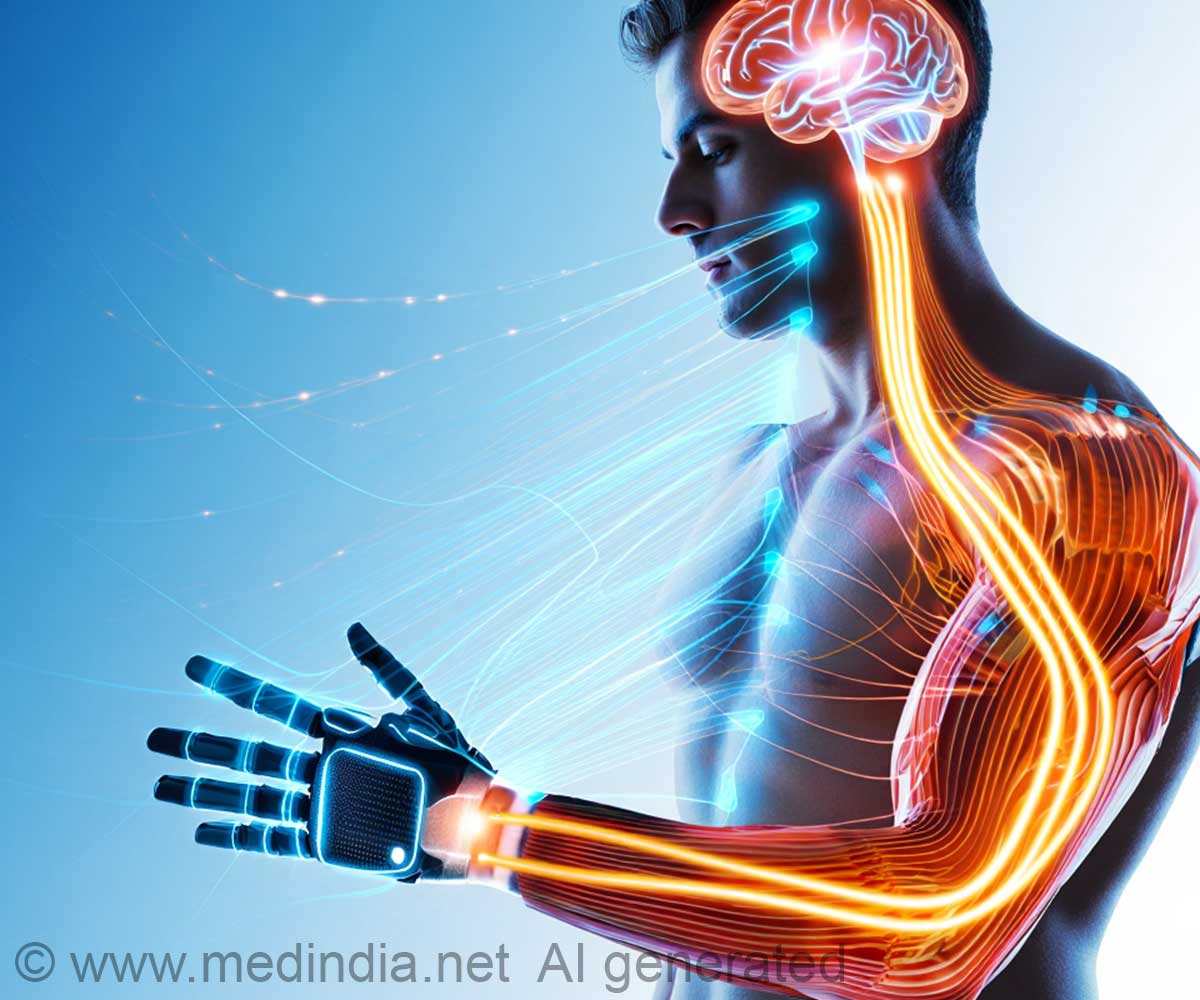
The iSens prosthesis integrates muscle signals and neuro feedback that help re-establish brain connection.
New clinical trial to test sensory prostheses for people with upper-limb loss
Go to source). The prosthesis called iSens, implanted Somatosensory Electrical Neurostimulation and Sensing system, embedded with electrodes to catch muscle movement and provoke nerves for sending touch sensations to the brain.
The electrodes and prosthesis communication happens through Bluetooth. This neural stimulation technology can improve the quality of life of people with amputations.
This technology was developed at Case Western Reserve University and the Louis Stokes Cleveland Department of Veterans Affairs Medical Center (Cleveland VA).

New Technology Restores Movement and Sensation in Upper Limb Amputation Patients
Scientists design novel system that can turn on sensation of movement of missing arm, in persons with upper limb amputation, helping them control their bionic prosthetic limb to perform more precise movements.
Scientists design novel system that can turn on sensation of movement of missing arm, in persons with upper limb amputation, helping them control their bionic prosthetic limb to perform more precise movements.
TOP INSIGHT

Did You Know?
Individuals with new #sensory #prosthetic_arms can live a better life with improved #motor_control and #touch_sensation. This fosters their daily life and independence. #isensprosthesis #bionic_arm #restoringtouchsense #medindia
Better Technology can Bring Better Lives
“People with upper-limb-loss deserve to have better technologies that can improve their lives,” said Emily Graczyk, assistant professor of biomedical engineering in the Case School of Engineering and School of Medicine, who is leading the research. Graczyk is also an investigator at the Cleveland VA.“The significant funding allows us to complete this clinical trial that wouldn't necessarily get venture capital investment at this stage,” said Dustin Tyler, the Arthur S. Holden Professor of biomedical engineering and the study’s coinvestigator. “This grant will allow us to remove one big barrier to translation.”

Prosthetic Arm That Detects Nerve Signals Developed
Researchers have developed a sensory based prosthetic arm that interprets the electrical signals sent from spinal motor neurons.
Researchers have developed a sensory based prosthetic arm that interprets the electrical signals sent from spinal motor neurons.
The Effects of Sensory Cues on Prosthetics
Tyler and Graczyk developed the technology and stimulation techniques that allowed sensory signals to be relayed from the prosthetic hand through neural implants in the subject’s arm.Even they were surprised in early research how much a sense of touch transformed the prosthesis from a sporadically used tool to something that really felt like having one’s own hand.
“Having a sense of touch improves so many different aspects involved in quality of life,” said Graczyk, “including the sense of connectedness to loved ones, self-sufficiency, self-image and social interaction.”
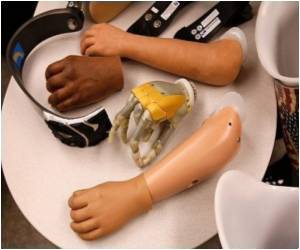
Bionic Finger Makes Amputee Feel Texture
The bionic fingertip is used stimulate nerves to feel roughness and smoothness. It resembles the feeling of touch from a real finger.
The bionic fingertip is used stimulate nerves to feel roughness and smoothness. It resembles the feeling of touch from a real finger.
Evaluation of Muscle Signals and Nerve Stimulation in Participants
The four-year study will enroll a dozen upper-limb amputees using a prosthesis. It will involve three parts, which each study participant will complete over about 18 months:Part One: A three-month initial testing phase will document how the participants use their current prostheses. Next, each study participant will have electrodes and electronic modules implanted in their arm in an outpatient surgery.
The research team will then set-up each participant's neuroprosthetic system over three to six months of laboratory visits. A controller will be built to allow the participant to intuitively control the prosthesis with their muscle signals, and the nerve stimulation will be calibrated so the sense of touch can be relayed from sensors on the prosthetic hand to the user's brain.
Part Two: Participants will then either be sent home with the prosthesis they were already using or the touch-enabled, multi-functional research iSens prosthesis. Each participant will complete surveys about how much they used the prosthesis and for what types of tasks and how they felt about using it.
They will return to the lab for testing monthly to demonstrate how they use the prosthesis. Then they will switch. Those who first used their normal prosthesis will get the research arm and vice versa.
Part Three: In the third phase, the participants will be randomized again into a group that uses the iSens prosthesis with only touch sensation enabled or with only the advanced motor control enabled. And again, they will switch.
“We expect our neuroprosthesis to make life better for people with amputation,” said Graczyk, “but we don’t know if the biggest factor will be improved sensation or improved control, or both.”
Reference:
- New clinical trial to test sensory prostheses for people with upper-limb loss - (https://case.edu/news/new-clinical-trial-test-sensory-prostheses-people-upper-limb-loss)
Source-Eurekalert
Test Your Knowledge on Physiotherapy
Physiotherapy or physical therapy is a physical medicine and rehabilitation specialty that promotes mobility, function and improves the quality of life through physical intervention. Physiotherapy is carried out by physical therapists. ...
Physiotherapy or physical therapy is a physical medicine and rehabilitation specialty that promotes mobility, function and improves the quality of life through physical intervention. Physiotherapy is carried out by physical therapists. ...
 Email
Email