MEDINDIA
 English
 हिन्दी
 Español
 français
 中文
中文
New research identifies tumor-promoting keratinocytes linked to HPV infection, driving poor prognosis in cervical cancer.
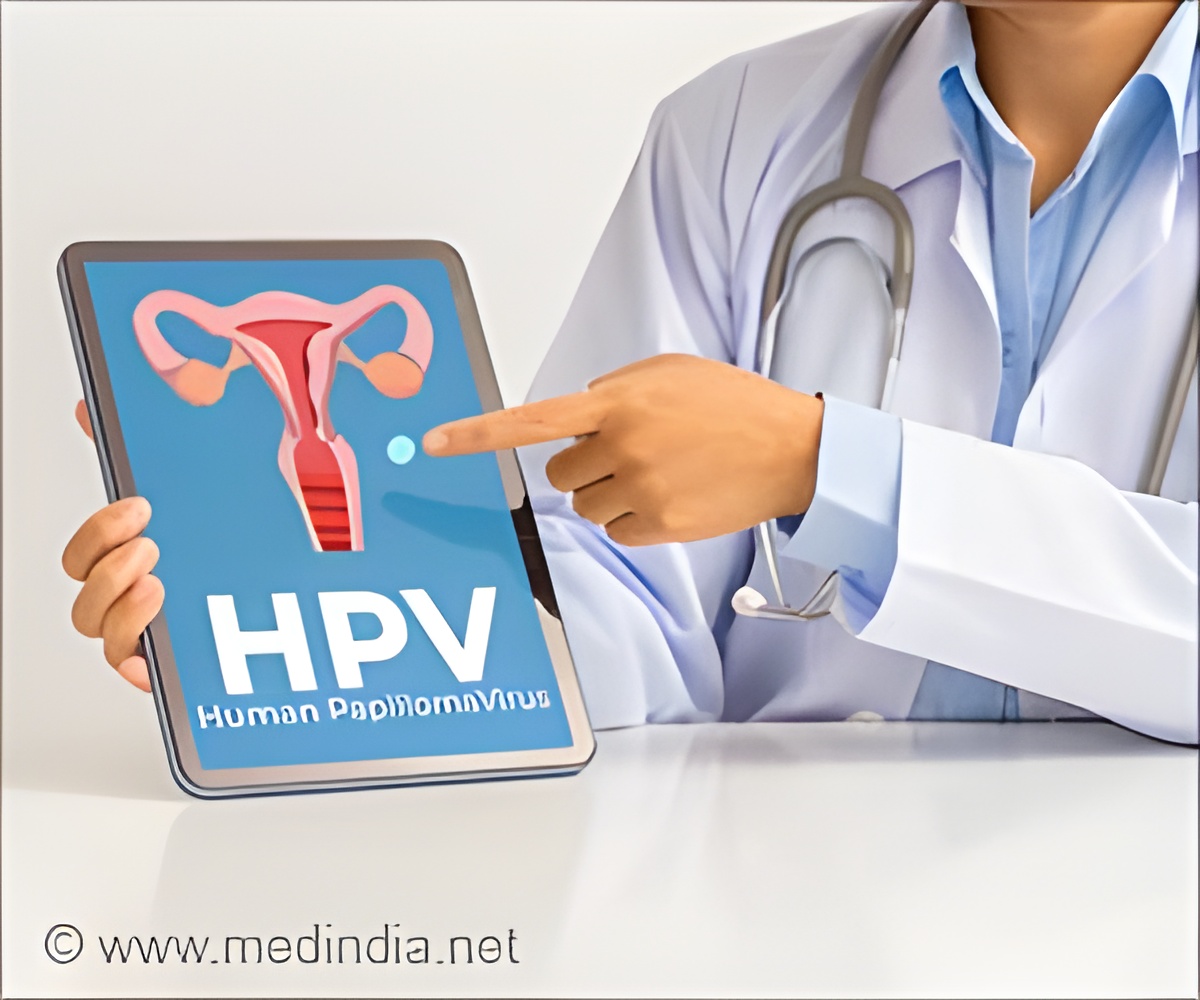
Single-cell analysis identifies PI3+S100A7+ keratinocytes in early cervical squamous cell carcinoma with HPV infection
Go to source). Despite advances in screening and vaccination, early-stage detection and understanding of its molecular mechanisms remain critical for improving patient outcomes.

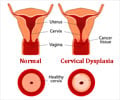
Pap smear and Cervical Cancer Screening
Pap smear is the most common test used in screening cervical cancer caused by an infection with human papilloma virus. Pap smear should be repeated every 1 to 3 years till the age of 65 years.
Pap smear is the most common test used in screening cervical cancer caused by an infection with human papilloma virus. Pap smear should be repeated every 1 to 3 years till the age of 65 years.
TOP INSIGHT

New research is dissecting the complex "cross-talk" between HPV-infected cells, immune cells, and surrounding tissue in early #cervicalcancer. This not only reveals how cervical #carcinogenesis progresses but also identifies potential therapeutic targets to halt the disease! #HPV #Oncology #WomenCancer
Rapid Mapping of HPV-Driven Cellular Changes in Early Cervical Cancer
In a groundbreaking study, a research team led by Professor Ruozheng Wang, alongside Mr. Peiwen Fan, Mr. Danning Dong, Dr. Yanning Feng, and Dr. Xiaonan Zhu from the Affiliated Tumor Hospital of Xinjiang Medical University, employed cutting-edge single-cell RNA sequencing (scRNA-seq) and multiplex immunohistochemistry (mIHC) to map the molecular landscape of early-stage CESC.Their findings reveal intricate HPV-induced heterogeneity among keratinocytes and significant remodeling of the tumor microenvironment (TME) during carcinogenesis.
This detailed characterization not only deepens the scientific understanding of early cervical cancer development but also highlights potential therapeutic targets, paving the way for more precise and effective treatments. The study’s results were published in the Chinese Medical Journal, marking a significant advance in cervical cancer research.
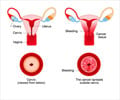
Cervical Cancer
Cancer cervix refers to cancerous growth in the cervix and usually occurs in the transition called squamo-columnar junction.
Cancer cervix refers to cancerous growth in the cervix and usually occurs in the transition called squamo-columnar junction.
Distinct S100A7⁺PI3⁺ Keratinocytes Linked to HPV
Single-cell RNA sequencing (scRNA-seq) of tumor and adjacent tissues from early-stage CESC patients identified a distinct population of S100A7⁺PI3⁺ keratinocytes that were highly enriched in tumors and closely associated with HPV infection. Prognostic validation using the TCGA dataset showed that increased infiltration of these cells was significantly correlated with poorer patient outcomes.Within tumors, PI3⁺S100A7⁺ keratinocytes were found in close spatial proximity to CD163⁺ macrophages, engaging in interactions that co-activated key oncogenic pathways, including NF-κB, TNF signaling, and cytokine–receptor interactions.
These signaling networks collectively promoted tumor proliferation, differentiation, and metastasis. Notably, patients with high infiltration of both cell types exhibited markedly reduced overall survival.
Fibroblast subtyping further revealed four distinct populations. Among these, cancer-associated fibroblasts (CAFs; C1 subtype) were predominant in tumor tissues and displayed strong activation of inflammatory pathways, whereas undifferentiated fibroblasts (C3 subtype) were more abundant in adjacent non-cancerous tissues.
Prof. Wang quoted, “We identified PI3 and S100A7 as significantly overexpressed in HPV-positive cervical squamous cell carcinoma samples compared to non-tumor controls, as validated by TCGA data. Through immunohistochemistry, we further confirmed the co-localization of S100A7 and PI3 within keratinocytes, defining a distinct subpopulation of PI3+S100A7+ cells.”
Prof. Wang further highlighted that these interactions between keratinocytes and immune cells are pivotal in shaping the tumor environment: “Macrophages were enriched in tumor tissues and exhibited strong crosstalk with keratinocytes, mediated by TNF, CCL2, CXCL8, and IL10.”
Quiz on Cervical Cancer
Cervical cancer remains a common cancer in women of the developing world despite a test available for early diagnosis and a vaccine to prevent it. Here’s a quiz to test your knowledge on cervical cancer. ...
Cervical cancer remains a common cancer in women of the developing world despite a test available for early diagnosis and a vaccine to prevent it. Here’s a quiz to test your knowledge on cervical cancer. ...
HPV Drives Keratinocyte Reprogramming in Early Cervical Cancer
The study sheds light on how HPV infection drives transcriptional reprogramming in keratinocytes, creating a permissive tumor microenvironment through intricate stromal–immune crosstalk. This mechanism likely underlies both viral persistence and the early stages of malignant transformation.This research not only deepens our understanding of cervical carcinogenesis but also reveals potential therapeutic targets for halting disease progression by dissecting the cross-talk between HPV-infected keratinocytes, immune cells, and stromal components in early CESC.
Future investigations focusing on pathway-specific inhibitors or immunomodulatory agents directed at these cell populations could fundamentally transform the management of early-stage CESC.
In conclusion, this discovery represents a pivotal step toward precision medicine in cervical cancer—redefining how HPV-driven cellular reprogramming is understood and opening the door to earlier, more effective therapeutic interventions.
Reference:
- Single-cell analysis identifies PI3+S100A7+ keratinocytes in early cervical squamous cell carcinoma with HPV infection - (https://journals.lww.com/cmj/fulltext/2025/10200/single_cell_analysis_identifies.8.aspx)
Source-Eurekalert

Cancer Key Facts and Statistics
Cancer is an abnormal cell growth and it can destroy other body tissues. 1 in 6 deaths that occur in the world is due to cancer. Here are some key facts and statistics about cancer
Cancer is an abnormal cell growth and it can destroy other body tissues. 1 in 6 deaths that occur in the world is due to cancer. Here are some key facts and statistics about cancer
 Email
Email