MEDINDIA
 English
 हिन्दी
 Español
 français
 中文
中文
OpenAI warns of long-term risks from superintelligent AI while exploring its potential to revolutionize global healthcare.
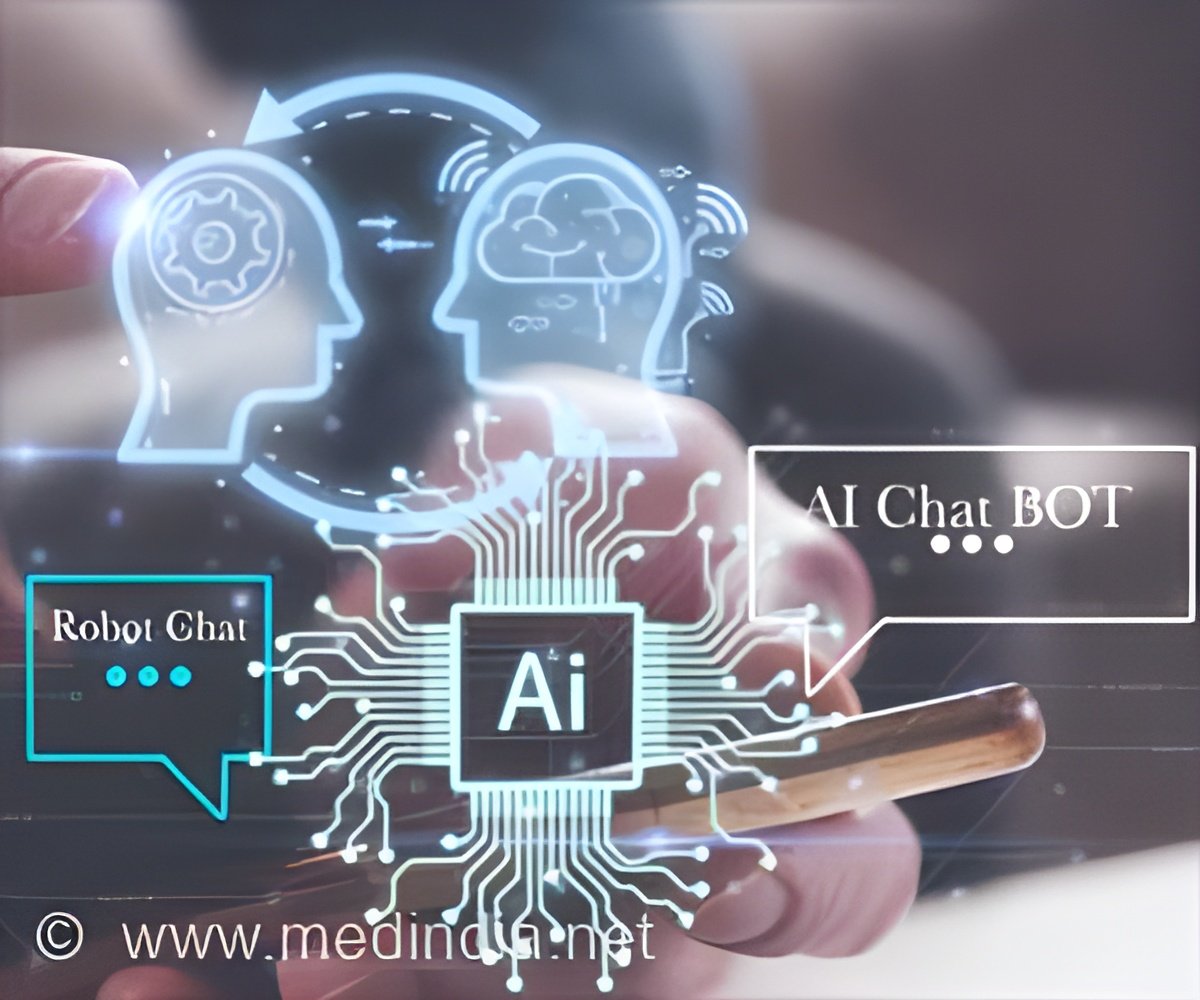
Solutions for healthcare
Go to source). In a recent blog post, the US-based AI research company outlined its vision for the near future, suggesting that the world has yet to grasp the full potential of advanced AI systems. “Much of the world still sees AI as chatbots or advanced search tools,” OpenAI said. “But today, we have systems that can outperform the smartest humans at some of our most challenging intellectual competitions.”

Artificial intelligence in Healthcare
Artificial intelligence (AI) in healthcare is the discipline using data intensive computer based solutions to improve patient care and outcome.
Artificial intelligence (AI) in healthcare is the discipline using data intensive computer based solutions to improve patient care and outcome.
TOP INSIGHT

We're past counting clock cycles. The real question: What can #artificial_intelligence help us solve?
The focus is now on improving life: cracking health understanding, accelerating the science of #drugs/materials/#climate, and delivering truly #personalizededucation. This shift to tangible benefits is how we build a positive, shared vision for #AI. #AIImpact #OpenAI #AIInHealthcare
What Is OpenAI? The Force Behind the GPT Revolution
OpenAI is a research organization founded in 2015 that aims to build artificial intelligence in a safe and beneficial way for humanity. It is best known for creating advanced generative models like the GPT family, including the multimodal model GPT-4o, which can process text, images, and audio.Recently, OpenAI researchers discovered hidden internal features in their models that correspond to different “personas,” offering new insights into improving AI alignment and safety. The company has also released new tools and APIs, such as the Responses API, enabling developers to build more capable, reasoning-driven applications for tasks like image generation, code interpretation, and multi-step problem solving.
The company noted that while current AI models remain “spiky” — showing strengths in some areas and weaknesses in others — they are already approaching the capabilities of human researchers. “Systems that can solve such hard problems seem more like 80 percent of the way to an AI researcher than 20 percent,” the post added.

The Impact of Artificial Intelligence(AI) on Modern Dentistry
Explore how artificial intelligence revolutionizes diagnostics, treatment planning, patient care, and various dental specialties, offering unprecedented accuracy and efficiency in dental practices.
Explore how artificial intelligence revolutionizes diagnostics, treatment planning, patient care, and various dental specialties, offering unprecedented accuracy and efficiency in dental practices.
AI Moving beyond Human Timeframes
OpenAI highlighted how rapidly AI’s problem-solving capacity has expanded — from completing tasks that once took humans seconds, to those requiring over an hour.“We expect to have systems that can do tasks that take a person days or weeks soon,” the company stated. “We do not yet know how to think about systems that can do tasks that would take a person centuries.”
At the same time, the cost of achieving a given level of intelligence has been plummeting. According to OpenAI’s estimates, the cost per unit of capability has dropped by roughly 40 times per year in recent years — a trend that could accelerate the development of more powerful systems.
The company envisions AI playing a transformative role in areas such as health research, materials science, drug development, climate modelling, and global education. These advancements, it said, could redefine how humanity discovers new knowledge and enhances collective understanding.
“Demonstrating tangible benefits helps create a shared vision of a world where AI improves life — not just efficiency,” the company wrote, emphasizing the need for responsible development alongside innovation.

Test Your Knowledge on Artificial Intelligence
Artificial intelligence (AI) or machine intelligence refers to the intelligence displayed by computers or robots in contrast to the natural intelligence exhibited by humans. It is considered one of the major advancements of the 4th industrial ...
Artificial intelligence (AI) or machine intelligence refers to the intelligence displayed by computers or robots in contrast to the natural intelligence exhibited by humans. It is considered one of the major advancements of the 4th industrial ...
Balancing AI Breakthroughs (Superintelligent AI) with Caution
Despite its optimism, OpenAI reiterated its concerns about the long-term risks of superintelligent AI, calling them “potentially catastrophic.” The firm underscored the need for rigorous safety and alignment research before deploying systems capable of recursive self-improvement.“No one should deploy superintelligent systems without being able to robustly align and control them,” the company warned. “And this requires much more technical work.”
As AI edges closer to making landmark discoveries, OpenAI’s message is clear — the frontier of artificial intelligence holds immense promise, but realizing it safely will require the same scientific precision and ethical care as the discoveries themselves.
Reference:
- Solutions for healthcare - (https://openai.com/solutions/healthcare/)
Source-Medindia
Explainable Artificial Intelligence (XAI) for Brain Tumor Diagnosis
Discover how AI and DNA methylation revolutionize brain tumor diagnosis, increasing accuracy, and identifying new therapeutic targets for precision medicine.
Discover how AI and DNA methylation revolutionize brain tumor diagnosis, increasing accuracy, and identifying new therapeutic targets for precision medicine.
 Email
Email