MEDINDIA
 English
 हिन्दी
 Español
 français
 中文
中文
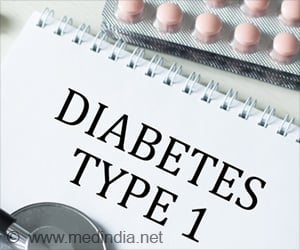
Hepatitis B vaccine-induced immunity is linked to a lower risk of diabetes, especially among younger adults.
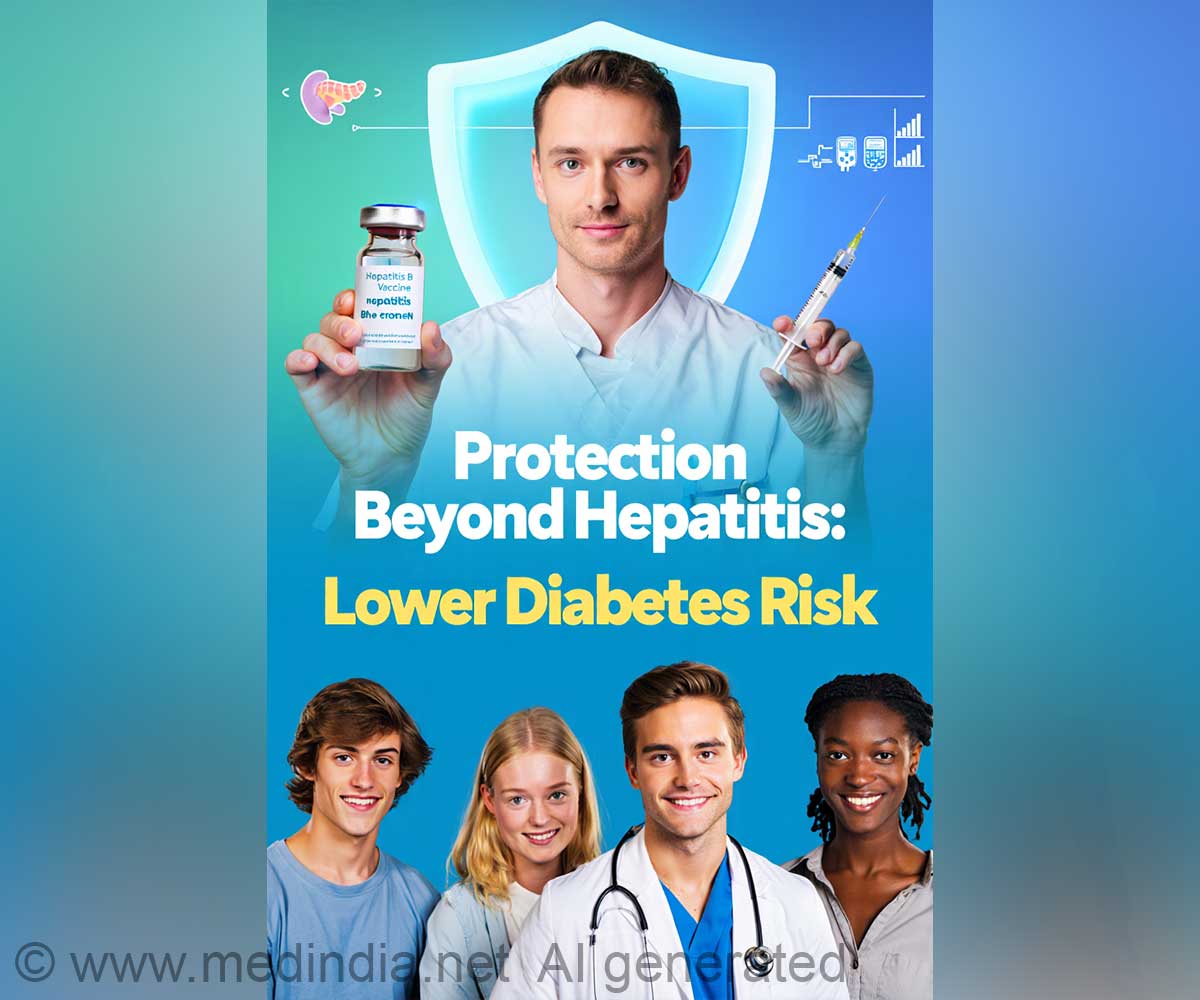
Potential Protective Effect of Hepatitis B Immunity Against Diabetes Mellitus: A Retrospective Propensity-Matched Cohort Study
Go to source).
Therefore, immunity provided by hepatitis B vaccination, which protects against hepatitis B virus infection, may also help lower the risk of diabetes. However, the protective potential of hepatitis B immunity in individuals without active infection has not been widely explored until now.
Hepatitis B-Causes-Symptoms-Diagnosis-Treatment-Vaccination-FAQs
Hepatitis B is inflammation of the liver due to infection with the hepatitis B virus.
Hepatitis B is inflammation of the liver due to infection with the hepatitis B virus.
TOP INSIGHT

Did You Know?
People with hepatitis B vaccine-induced immunity had lower chance of developing diabetes.
#hepatitisbvaccine #diabetes #medindia
Data Extracted from 131 Healthcare Organizations Worldwide
This retrospective cohort study relied on anonymized electronic medical records accessed through TriNetX, a global health data platform encompassing diagnosis, procedure, medication, lab, and genomic records. At the time of analysis, the data spanned 131 healthcare organizations across regions including the United States, Europe, the Middle East and Africa, Asia-Pacific, and Latin America.The study population included adults aged 18 and above with blood test results for hepatitis B surface antibody (HBsAb), which indicates hepatitis B immunity. Participants with previous hepatitis B infection were excluded. Those with HBsAb levels of 10 milli-international units per milliliter or more were considered hepatitis B immunized, while those with less than 10 were categorized as unimmunized. This resulted in 573,785 individuals in the immunized group and 318,684 in the unimmunized group.
Hepatitis B Therapeutic Vaccine Enters First Human Trial
First clinical trial launches for a therapeutic vaccine targeting chronic hepatitis B, aiming to boost immune response and improve patient outcomes.
First clinical trial launches for a therapeutic vaccine targeting chronic hepatitis B, aiming to boost immune response and improve patient outcomes.
Hepatitis B Immunity Associated with 15 Percent Lower Diabetes Risk
Diabetes diagnosis in the study was based on medical diagnosis records, diabetes-related medication usage, or glycated hemoglobin (HbA1c) levels of 6.5 percent or higher. Data were statistically adjusted for age, sex, and existing medical conditions.Findings revealed that the hepatitis B immunized group had a 15 percent lower risk of developing diabetes compared to the unimmunized group. A clear dose-response relationship was also noted: individuals with HBsAb levels at or above 100 milli-international units per milliliter had a 19 percent lower risk, while those with levels of 1000 or more had a 43 percent lower risk of diabetes, compared to those with HBsAb levels below 10.

Quiz on Hepatitis
Hepatitis is a common liver disease that is responsible for mortality as well as morbidity. Test your knowledge on hepatitis by taking this quiz. ...
Hepatitis is a common liver disease that is responsible for mortality as well as morbidity. Test your knowledge on hepatitis by taking this quiz. ...
Age-Specific Trends and Immune System Role
The protective effect of hepatitis B vaccine-induced immunity varied with age. Among vaccinated individuals, those aged 18 to 44 years showed a 20 percent reduced diabetes risk, while those aged 45 to 64 and 65 and older showed 11 percent and 12 percent reductions, respectively, compared to their unimmunized counterparts.The authors suggested that this age-related trend could be linked to immunosenescence, the natural decline in immune function with age, which may weaken the immune system’s response to vaccination in older adults, thereby reducing its protective effect against diabetes.

Hepatitis B Nano Vaccine Sans Needle Shows Promise for Third World
University of Michigan scientists say that a new hepatitis B has proved non-toxic, and able to produce strong immune responses in animal studies.
University of Michigan scientists say that a new hepatitis B has proved non-toxic, and able to produce strong immune responses in animal studies.
Geographical Variation Observed in Diabetes Protection
Another key observation was the significant variation in diabetes protection across different regions. Interestingly, the United States, despite having a highly developed healthcare infrastructure, demonstrated the smallest reduction in diabetes risk linked to hepatitis B vaccine-induced immunity. The authors call for further research to uncover the factors driving this geographical inconsistency.On a behavioral level, the authors proposed that people who complete vaccination schedules may also be more inclined toward health-conscious behaviors such as regular exercise and nutritious diets. These healthier lifestyle choices may serve as confounding variables in the relationship between hepatitis B immunity and diabetes risk.
Potential for Dual-Benefit Preventive Strategy
The researchers emphasized the unique potential of the hepatitis B vaccine as a dual-purpose preventive tool. Unlike traditional diabetes prevention methods that require ongoing lifestyle changes, dietary adjustments, or medications, the hepatitis B vaccine is a one-time, cost-effective intervention.This could be especially beneficial in regions such as Asia-Pacific and Africa, where both hepatitis B and diabetes are prevalent. The authors recommend additional research to verify these findings and to better understand the underlying biological mechanisms.
Reference:
- Potential Protective Effect of Hepatitis B Immunity Against Diabetes Mellitus: A Retrospective Propensity-Matched Cohort Study - (https://pmc.ncbi.nlm.nih.gov/articles/PMC12248427/))
 Email
Email