MEDINDIA
 English
 हिन्दी
 Español
 français
 中文
中文
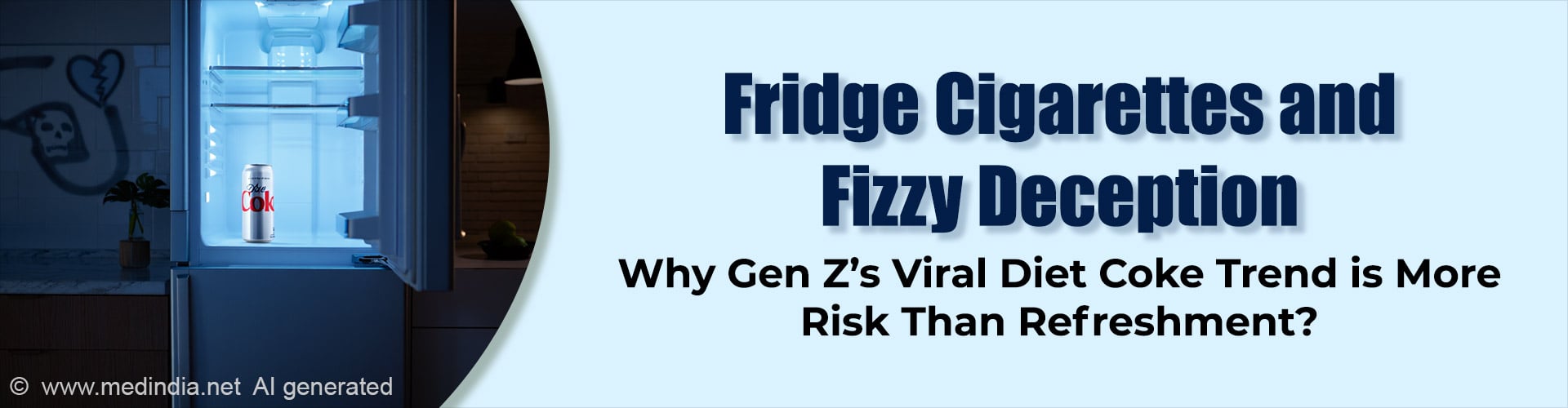
A viral TikTok trend glamorizing Diet Coke reveals serious health concerns linked to artificially sweetened beverages.
Highlights:
The practice of drinking frozen Diet Coke, known as “fridge cigarettes,” has gone global. It is intended to assist you in taking a break from the hustle. Experts discuss the link but also voice concerns about the usage of Diet Coke. Taking a Diet Coke break during a busy day isn't really about smoking tobacco, but is it a good way to relax?
Experts believe that the click of opening a can is remarkably similar to that of lighting a cigarette, even if there may not be scientific evidence to support this claim (1✔ ✔Trusted Source- The viral "Fridge Cigarette" trend is fueling a dangerous ritual around Diet Coke
- Studies link diet soda to stroke, cognitive decline, and metabolic disease
- Gen Z’s aesthetic wellness may be hiding long-term health threats
Gen Z's new cigarette is cold, fizzy, and comes in a can
Go to source).
Diet Soda Habit can Cause Dental Problems
Too much intake of diet soda can have a negative effect on your teeth, shows study.
Too much intake of diet soda can have a negative effect on your teeth, shows study.
TOP INSIGHT

Did You Know?
Diet soda drinkers have a 67% higher risk of developing type 2 #diabetes-even without sugar! #dietsoda #medindia #tiktok #fridgecigarette
Trend Alert: The Rise of the ‘Fridge Cigarette’
According to Dr. Gade, the sensation of fizz and maybe even burp that occurs when you take a drink is similar to the pull of a cigarette. It taps into an ironic 90s-nostalgia-meets-body-aesthetic culture, where diet soda becomes a symbol of self-control, rebellion, and dopamine on demand.For some, it’s a placeholder for a vice they’ve sworn off (like smoking or binge eating); for others, it’s simply cool content. But beneath the satire and sparkles lies a deeper health concern.
Coco-Cola Company Plots New Plans to Increase the Sales of Diet Soda in the US
Diet soda was the country's second-most-popular soda. Last year, however, its ranking slipped to No. 3, with regular Pepsi taking its No. 2 spot.
Diet soda was the country's second-most-popular soda. Last year, however, its ranking slipped to No. 3, with regular Pepsi taking its No. 2 spot.
What Science Says About Artificially Sweetened Beverages
Diet Coke as the name suggests is believed to be a healthier alternative for normal Coke but research says otherwise!A systematic review revealed that regular consumption of Artificially Sweetened Beverages (ASBs) is linked to:
- Increased risk of coronary heart disease.
- Stroke, especially among postmenopausal women.
- Harmful effects on gut flora and carbohydrate metabolism.
- Potential causes of dementia and cognitive decline.
Artificially Sweetened Beverages Beyond the Metabolic Risks: A Systematic Review of the Literature
Go to source).

Artificially Sweetened Products May be the Source of Your Anxiety
Artificially sweetened foods and beverages with ‘Aspartame,’ may be the cause of your anxiety
Artificially sweetened foods and beverages with ‘Aspartame,’ may be the cause of your anxiety
Says Zero Sugar, But the Real Risk Lies Within
A large-scale, multi-ethnic cohort study reveals that individuals who consumed diet soda daily had a 36% higher risk of developing metabolic syndrome and a 67% higher risk of type 2 diabetes.The paradox? Even without sugar, these drinks may still promote insulin resistance, weight gain, and fat accumulation, especially around the abdomen (3✔ ✔Trusted Source
Diet Soda Intake and Risk of Incident Metabolic Syndrome and Type 2 Diabetes in the Multi-Ethnic Study of Atherosclerosis (MESA)
Go to source).

Diet Soft Drinks: A Healthier Choice or Hidden Hazard?
Despite being sugar-free, diet soft drinks may pose health risks like metabolic issues, dental erosion, and possible cancer links.
Despite being sugar-free, diet soft drinks may pose health risks like metabolic issues, dental erosion, and possible cancer links.
Why This Trend Hits Gen Z the Hardest
Gen Z is known for being health-conscious yet mentally overwhelmed. Diet sodas are a common solution to elevating mood, getting a caffeine-driven boost, or losing appetite. However, this dependence, particularly when it becomes ritualized and a daily fix can foster unhealthy food and body associations and affect long term metabolic health.Consider this:
- Anxiety can be induced by caffeine dependency.
- Artificial sweeteners have the tendency of increasing sugar carvings.
- Diet culture, rebranded as aesthetic wellness, often hides disordered behaviors.
Hooked on Fizz: The Dopamine Trap of Diet Soda
Popping open a Diet Coke may offer more than just refreshment. It can have the same psychological comfort that people enjoyed through smoking—hence the “cigarette” metaphor. This ritual becomes a self-soothing mechanism, especially in moments of boredom, stress, or emotional lows.However, similar to cigarettes, the long-term effects may outweigh the immediate satisfaction.
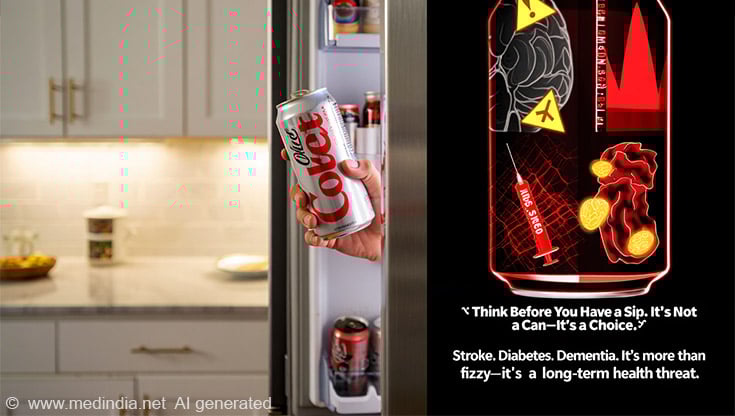
Cool, Caffeinated, and Complicated
What began as a viral TikTok trend has sparked a much-needed conversation. The so-called “Fridge Cigarette” is nothing more than a health risk wrapped in a trendy name. While it may satisfy a psychological craving, it carries harmful effects—much like cigarettes themselves. And let’s be clear: it’s far from a healthy replacement.References:
- Gen Z's new cigarette is cold, fizzy, and comes in a can - (https://www.indiatoday.in/lifestyle/what-s-hot/story/fridge-cigarette-diet-coke-can-viral-trend-2747223-2025-06-28)
- Artificially Sweetened Beverages Beyond the Metabolic Risks: A Systematic Review of the Literature - (https://pmc.ncbi.nlm.nih.gov/articles/PMC9891650/)
- Diet Soda Intake and Risk of Incident Metabolic Syndrome and Type 2 Diabetes in the Multi-Ethnic Study of Atherosclerosis (MESA) - (https://pmc.ncbi.nlm.nih.gov/articles/PMC2660468/)
Source-Medindia
 Email
Email