MEDINDIA
 English
 हिन्दी
 Español
 français
 中文
中文

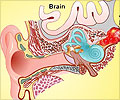
Artificial intelligence identifies unique volatile organic compounds in ear wax with 94 percent accuracy for early Parkinson’s disease screening.
Highlights:
Subtle chemical differences in ear wax could soon offer a low-cost, non-invasive way to detect Parkinson's disease in its early stages. Parkinson’s is a progressive neurological disorder, and early diagnosis is crucial for slowing down its development and improving long-term care (1✔ ✔Trusted Source- Artificial intelligence detects Parkinson’s disease from ear wax with 94 percent accuracy
- Volatile organic compounds in ear wax differ in Parkinson’s disease patients
- Non-invasive testing method offers promise for early Parkinson’s disease detection
An Artificial Intelligence Olfactory-Based Diagnostic Model for Parkinson's Disease Using Volatile Organic Compounds from Ear Canal Secretions
Go to source). Traditional diagnostic methods, like imaging scans or clinical rating scales, can be expensive, time-consuming, and subjective.

Parkinson’s Disease - Causes, Symptoms, Diagnosis, Treatment
Parkinson’s disease is a neurodegenerative disease caused by progressive dopamine brain cells loss. Symptoms of Parkinson’s disease are correctable to an extent.
Parkinson’s disease is a neurodegenerative disease caused by progressive dopamine brain cells loss. Symptoms of Parkinson’s disease are correctable to an extent.
TOP INSIGHT

Did You Know?
Parkinson’s disease alters the smell of sebum deep inside your ear, and artificial intelligence can now detect it with 94 percent accuracy. #medindia #parkinsonsdisease #ai
Odor-Based Screening Powered by Artificial Intelligence
A team led by Hao Dong and Danhua Zhu focused on identifying specific volatile organic compounds in ear wax that are uniquely altered in individuals with Parkinson’s disease. They collected ear wax samples from 209 participants—108 of whom were diagnosed with Parkinson’s and analyzed them using gas chromatography and mass spectrometry techniques.Their findings revealed four volatile organic compounds—ethylbenzene, 4-ethyltoluene, pentanal, and 2-pentadecyl-1,3-dioxolane that differed significantly between those with and without the disease.

Nutritional Management of Parkinson's Disease
Parkinson's disease is a brain disorder which leads to many other related effects. Nutrition plays an important role in management of the disease.
Parkinson's disease is a brain disorder which leads to many other related effects. Nutrition plays an important role in management of the disease.
Validating Across Populations and Stages
Although the findings are promising, the system has only been tested in a small-scale, single-center setting in China. Lead researcher Hao Dong emphasized the need for broader testing across different disease stages, populations, and research centers to validate the method’s reliability and global applicability.
Parkinson's Disease Finds Potential Cure and Prevention
Cortisol, a steroid hormone, can prevent Parkinson’s disease (PD) by inducing over-expression of parkin protein which inhibits death of dopaminergic neurons.
Cortisol, a steroid hormone, can prevent Parkinson’s disease (PD) by inducing over-expression of parkin protein which inhibits death of dopaminergic neurons.
To sum up, the discovery that specific volatile organic compounds in ear wax can help detect Parkinson’s disease highlights a new, non-invasive diagnostic pathway powered by artificial intelligence. With further validation, this method could transform early screening and significantly enhance quality of life for people at risk.

Scratch-and-Sniff Test Could Predict Parkinson's Much Earlier
Poor sense of smell can predict the risk of Parkinson’s disease 10 years prior to the actual diagnosis.
Poor sense of smell can predict the risk of Parkinson’s disease 10 years prior to the actual diagnosis.
Reference:
- An Artificial Intelligence Olfactory-Based Diagnostic Model for Parkinson's Disease Using Volatile Organic Compounds from Ear Canal Secretions - (https://pubs.acs.org/doi/10.1021/acs.analchem.5c00908)
Source-Medindia
 Email
Email