MEDINDIA
 English
 हिन्दी
 Español
 français
 中文
中文
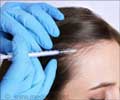
Biologically relevant measure of a fertility hormone, Anti-Mullerian (AHM), can be accurately taken from a sample of human hair. AMH is presently measured in serum taken from a blood sample drawn intravenously, which is invasive and time-consuming. Hair samples are a more appropriate representation of hormone levels


Infertility - Causes - Diagnosis - Treatment - FAQs
Infertility is a condition wherein couples fail to achieve pregnancy or if the woman has been unable to carry a pregnancy that results in a live birth.
Infertility is a condition wherein couples fail to achieve pregnancy or if the woman has been unable to carry a pregnancy that results in a live birth.
TOP INSIGHT

Quantification of Anti-Mullerian hormone levels in the human hair makes it a non-invasive procedure, which reduces testing stress and offers a less expensive assay. It also makes the process accessible to many women and offers accurate results.
AMH is presently measured in serum taken from a blood sample drawn intravenously. The readings represent a measurement at a short moment in time and are relatively invasive to complete.
Now, however, a new study presented at the online Annual Meeting of ESHRE has tested the quantification of AMH from human hair and found it to be a less invasive and a "more appropriate representation of hormone levels" than from an "acute" source like serum. The results are presented this week in a poster from PhD student Sarthak Sawarkar, working in the laboratory of Professor Manel Lopez-Bejar in Barcelona, with collaborators from MedAnswers Inc in the USA.
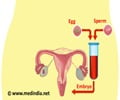
In Vitro Fertilization (IVF) - Introduction To Infertility and Reproduction
Encyclopedia section of medindia gives a brief introduction to infertility and reproduction
Encyclopedia section of medindia gives a brief introduction to infertility and reproduction
"Biologically relevant" AMH levels were successfully detected in the hair samples, with levels declining with patient age, as expected. As ovarian reserve declines with age, so do AMH levels. The AMH levels from hair strongly correlated with both serum levels and AFC. It was also seen that the hair test was able to detect a wide range of AMH levels within individuals from a similar age cohort, suggesting a greater accuracy than from a single blood sample.

About Male Infertility
Encyclopedia section of medindia briefs you about the Genetics of Male Infertility
Encyclopedia section of medindia briefs you about the Genetics of Male Infertility
Among the other advantages of a hair test, the authors note that hormone levels are assessed non-invasively, which reduces testing stress and offers a less expensive assay. Testing can be done without visiting a clinic, and thus makes this type of test available to a broader range of women. "Finally," explains Mr Sawarkar, "as hair offers a look at the long-term accumulation of hormones, this measurement may allow a better understanding of an individual's hormone levels - unlike blood-based assays, which can only measure the hormone at the moment of the testing."

Lifestyle Factors that Improve Fertility
Couples facing difficulty in getting pregnant could benefit from lifestyle changes. Serious medical factors might be beyond control, but lifestyle factors are choices, affecting fertility.
Couples facing difficulty in getting pregnant could benefit from lifestyle changes. Serious medical factors might be beyond control, but lifestyle factors are choices, affecting fertility.
Commenting on the biology of the test, Mr Sawarkar explains that hormones are incorporated into the matrix of hair before the growing hair reaches the skin surface, thereby allowing an accumulating measurement of hormone concentration.
Source-Eurekalert
 Email
Email