MEDINDIA
 English
 हिन्दी
 Español
 français
 中文
中文
Immunotherapy in early breast cancer indicated an improvement in event-free survival, revealed study.

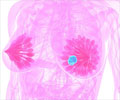
Triple-Negative Breast Cancer - Causes, Symptoms, Diagnosis, Treatment, Prevention & Prognosis
Triple-negative breast cancers are ER negative, PR negative, and lack overexpression of HER-2. They are difficult to treat and are very aggressive.
Triple-negative breast cancers are ER negative, PR negative, and lack overexpression of HER-2. They are difficult to treat and are very aggressive.
TOP INSIGHT

Triple negative breast cancer is the most aggressive subtype of breast cancer and more often affects young women.
KEYNOTE-522 tested whether adding immune therapy to chemotherapy prior to surgery could improve pathological complete response and event-free survival in women with early triple negative breast cancer. A total of 1,174 patients were randomly allocated at a 2:1 ratio to pembrolizumab or placebo, both added to preoperative chemotherapy with anthracyclines, taxanes, and platinum, for five to six months. After surgery, patients continued their allocated treatment of pembrolizumab or placebo for nine cycles.
The analysis presented at the ESMO Congress 2019 was performed after a median follow-up of 15.5 months. Pathological complete response, assessed in the first 602 patients, significantly increased from 51.2% (95% confidence interval [CI] 44.1-58.3) in the placebo group to 64.8% (95% CI 59.9-69.5) in the pembrolizumab group (p=0.00055). "We found a 13.6% difference which is a clinically meaningful benefit," said Schmid.

Diagnoses of Triple Negative Breast Cancer Show Disparities
A new study published in CANCER shows that women of color and young women may face elevated risks of developing triple-negative breast cancers.
A new study published in CANCER shows that women of color and young women may face elevated risks of developing triple-negative breast cancers.
Grade 3 or higher treatment-related adverse events occurred in 78.0% and 73.0% of the pembrolizumab and placebo groups, respectively. Schmid noted that many of the side-effects were driven by the intensive chemotherapy regimen. Side-effects with a potential link to immune therapy occurred in 42% of study participants taking pembrolizumab versus 21% on placebo. "Immune therapy added some side-effects to chemotherapy but there were no new safety signals," he said. Commenting on the results for ESMO, Prof Fabrice Andre, Institut Gustave Roussy, Villejuif, France, said: "Triple negative breast cancer accounts for 15% of breast cancers. It represents an unmet medical need, since the only approved medical therapy at early stages of the disease is chemotherapy. This study could have a major impact on treatment for these patients."

Triple Negative Breast Cancers: Fresh Insights
Triple negative breast cancer (TNBC) cells that develop resistance to frontline, or neoadjuvant, chemotherapy not by acquiring permanent adaptations, but rather transiently turning on molecular pathways that protect the cells have been discovered.
Triple negative breast cancer (TNBC) cells that develop resistance to frontline, or neoadjuvant, chemotherapy not by acquiring permanent adaptations, but rather transiently turning on molecular pathways that protect the cells have been discovered.
While a large benefit in response rates was expected, the poor predictive value of PD-L1 was surprising. "This is probably because most early stage triple negative breast cancers express some degree of PD-L1, sometimes below the predefined cut-off of positivity. The role of chemotherapy as a sensitiser for anti-PD-1 in PD-L1-low early stage triple negative breast cancer should also be explored," said Andre. "The next step will be to define which patients are resistant and prioritise which targets should be hit in this population. We also have to determine the impact of this new class of drug on survivorship issues."

New Therapy to Prevent Triple Negative Breast Cancer from Spreading
Targeting key protein p53 helps to prevent the spread of cancer in people diagnosed with triple-negative breast cancer.
Targeting key protein p53 helps to prevent the spread of cancer in people diagnosed with triple-negative breast cancer.
 Email
Email