MEDINDIA
 English
 हिन्दी
 Español
 français
 中文
中文
Bacteria lurking in the water lines at the dentist's office are tougher than we thought, suggested a new paper.

Dental Braces-How do they work - Treatment - Procedure - Risks
Dental braces are dental devices used to align and straighten teeth. Dental devices are placed by an orthodontist.
Dental braces are dental devices used to align and straighten teeth. Dental devices are placed by an orthodontist.
TOP INSIGHT

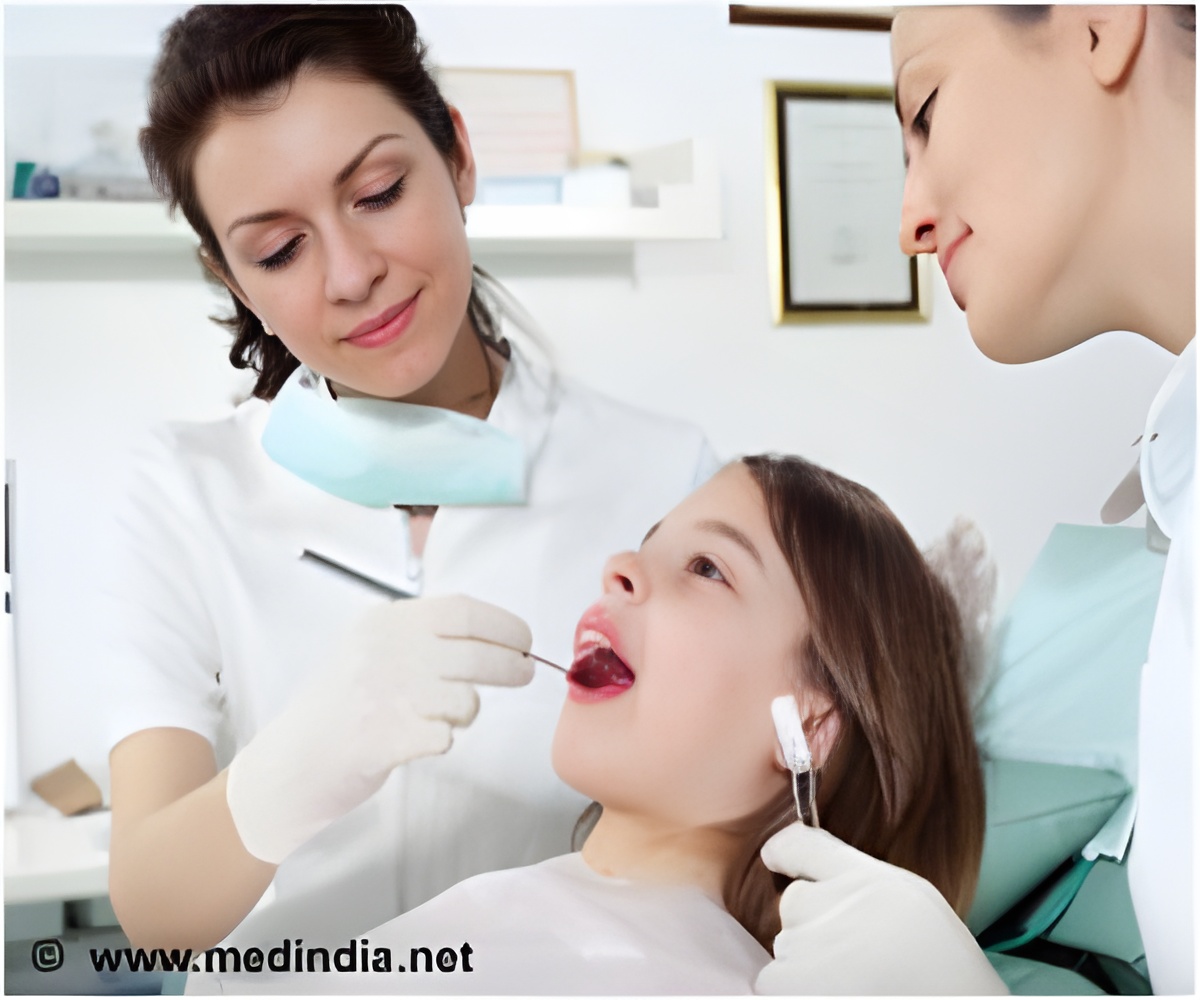
During dental procedures, patients and dentists can be exposed to microorganisms present in the water circulating inside dental units.
Dr. Damien Costa, lead author of the study, said, "During dental procedures, patients and dentists can be exposed to microorganisms present in the water circulating inside dental units. Infections may occur if this potentially microbiologically contaminated water is inhaled or splashed. We wanted to determine the best way to keep dental lines clean and avoid infection."
There has long been concern about how clean dental lines are, and there have been some - albeit rare - documented cases of them causing infections in people. In 2011, an 82-year-old woman was admitted to hospital with trouble breathing and was diagnosed with Legionnaire's disease, which she had contracted via a contaminated dental water line. She died two days later.

Dental Care during Pregnancy
Dental care is not only safe but also essential during pregnancy. Hence, it is important for you to take good care of your teeth while you are pregnant.
Dental care is not only safe but also essential during pregnancy. Hence, it is important for you to take good care of your teeth while you are pregnant.
Dr. Costa and his colleagues grew biofilms in the laboratory in conditions similar to dental water lines. The biofilms contained several different microbes, to mimic the complex biofilms that form in real lines: the bacterium Pseudomonas aeruginosa, which can cause pneumonia and septic shock, the fungus Candida albicans, which can also cause superficial and severe infections, and free living amoebae Vermamoeba vermiformis. These amoebae can be dangerous - they're known as 'Trojan horses' because they carry some bacteria that can infect humans, like Legionella pneumophila, which causes Legionnaire's disease.

Dental Care for Babies, Toddlers, Preschoolers, Children
Initiating dental care at an early age can prevent tooth decay in children and also helps maintain overall oral health throughout life.
Initiating dental care at an early age can prevent tooth decay in children and also helps maintain overall oral health throughout life.
Dr. Costa said, "Unfortunately, our results showed that none of the three disinfectants commonly used are completely effective. What is most worrying is that none of the disinfectants could kill the amoebae, which means they are still dangerous to patients and dentists even after water lines have been sterilized."

Dental Check-Up
It is commonly recommended that you visit the dentist twice a year to clean your teeth and gums and also do the basic check–ups.
It is commonly recommended that you visit the dentist twice a year to clean your teeth and gums and also do the basic check–ups.
Source-Eurekalert
 Email
Email