MEDINDIA
 English
 हिन्दी
 Español
 français
 中文
中文
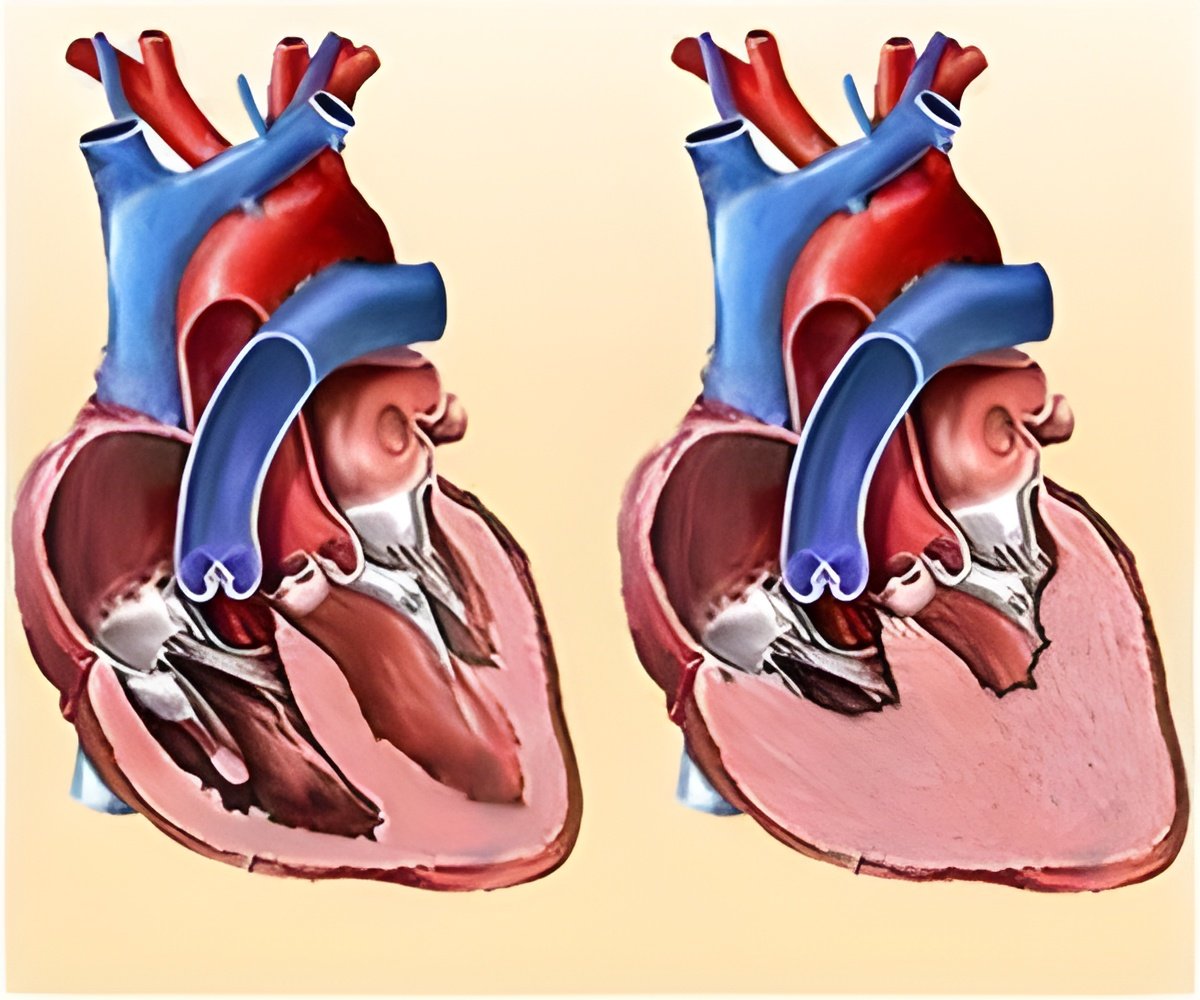
Personalized care for congestive heart failure, also known as ischemic cardiomyopathy can now be possible with a new study that describes the underlying mechanism that reprograms the hearts of patients with ischemic cardiomyopathy
TOP INSIGHT

Personalized care for congestive heart failure, also known as ischemic cardiomyopathy can now be possible with a new study that describes the underlying mechanism that reprograms the hearts of patients with ischemic cardiomyopathy
The research team, led by Adam Wende, Ph.D., assistant professor in the UAB Department of Pathology, found that epigenetic changes in ischemic cardiomyopathy hearts likely reprogram the heart's metabolism and alter cellular remodeling in the heart. Epigenetics is a field that describes molecular modifications known to alter the activity of genes without changing their DNA sequence.
One well-established epigenetic change is the addition or removal of methyl groups to the cytosine bases of DNA. Generally, hyper-methylation is associated with reduction of gene expression, and conversely, hypo-methylation correlates with increased gene expression.
Cardiac Pacemaker for Abnormal Heart Rhythms – Types, Advantages & Risks
A pacemaker stimulates the heart with electrical signals when it detects arrhythmias of the heart. Pacemakers are classified based on the number of lead electrodes used and the type of pacing involved.
A pacemaker stimulates the heart with electrical signals when it detects arrhythmias of the heart. Pacemakers are classified based on the number of lead electrodes used and the type of pacing involved.
"Altogether, we believe that epigenetic changes encode a so-called 'metabolic plasticity' in failing hearts, the reversal of which may repair the ischemic and failing heart," Wende said.
Cardiogenic Shock - Causes, Symptoms, Diagnosis, Treatment & Prevention
Cardiogenic shock is defined as reduced cardiac output due to inability of the heart to pump adequate blood in the presence of a normal blood volume.
Cardiogenic shock is defined as reduced cardiac output due to inability of the heart to pump adequate blood in the presence of a normal blood volume.
This contribution by EZH2 offers a new molecular target for further mechanistic studies that may aid precision-based heart disease therapies. Of note, co-author Sooryanarayana Varambally, who has spent over 15 years studying this protein, has already made progress using small-molecular inhibitors to regulate EZH2 to treat various cancers.
Congestive Heart Failure (Congestive Cardiac Failure) Current Management
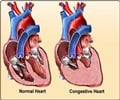
Congestive heart failure (CHF) is a condition in which the heart fails to work adequately as a pump that can deliver oxygen rich blood to the body.
Congestive heart failure (CHF) is a condition in which the heart fails to work adequately as a pump that can deliver oxygen rich blood to the body.
Pepin is a sixth-year M.D.-Ph.D. student at UAB and is currently completing the Ph.D. portion of his training in the Medical Scientist Training Program.
The UAB team also performed cell culture experiments showing repression of KLF15 after EZH2 over-expression in rat cardiomyoblasts, and they demonstrated that EZH2 over-expression depended on EZH2's having an intact SET catalytic domain.
Source-Eurekalert
 Email
Email