MEDINDIA
 English
 हिन्दी
 Español
 français
 中文
中文
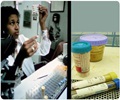
Over the last decade, fecal transplantation (FT) has re-emerged as a promising treatment for recurrent Clostridium difficile infection.
Alternative to Antibiotics Found for Deadly Clostridium Difficile Infection
Antioxidant drug ebselen did not kill the bacteria. Rather, it disabled a toxin produced by the pathogen and prevented intestinal damage and inflammation.
Antioxidant drug ebselen did not kill the bacteria. Rather, it disabled a toxin produced by the pathogen and prevented intestinal damage and inflammation.
TOP INSIGHT

A single fecal transplantation delivered by enema is no more effective than the existing standard of care for recurrent Clostridium difficile infection (RCDI), administration of oral vancomycin taper.
Researchers at the University Health Network have found that when treating recurrent Clostridium difficile infection (RCDI), a single fecal transplantation delivered by enema is no more effective than the existing standard of care for RCDI, administration of oral vancomycin taper. The findings were published recently in the journal Clinical Infectious Diseases.
Over the last decade, FT has re-emerged as a promising treatment for RCDI with recent studies showing it to be highly effective. In an effort to measure the true effectiveness of FT, the UHN team launched a phase 2/3, single center, open-label trial, where study participants experiencing an acute episode of RCDI were randomly assigned to receive either 14 days of oral vancomycin therapy followed by a single FT of fresh donor stool via enema, or a six week taper of oral vancomycin only.
Settings Outside Hospitals Play Key Role in Onset and Possible Transmission of Clostridium Difficile Infections
Researchers at Kaiser Permanente suggested that four in five hospitalized patients who were tested positive for Clostridium difficile had been tested outside the hospital.
Researchers at Kaiser Permanente suggested that four in five hospitalized patients who were tested positive for Clostridium difficile had been tested outside the hospital.
"These findings are quite interesting and show that we have a lot to learn as to how well fecal transplantation works compared to the standard of care before it becomes a mainstream treatment," says Dr. Susy Hota, Medical Director, Infection Prevention and Control Program, University Health Network. "More research is needed into the many factors that influence the effectiveness of FT, such as donor and patient selection, FT manufacturing, how it is delivered to the patient, the number of times FT needs to be given, and any other variables that could improve outcomes."
Clostridium Difficile Epidemic Should Concern People at Home As Well
The Clostridium difficile bacteria poses a major health threat without proper infection prevention in hospitals and now homes, cautions a Case Western Reserve University infection control researcher.
The Clostridium difficile bacteria poses a major health threat without proper infection prevention in hospitals and now homes, cautions a Case Western Reserve University infection control researcher.
"In light of our results, I would caution a blanket approach of FT to treat RCDI," says Dr. Hota. "The FT field is still evolving and, given as yet undefined long-term effects of manipulating the gut's microbiota, it should be approached with caution."
Transplanting Fecal Matter can Help Treat Recurrent Clostridium Difficile Infection
A joint study suggests that people suffering from recurrent Clostridium difficile infection can be treated by transplanting fecal matter from healthy donors.
A joint study suggests that people suffering from recurrent Clostridium difficile infection can be treated by transplanting fecal matter from healthy donors.
Source-Eurekalert
 Email
Email