What are the Causes of Kidney Stones?
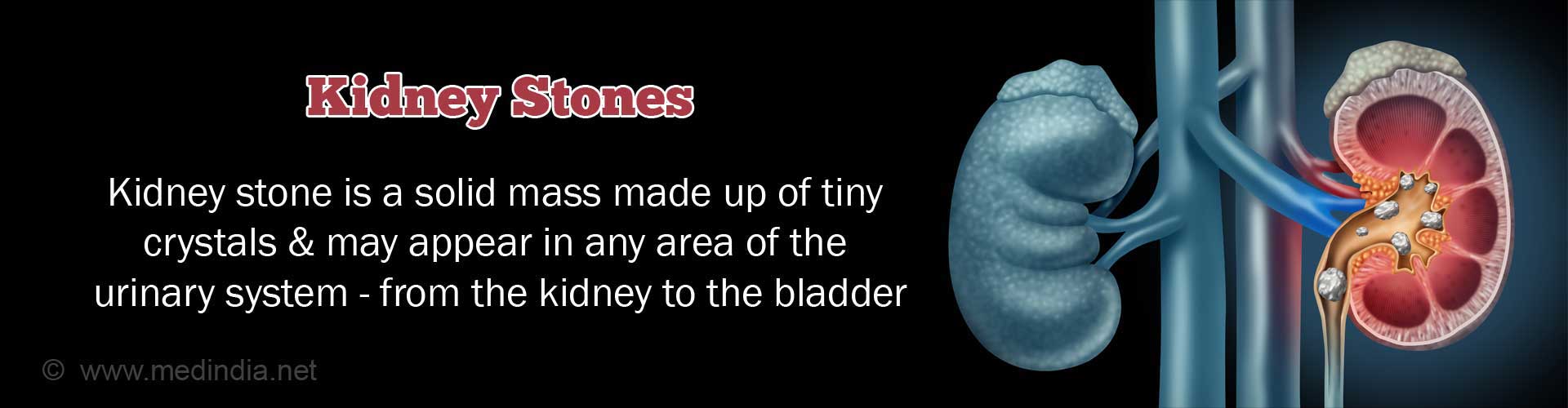
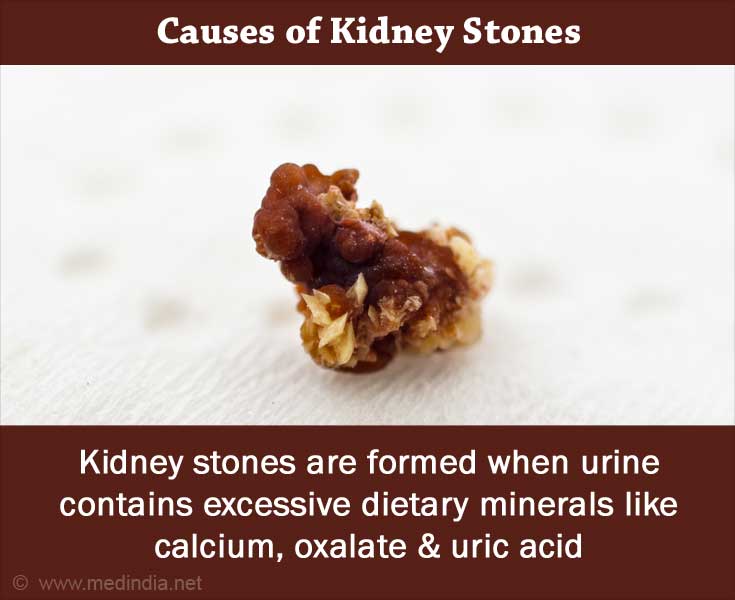
Kidney stones are formed when urine contains too much of certain dietary minerals.
There are different types of kidney stones and the exact cause depends on the type of stone. Some types run in families.
- Calcium stones are the most common. Almost 95% of all kidney stones are calcium stones. They occur when there is too much calcium in the urine. Defective kidney function may allow too much calcium in the urine, or excessive calcium may be absorbed from the stomach and intestines. Some calcium stones are caused by an excess of a chemical called oxalate, present in many foods (spinach), which binds easily with calcium to form a stone. The risk of calcium stone formation is increased due to certain diseases like hyperparathyroidism and inflammatory bowel disease
- Uric acid stones are much less common than calcium stones. Men are more prone to uric acid stones than women. Uric acid stones occur because of dehydration, for example, during strenuous exercise on a hot day or during an illness. Uric acid stones are common in people who have gout (a disease that causes high uric acid levels in the blood) or chemotherapy
- Struvite stones are not quite so well understood. They are mostly found in women with urinary tract infection. It is thought that these stones are formed as a result of an interaction between protein-breakdown products and infection-causing bacteria in the urine
- Cystine stones are rare and occur in the presence of a genetic disease called cystinuria. This disease runs in families and results from a birth defect that causes the kidney to allow too much cystine into the urine. This type of stone formation is diagnosed during childhood
- Other substances can also form stones, including medications like acyclovir, indinavir, and triamterene