What is Geriatrics?
Aging is referred to the accumulation of changes that brings a person closer to death.
Ever since man stopped swinging from trees he has been preoccupied with the quest for the ‘fountain of youth’. Thousands of years later, his understanding of the diseases that debilitate has amazingly increased. Yet, with muted reverence, he continues to succumb to Nature’s dominating forces- Aging and Death!
Aging is referred to the accumulation of changes that render a person more vulnerable to death. Usually the term ‘old age’ is a reference to people who are at the end of an average lifespan or, to those who have exceeded it. In many societies retirement, usually after the age of 60-65, is the doorway to old age.
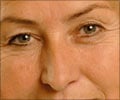
There was a time when it was thought that a silver streak in a person’s hair was the first sign of aging. But in these modern times of stress, pollution and diseases, premature graying is the order of the day. Nevertheless, classical symptoms such as liver spots on the skin, graying and loss of hair, diminished sight and hearing, reduced agility and memory are some of the signposts along the path of aging.
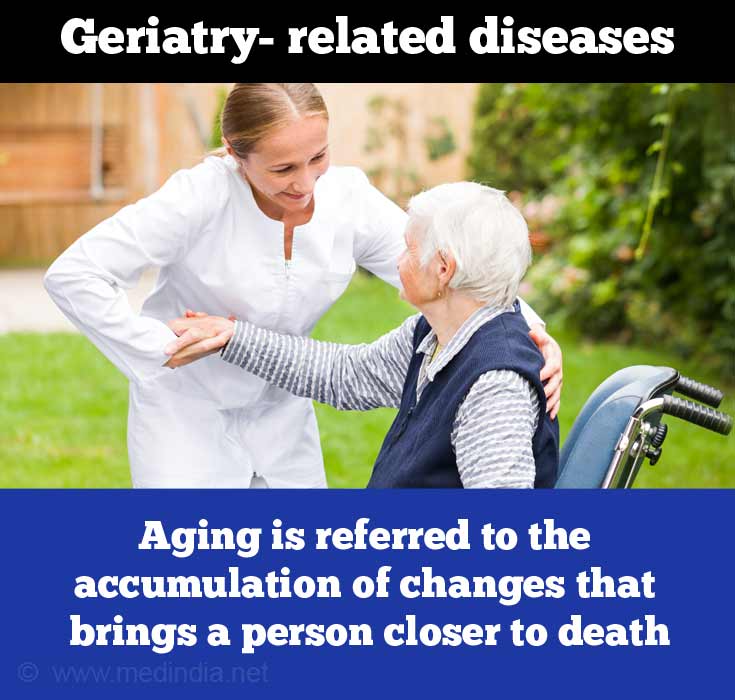
The branch of medicine dealing with old age, called ‘Geriatrics’ still remains an ill-defined branch of medicine. The fact that the elderly have a set of physical and psychological needs which are different from young or middle aged adults, was traditionally ignored. ‘Geriatric psychiatry’ was a term ‘waiting in the wings’- yet to be coined.
The discovery of antibiotics and better diagnostics during the twentieth century, helped to increase the number of the elderly substantially enough to be taken seriously. Today older individuals comprise of an ever-expanding population thanks to better treatment strategies for chronic conditions including Coronary Artery Disease (CAD) and Cancer. And Geriatrics, as a specialty, has almost come of age!
Chronic diseases and increased mortality are often cited as the hallmark of old age. There is a long-standing belief that aging and diseases are inseparable. However, studies have revealed that aging is inevitable, but diseases are not.Nevertheless, a correlation has been observed between age and chronic diseases such as cardiovascular diseases, diabetes, cancer, arthritis, osteoporosis, Alzheimer’s disease and dementia.
Older people are often referred to as ‘seniors’ or ‘elderly’ in an attempt to soften the impact of the prejudice that exists towards them. Although growing old is an integral part of the human life span, old people are often discriminated against, often by their own family. This could be because they are physically weak and need looking after or because they suffer from mental changes due to conditions such as dementia. These changes, whether physical or mental, may become a burden on the family. As an extreme manifestation, this discrimination against the elderly can lead to neglect and isolation and it is not uncommon for them to be totally abandoned.
Diseases and Old Age
Aging, in simple terms is a continuous process which restricts our normal functions and makes us more prone to disease and death.
There are several changes in the morphological features and functions of an aging individual some of which are reduction in muscle and bone mass, decline in cognitive and memory functions, decline in sensory perceptions, decline in sexual activity and an increased propensity to develop chronic conditions, like cancer.
Several of these diseases can be traced to specific genes. And those who are free of diseases, despite their advanced years, can attribute their freedom to ‘disease-protective’ genes. It is indeed ironical that the same gene, in different forms, can be beneficial or hinder the well being of an individual.
Some of the common age-related diseases are briefly discussed in this article.
Heart Disease in Old Age
Heart disease is the major cause of death in people above the age of seventy, of which Coronary Artery Disease (CAD) is significantly prevalent. High blood pressure is part of growing old and with it the chances of developing conditions such as stroke and heart failure.
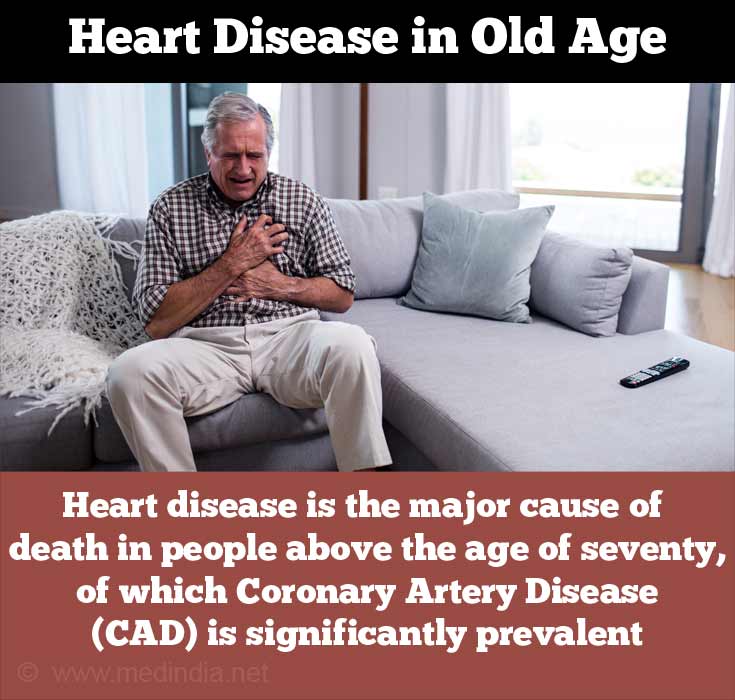
A decline in cardiovascular function is observed with age. If a person is healthy, this decline may not make a significant impact; however, in the case of the individuals with heart diseases, age-associated changes may compound the condition or impede the effect of treatment.
The variants of the two genes linked to longevity, the apoE (which produces the protein apolipoprotein E) and the ACE (Angiotensin Converting Enzyme) are also associated with heart disease. The E2 variant of the apoE is more likely to be present in people who live long, while the E4 variant predisposes individuals to heart diseases and Alzheimer’s disease. The gene ACE plays a role in blood pressure regulation while a variant of this gene results in heart disease.
It is interesting how the same gene can have a negative and a positive effect on a person’s health. More research is needed to understand the underlying mechanisms.
Diabetes in Elderly
Diabetes mellitus is characterized by high blood sugar levels. The incidence of diabetes is found to increase with age. Older adults are at an increased risk for diabetes.
Causes that lead to high risk of diabetes in older adults:
- Increased insulin resistance
- Impaired pancreatic islet functions
Diabetes associated with geriatric patients often result in lower levels of cognitive functions or increased cognitive decline.
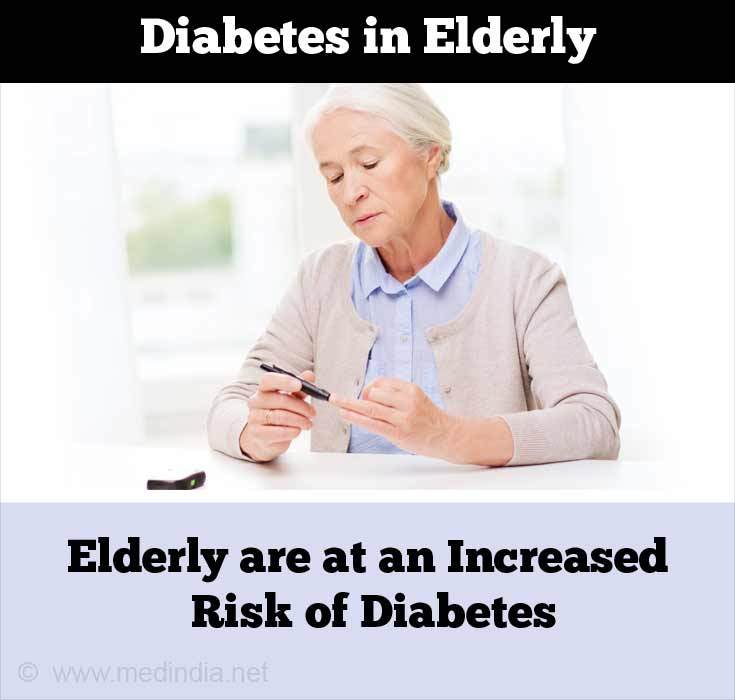
Geriatric patients should follow the required medical therapy to cope with diabetes.
- Proper geriatric assessment should be carried out to ensure if there is any risk of severe hypoglycemia associated while following insulin regimen.
- The American Diabetes Association (ADA) also recommends elderly patients to follow a proper diet and exercise in order to cope with diabetes.
Why is Cancer a Disease of Old Age?
Growing old brings with it an increased risk of developing cancer. Although the big C attacks both the young and the old, it is primarily considered a disease of the old.
Explanations are aplenty but one of the most rational hypotheses is that chromosomal instability, the hallmark of cancer, increases with old age. There is an accumulation of chromosomal aberrations with age; the older a person is, the greater is the exposure to various forms of mutagens and carcinogens which cause the aberrations.
The human body is endowed with a vigilance system which tracks down these aberrations and repairs the DNA. However, in aging individuals, the efficiency of this vigilance system wanes and the individual becomes more prone to develop cancer.
Besides, the apoE genes which are linked to aging and heart disease, is also associated with tobacco-related cancer.
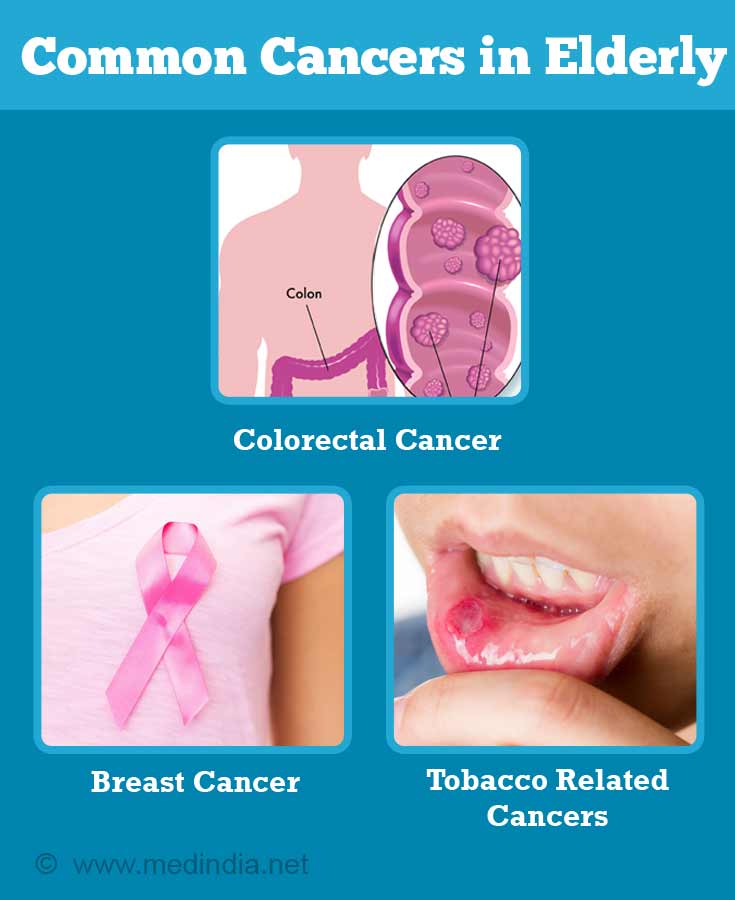
Some of the common cancers that develop during old age are colorectal cancer, breast cancer and tobacco-related cancers.
The treatment of cancer in the old is aimed to cure in case it is detected early. If cure is not possible, then managing the disease, by controlling the symptoms, is the only option.
What are the Neurological Ailments in the Elderly?
Alzheimer’s disease is fairly prevalent among older individuals. But the early-onset familial variety of the disease is known to occur before the age of 60. The early onset disease results from mutations in the genes that code for the proteins called ‘presenilins.’ The late onset disease, however, results in the E4 variant of the apo E gene (which is also involved in heart diseases).
There is a decline in the cognitive function in older individuals. And this is especially so in smokers and drinkers. The variants of the apoE gene is again believed to play a role.
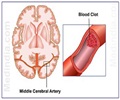
The older a person, the greater is the chance of suffering a stroke. A stroke can change the lives of the victim and also of those involved in patient care.
Dementia
Dementia is a term used to refer to a progressive decline in cognitive functions. It is characterized by a non–specific set of symptoms.
Although dementia can affect any adult it is primarily a disease of old age. About 5% of the world’s elderly suffer from dementia. In these individuals it comes about as a result of neurodegeneration that ushers in changes in the brain.There is an impairment in social behavior and emotional control and the affected individual is often prevented from doing things that they could earlier do.
The personality of an individual suffering from dementia undergoes a prominent change. Memory loss is strongly linked to dementia. Diseases such as Alzheimer’s disease and stroke can bring about dementia. Dementia is often not treatable but its onset can be slowed, and its symptoms controlled, with the help of medications.
Age-Related Macular Degeneration
Age-related Macular Degeneration (AMD) is cited as the most common cause of visual impairment in people in the developed countries, above the age of 60. Recently there is more data available on the macular degeneration in people belonging to the developing nations such as China and India.
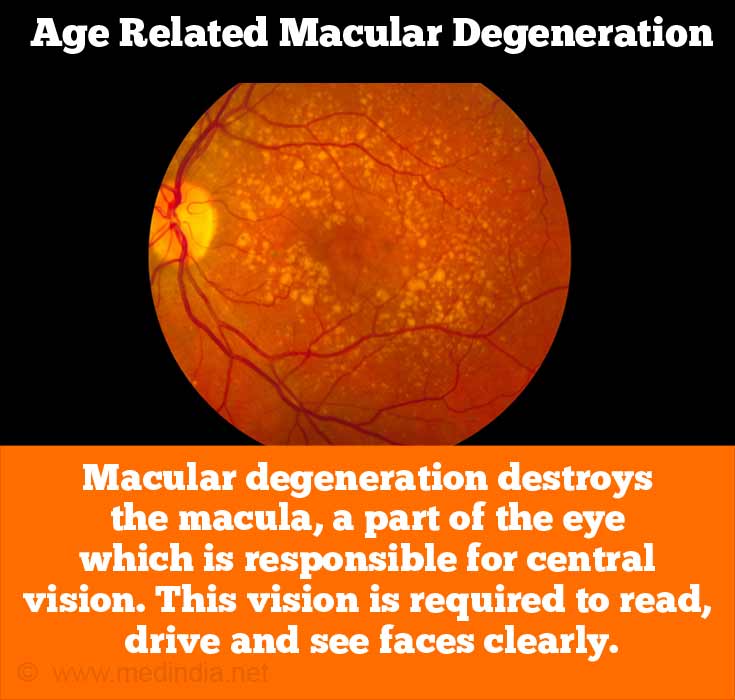
Macular degeneration destroys the macula, a part of the eye which is responsible for central vision. This vision is required to read, drive and see faces clearly.
Several causes such as age, smoking, genetics, nutrition have been implicated. The genetics of the condition is ill understood although apoE and its E4 variant is implicated.
In some people, the disease progresses so slowly that they hardly sense a change in their vision, while in others it can be faster. Regular check ups may help to detect the disease faster which in turn can help to provide treatments. These treatments can help to slow the disease progress but never to completely restore vision
Age-Related Hearing Loss/Presbycusis in Old Age
Presbycusis or age-related hearing loss refers to the slow loss of hearing that occur as you age.
This type of hearing loss occurs when the tiny hair cells inside the ear gets damaged.
Age-related hearing loss usually occurs due to
- Repeated exposures of loud noise to the ears
- Hereditary
- Medical conditions like diabetes
- Chemotherapy drugs
Osteoporosis in the Elderly
Osteoporosis is a condition that lowers bone density, causing the bones to be fragile and brittle. The bones become abnormally porous and resembles a sponge.
Osteoporosis is more common among older people, especially in women who are post-menopausal. Hormone Replacement Therapy (HRT) is often the course of management. In many, the disease creeps in without symptoms. The victim may be unaware of the condition until a painful fracture occurs. That is why old age is often characterized by falls and fractures, involving various parts of the body.
Research suggests that osteoporosis is strongly linked to genetics. Although a single gene has not been implicated, a combination of alleles of various genes have been understood to play a role in the disease.
Falls in the Elderly
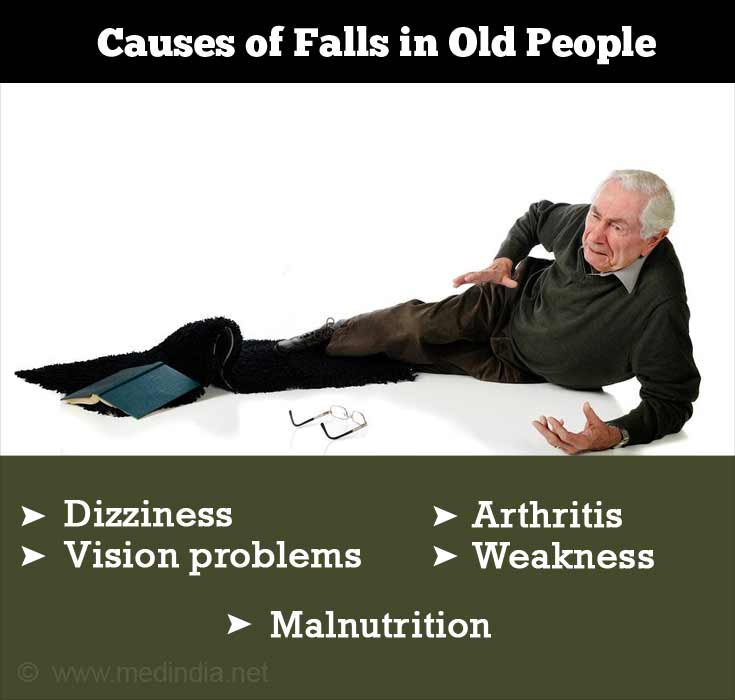
Falls in the elderly people often lead to serious injury. One out of three people above the age of 65 or older experience falls every year.
Some of the causes that lead to falls in senior include:
- Dizziness
- Vision problems
- Arthritis
- Weakness
- Malnutrition
Falls may result in fractures of the hip, spine, arms, pelvis, hands or in the ankle.
Managing Falls:
- Proper exercise, physical therapy and walking helps to strengthen the muscles and improves balance to prevent falls.
- It is also advisable that geriatric patients wear proper glasses to avoid vision problems to prevent falls.
- Consult the physician before taking any medicines that can make you feel dizzy.
What Old Age Really Means?
Older individuals may be physically or mentally challenged and may be forced to be dependent on others for most of their everyday activities. This dependency, compounded by the fact that their ‘utility value’ has decreased, can lead to despair among the aged.
By and large, it is important to be prepared for old age - both physically and emotionally. Good lifestyle habits, such as good food, adequate exercises and regular health checks can slow aging and calm its symptoms to a large extent. Emotionally it is important to accept old age as an inevitable part of life. Once it is accepted it becomes easier to deal with the changes that are integral to aging.
While it is essential for the young to be sympathetic, it is important for the seniors to realize that looking after them is not an easy or an enviable task as it may involve making changes in the routine or life pattern of the care-taker as well.
Understanding and co-operation on the part of the old and a sympathetic, empathetic approach on the part of the caregiver is paramount to geriatric care.
Why Do You Grow Old?
Aging has been a facet of life that has both fascinated and awed man for eons. Many a human life has been spent pondering on the possible causes of aging!
The role of heredity factors in aging have long been realized through the discovery of longevity genes and through the study of the early onset of old-age diseases.
Aging occurs at various levels- at the DNA, cells or tissues. If the cells are not repaired after a DNA damage, cells age or undergo self-destruction (apoptosis). Apoptosis, or programmed cell death, plays a vital role in controlling diseases like cancer. Nevertheless, it plays a crucial role in organ deterioration and failure. Aging is also attributed to the progressive impairment of the genes involved in the maintenance and repair of cells and tissues.
Cell senescence (or replicative senescence) is another phenomenon that is often referred to as the pathway of aging. After about 50 cycles of division, cells reach a ‘cul de sac’ and lose their ability to divide any further.
Environment too plays an important role in accelerating the aging process. Even if oxygen, which is a requisite for life, exceeds above 50%, the cells become cytotoxic.
Our present day lifestyle choices add to all the existing causes and aggravate morbidity during old age.
What are the Signs / Biomarkers of Aging
There are unique characteristics, signs or ‘biomarkers’ exclusive to aging. These biomarkers play a distinct role in ushering diseases during old age. The most distinct biomarker is the arrest of cell growth, when the cells stop dividing.
Some of the other prominent ones are listed below -
- An increase in the number and size of lysosomes in the senescent cells has been observed (Robbins et al., 1970;).
- The enzyme alpha-galactosidase has an abnormal behavior in the senescent or aging cells. This enzyme is normally active at pH 4, but in the case of senescent cells it is active at pH 6 (Judith Campisi et al., 1995).
- Increased digestion of the cell's organelles (autophagy) has been observed in senescent/ aging cells (Gerland et al., 2003).
- The percentage of polyploid cells (those with more than 2 copies of chromosomes) increases (Matsumura, 1980).
- Mutations in the mitochondrial DNA (mtDNA) also increase with age (Tanhauser and Laipis, 1995).
- Gene expressions change with age. Fargnoli et al., 1990 discovered a decreased ability in senescent cells to express heat shock proteins.
- Telomeres are non-coding regions of repeated sequences located at the tip of chromosome. The telomeres are known to shorten with age.