MEDINDIA
 English
 हिन्दी
 Español
 français
 中文
中文
 Email
Email
- Masoud Mardani, Maryam Keshtkar-Jahromi. Crimean-Congo Hemorrhagic Fever. Archives of Iranian Medicine 2007; 10 (2): 204 – 214.
About
Crimean-Congo Hemorrhagic fever (CCHF) is a viral disease that affects people who are bitten by infected ticks or who come in direct contact with blood and tissues of infected animals or patients.
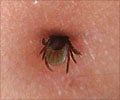
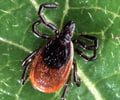
Crimean-Congo Hemorrhagic fever (CCHF) is a viral disease that spreads through tick bite. It was first described in Crimea in 1944 and was called Crimean Hemorrhagic fever. It was later also described in Congo, hence it was named Crimean-Congo Hemorrhagic fever. The disease is more common in Africa, Asia, East Europe and the Middle East. A recent outbreak has been reported in the Indian State of Gujarat.
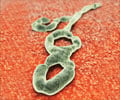
Crimean-Congo Hemorrhagic fever (CCHF) is caused by a virus belonging to a group called Nairovirus. The virus infects wild as well as domestic animals like sheep and cattle through tick bites. Humans are infected when they come in direct contact with blood or tissues from infected animals or bites of infected ticks. Crushing of infected tick could also result in infection. Infection may rarely occur if people breathe in the virus passed out in the infected animal’s excreta. Thus, people who work in close contact with livestock such as those working in agriculture, slaughterhouses and veterinary hospitals are at a higher risk of acquiring the disease.
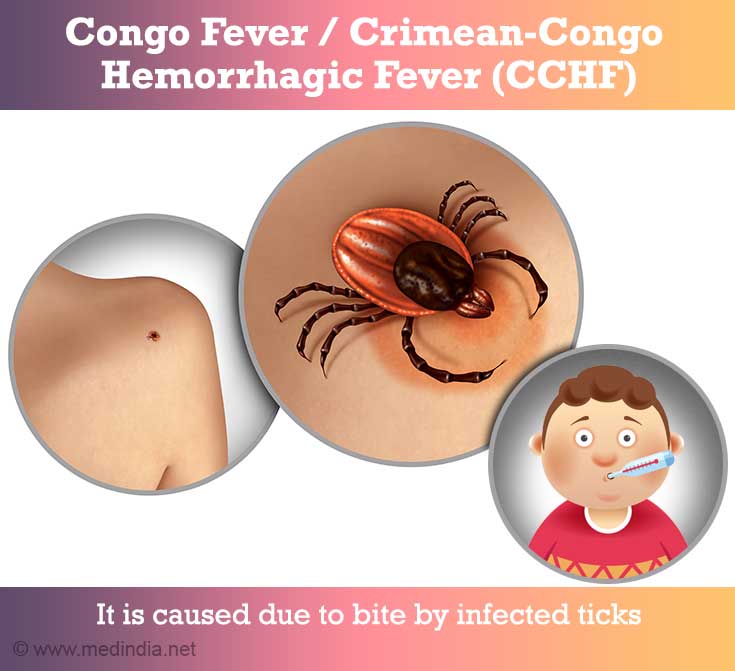
Once a human is affected, the infection spreads to other people if they come in contact with the patient’s infected blood or body fluids. Infection could also spread in hospitals during injections and surgical procedures. Hospital staff that treat patients with CCHF are at a higher risk for developing the infection.
A person cannot be infected by eating well-cooked infected meat since the virus does not survive cooking.
The patient may show general symptoms like high fever, headache, joint and muscle aches, nausea, stomach pain and loose motions. He may suffer from severe bleeding, jaundice, convulsions, and coma.
CCHF is diagnosed using tests like ELISA, isolation of the virus, antigen detection, and polymerase chain reaction. The patient is treated with intravenous fluids and an antiviral drug ribavarin.
Adequate precautions should be taken to avoid being infected in epidemics. People exposed to domestic animals or those undergoing activities like hiking should wear protective gear to avoid tick bites. Hospital staff should also take adequate precautions while treating patients with the disease. Ribavarin may be administered to people coming in close contact with patients.