MEDINDIA
 English
 हिन्दी
 Español
 français
 中文
中文
Rats whose mothers were fed a high-fat diet during pregnancy and nursing were able to stave off some of the detrimental health effects of obesity by exercising during their adolescence.


Mantra to Prevent Childhood Obesity � Vigorous Physical Activity
Being physically very active is the mantra to prevent pediatric obesity rather than concentrating efforts at restricting energy consumption.
Being physically very active is the mantra to prevent pediatric obesity rather than concentrating efforts at restricting energy consumption.
"Just three weeks of exercise early in life had a persistent effect on the satiety centers of the brains of these rat pups," says study leader Kellie L. K. Tamashiro, Ph.D., an associate professor of psychiatry and behavioral sciences at the Johns Hopkins University School of Medicine. "If we can find a way to take advantage of that phenomenon in humans that would be great, because preventing obesity is probably going to be much easier to do than reversing it."
Tamashiro and her colleagues fed pregnant rats a high-fat diet and continued that diet while they were nursing their pups. The animals were weaned on a healthier, standard low-fat diet and at four weeks of age, the equivalent of rodent early adolescence, some were given free access to running wheels in their cages, while the others remained sedentary. The running wheels were taken away after three weeks.

Childhood Obesity - Criteria - Causes - Complications, Treatment
Childhood obesity is one of the most serious health challenges in the developing countries and needs to be understood and tackled effectively.
Childhood obesity is one of the most serious health challenges in the developing countries and needs to be understood and tackled effectively.
Leptin is naturally secreted by fat cells and helps many people to maintain a healthy weight. But obese people who have more leptin circulating in the bloodstream because they have more fat appear to develop insensitivity to the hormone, and at a certain point, their brains stop responding to it, Tamashiro says.

Malnutrition to Obesity - The Big Leap
Obesity is the root cause of problems like diabetes, heart disease, stroke, arthritis and gall bladder disease. A serious look at our strategies is needed to tackle this fast growing epidemic.
Obesity is the root cause of problems like diabetes, heart disease, stroke, arthritis and gall bladder disease. A serious look at our strategies is needed to tackle this fast growing epidemic.
She says their research suggests that exercise may better enable human brains to respond to leptin and eat less.
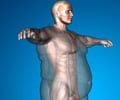
Obesity - Causes, Symptoms, Diagnosis, Complications, Treatment
Obesity is a condition where there is excess accumulation of body fat which poses a risk to the health of the individual. It can affect children and adults.
Obesity is a condition where there is excess accumulation of body fat which poses a risk to the health of the individual. It can affect children and adults.
Obese humans are often encouraged to exercise as part of a weight-loss program, but results are often frustration, Tamashiro says.
"Kids these days don't have as much opportunity for physical activity in school and are spending lots of time playing video games and engaging in other sedentary activities after school," she says. "Our research suggests that efforts to increase activity in kids could have positive long-term effects, regardless of whether they continue to exercise into adulthood."
Source-Eurekalert
 Email
Email