MEDINDIA
 English
 हिन्दी
 Español
 français
 中文
中文
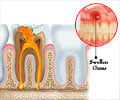
Bacteria, such as Streptococcus mutans,can be blamed for most tooth decay
Prevent Tooth Decay in Children by Using Dental Sealants
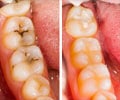
Dental sealants are considered as the quickest, safest and pain-free method to prevent cavities. Dental sealants are also known as pit and fissure sealants.
Dental sealants are considered as the quickest, safest and pain-free method to prevent cavities. Dental sealants are also known as pit and fissure sealants.
TOP INSIGHT

Candida can't effectively form plaque biofilms on teeth on its own nor can it bind S. mutans, unless in the presence of sugar.
Koo collaborated on the work with Penn Dental's Geelsu Hwang, the first author and a research assistant professor, as well as Yuan Liu, Dongyeop Kim and Yong Li. Damian J. Krysan of the University of Rochester was also a coauthor.
The research appears in the journal PLOS Pathogens.

Tooth Decay - Causes, Symptoms, Diagnosis, Treatment & Prevention
Tooth decay in toddlers, children and adults, also called dental caries, is a bacterial infection causing demineralization and destruction of the hard tissues of the teeth.
Tooth decay in toddlers, children and adults, also called dental caries, is a bacterial infection causing demineralization and destruction of the hard tissues of the teeth.
The researchers suspected that the outer portion of the Candida cell wall, composed of molecules called mannans, might be involved in binding GftB. To gain a more detailed understanding of the interaction between the yeast and the enzyme, the researchers measured the binding strength between various mutant Candida strains and GtfB using biophysical methods. Such measurements were developed by Hwang, who has a background in engineering and is applying his unique expertise to advance dental science.

Benefits of Coconut Oil Pulling
Oil pulling is a type of oral therapy that cleanses the oral cavity by expelling toxins. This is an ancient remedy for many oral problems.
Oil pulling is a type of oral therapy that cleanses the oral cavity by expelling toxins. This is an ancient remedy for many oral problems.
Using another biophysical technique, the researchers tested how stable the biofilms were when attached to a tooth-like surface. While low-shear stress, roughly equivalent to the force generated by taking a drink of water, removed only a quarter of the wild-type biofilm, the same force removed 70 percent of the biofilms with mutant Candida. When the forces were increased to the equivalent of a vigorous mouth rinse, the mutant biofilms were almost completely dislodged.

Dental Care for Babies, Toddlers, Preschoolers, Children
Initiating dental care at an early age can prevent tooth decay in children and also helps maintain overall oral health throughout life.
Initiating dental care at an early age can prevent tooth decay in children and also helps maintain overall oral health throughout life.
The findings point to a new direction for treatment of early childhood caries. The current standard of care, beyond the use of fluoride as a preventive approach, is to target only the bacteria with antimicrobials, or to use surgical interventions if the tooth decay has become too severe.
"This disease affects 23 percent of children in the United States and even more worldwide," said Koo. "In addition to fluoride, we desperately need an agent that can target the disease-causing biofilms and in this case not only the bacterial component but also the Candida."
Koo and colleagues are now working on novel therapeutic approaches for targeted interventions, which can be potentially developed for clinical use.
Source-Eurekalert
 Email
Email