MEDINDIA
 English
 हिन्दी
 Español
 français
 中文
中文
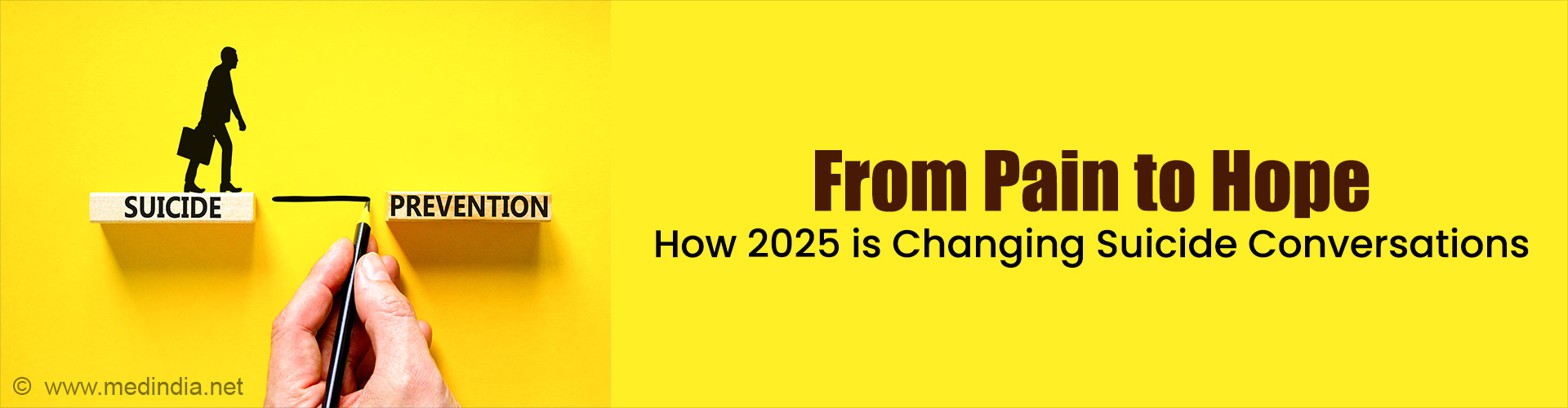
World Suicide Prevention Day 2025 emphasizes changing the way we talk about suicide to foster empathy, reduce stigma, and inspire action.
Highlights:
Each year on September 10, countries around the world unite to mark World Suicide Prevention Day. Organised by the International Association for Suicide Prevention, with support from the World Health Organization, the day serves as a powerful reminder of the urgent need to address suicide as a public health priority. It is a moment to reflect, reach out, and stand in solidarity with those affected by suicide (1✔ ✔Trusted Source- World Suicide Prevention Day 2025 urges open, honest conversations to reduce stigma around suicide
- The global theme “Changing the Narrative on Suicide” promotes empathy, understanding, and action
- More than 720,000 lives are lost to suicide each year, affecting countless families and communities
International Association for Suicide Prevention
Go to source). In 2025, this day continues to carry deep significance as communities across the globe gather with a shared commitment to saving lives. The collective focus this year is on fostering connection, hope, and honest dialogue, fundamental elements in preventing suicide and supporting those at risk.

Anxiety Screening Test
Are you anxious to know your anxiety level? Use Medindia’s Anxiety Screening Test, a simple online screening test for anxiety symptoms.
Are you anxious to know your anxiety level? Use Medindia’s Anxiety Screening Test, a simple online screening test for anxiety symptoms.
TOP INSIGHT

Did You Know?
Over 720,000 people die by suicide each year worldwide, yet many of these lives could be saved through simple conversations and awareness. #suicideprevention #mentalhealth #medindia
Campaign Focus on Changing the Way We Talk About Suicide
The theme for World Suicide Prevention Day 2025 is “Changing the Narrative on Suicide.” This message encourages a meaningful shift in how individuals, organisations, and governments approach the topic. The goal is to move from silence, stigma, and discomfort to conversations grounded in empathy, honesty, and action.By addressing suicide openly and without judgement, we can understand and create spaces where people feel safe to share their struggles. It is a call to replace fear with compassion and to actively challenge harmful myths that surround mental health and suicidal behaviour.

Depression Screening Test
Online Depression Screening Test tells if you have mild or chronic depression based on your depression symptoms. Learn how to deal with depression by using this self-assessment calculator.
Online Depression Screening Test tells if you have mild or chronic depression based on your depression symptoms. Learn how to deal with depression by using this self-assessment calculator.
Impact of Suicide on Individuals and Society
Suicide is not only a tragic loss of life but also a serious public health crisis that leaves a lasting mark on families, communities, and societies. More than 720,000 people die by suicide globally each year.Behind every statistic is a person with a story, a loved one, a colleague, or a friend. These numbers represent unimaginable grief and the ripple effect that suicide has on those left behind.

Breaking the Silence: World Suicide Prevention Day
World Suicide Prevention Day urges open conversations, policy advocacy, and support to combat suicide stigma and save lives.
World Suicide Prevention Day urges open conversations, policy advocacy, and support to combat suicide stigma and save lives.
Recognising Signs Can Lead to Early Support
In many cases, individuals who are struggling show signs, some subtle, others more visible. Understanding these signals can be the first step in providing help.Some common warning signs include:
- Expressing thoughts of hopelessness or a desire to die
- Withdrawing from daily life and relationships
- Sudden mood changes or increased substance use
- Changes in sleep or eating patterns
- Unusual behaviour, such as giving away prized possessions

Let Us Take Action to Prevent Suicidal Thoughts
Young-onset suicidal ideation is connected to childhood psychological distress, turbulent behavior, and emotional symptoms.
Young-onset suicidal ideation is connected to childhood psychological distress, turbulent behavior, and emotional symptoms.
Five Key Actions That Can Make a Difference
To support this year’s campaign, the National Office for Suicide Prevention has shared five important messages for communities to embrace and act upon:- Take the Time to Reach Out – Connecting with someone through a simple message or call can be a powerful act of hope.
- Speak Thoughtfully and Kindly – Words carry weight. Use language that is compassionate and respectful when discussing suicide.
- Be Mindful Online – Share content related to suicide in a responsible and sensitive way, contributing to a safer digital environment.
- Learn to Talk About It – Build your awareness and confidence in recognising signs and offering help. Your response could change or save a life.
- Know Where to Turn – Being familiar with available support services ensures help can be accessed quickly when it’s needed.
Understanding Root Causes Behind Suicidal Thoughts
Suicide is complex, with no single cause. It often results from a combination of emotional, psychological, and social factors. Mental health challenges such as depression or anxiety, past trauma, social isolation, or major life stress can all contribute.Substance misuse, ongoing illness or disability, and personal losses like relationship breakdowns or financial hardship can also heighten vulnerability. Recognising these factors helps us respond with greater empathy and appropriate support, rather than judgement.
Access to Help and Support Saves Lives
Effective suicide prevention also depends on ensuring people know where and how to get help. Whether facing a personal crisis or supporting someone else, accessible resources are essential.Support systems include:
- 24/7 helplines that offer confidential, immediate emotional support
- Mental health professionals who provide therapy and structured care
- Peer and community support groups where experiences can be shared
- Local programmes offering education and practical guidance
- Hospital-based services for individuals in acute need of psychiatric care
Bringing Hope Through Collective Action
World Suicide Prevention Day 2025 is not just a symbolic day, it is a rallying point for communities, leaders, and individuals to step forward and act. Through shared understanding, open dialogue, and supportive environments, we can change lives.By changing how we speak, think, and act about suicide, we change the narrative. Together, we can create a future where those in pain feel less alone, where help is available without shame, and where hope truly becomes action.
Reference:
- International Association for Suicide Prevention - (https://www.iasp.info/)
Source-Medindia
 Email
Email