MEDINDIA
 English
 हिन्दी
 Español
 français
 中文
中文
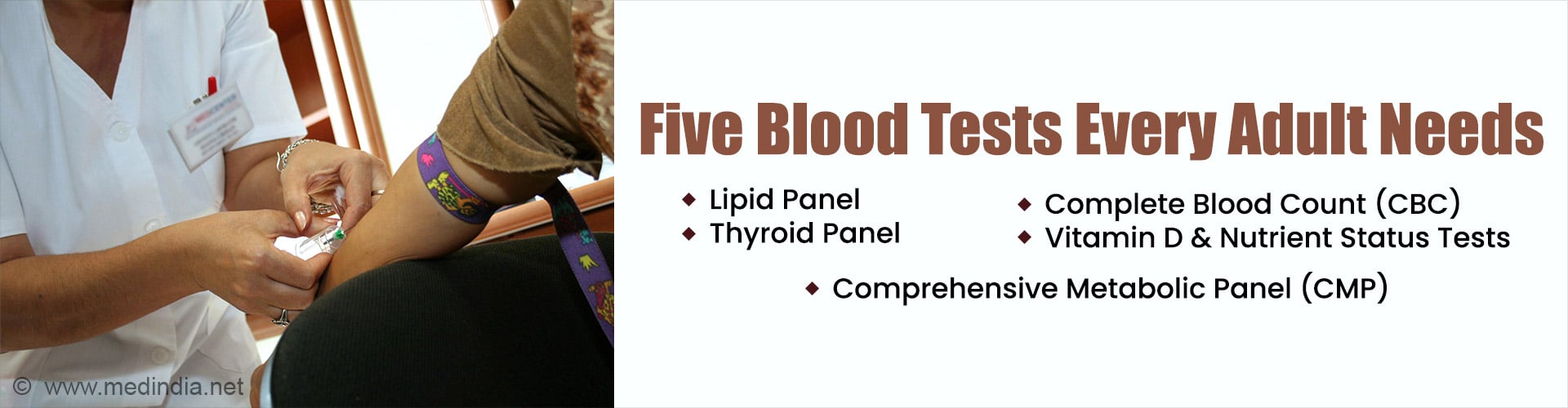
Your blood could hold the key to your health. Here are the five crucial tests that unlock your body’s hidden signals.
Highlights:
Getting a blood test is one of the clearest ways to view how your body is working internally. Medical experts describe bloodwork as a window into organ health, nutrition status and disease risk (1✔ ✔Trusted Source- The Complete Blood Count (CBC) provides a broad check of blood and immune health, spotting issues like anemia or infection early
- A Comprehensive Metabolic Panel (CMP) and lipid panel give insight into organ function, metabolism and cardiovascular risk before symptoms arise
- Testing thyroid function and nutrient status uncovers hidden imbalances that affect mood, energy and long-term health
Blood Tests
Go to source). Rather than waiting for symptoms to appear, picking the right set of blood tests helps catch issues early and manage health proactively.
Top 7 Blood Tests to Prioritize For Annual Medical Health Check-up
Why get annual blood tests? What are the top 5 blood tests for an annual medical health checkup? Find out now.
Why get annual blood tests? What are the top 5 blood tests for an annual medical health checkup? Find out now.
TOP INSIGHT

Did you know?
Your blood test results still reflect your breakfast from the day before. That morning smoothie might shift blood sugar or nutrient markers! #BloodTestFacts #KnowYourNumbers #HealthCheck #medindia
Complete Blood Count (CBC) – Assessing Blood and Immune Health
The Complete Blood Count (CBC) measures red blood cells, white blood cells, hemoglobin and platelets (2✔ ✔Trusted SourceBlood Tests
Go to source). It helps detect conditions such as anemia, infections or blood-related disorders. If you feel persistent fatigue, weakness or unusual bleeding, a CBC can provide important clues. It is very commonly used because it gives a quick overview of your general blood health.

Insulin in Saliva Could Predict Diabetes Long Before Blood Tests Do
Non-invasive saliva testing reveals insulin levels that indicate metabolic health risks including Type 2 diabetes and obesity.
Non-invasive saliva testing reveals insulin levels that indicate metabolic health risks including Type 2 diabetes and obesity.
Comprehensive Metabolic Panel (CMP) – Checking Metabolism, Kidney and Liver
The Comprehensive Metabolic Panel includes typically 14 substances related to liver enzymes, kidney function, blood sugar, electrolytes and proteins (1✔ ✔Trusted SourceBlood Tests
Go to source). Your kidneys and liver play major roles in filtering waste and processing nutrients. If those organs are under strain, or if your blood sugar is elevated, the CMP will flag the imbalances. For people with risk factors like high glucose, high blood pressure or medication use, this test is very informative.

Important Blood Tests to Take Before Starting a Gym Routine
Blood tests are vital before starting gym workouts to ensure your health and tailor fitness plans effectively.
Blood tests are vital before starting gym workouts to ensure your health and tailor fitness plans effectively.
Lipid Panel – Measuring Heart and Vascular Risk
A Lipid Panel measures cholesterol types (HDL, LDL) and triglycerides (1✔ ✔Trusted SourceBlood Tests
Go to source). High levels of “bad” cholesterol (LDL) and triglycerides tend to increase the risk of heart disease by promoting arterial narrowing or plaque buildup. Early awareness of unfavorable lipid readings gives you a chance to adjust diet, exercise and lifestyle in time.

Blood Tests Blocked? Medicare’s Policy Shift Puts Transplant Patients in Danger
Discover how Medicare's coverage changes impact critical blood tests for transplant patients.
Discover how Medicare's coverage changes impact critical blood tests for transplant patients.
Thyroid Panel – Monitoring Hormones and Metabolism
The thyroid gland regulates metabolism, energy levels and many body systems. A basic Thyroid Stimulating Hormone Test (TSH) and additional thyroid-hormone tests can pick up underactive or overactive thyroid. Symptoms such as unexplained weight change, fatigue, mood shifts, or hair loss might stem from thyroid imbalance. Testing allows you to address these issues early.Vitamin D and Nutrient Status – Identifying Hidden Deficiencies
Many people feel “okay” but still harbour nutrient deficiencies which impact immune function, bone health, mood and energy. A simple vitamin D blood test (and sometimes B12, iron or ferritin) helps flag whether you are low on key nutrients (3✔ ✔Trusted Source10 Common - and Not-So-Common Blood Tests You Should Know About
Go to source). For example, low vitamin D is associated with weaker bones and low immunity. Because these deficiencies develop slowly without overt symptoms, the test is valuable for preventive health.
Making Sense of Your Blood Test Results
When you receive your report, you’ll likely see a “reference range” telling you what counts as “normal” for each marker. If a result is outside this range, your doctor may recommend further tests, lifestyle changes or monitoring. Remember that blood results are one part of a bigger picture: your symptoms, history and lifestyle all matter.How Often Should You Get Blood Tests?
There is no “one-size-fits-all” schedule. For many adults a yearly check-up including CBC, CMP and lipid panel is reasonable unless you have specific risk factors. If you have thyroid concerns or nutrient issues, you might test more often. Your doctor will advise based on age, health status and family history.Blood tests provide a non-invasive, powerful way to check your internal health. The five tests discussed — CBC, CMP, lipid panel, thyroid panel and nutrient status — each cover a vital domain of health. By staying informed and doing the right tests at the right time, you provide your body with an opportunity to head off problems before they escalate. Work with your healthcare provider to choose what fits your life and risk profile.
References:
- Blood Tests - (https://my.clevelandclinic.org/health/diagnostics/24508-blood-tests)
- Blood Tests - (https://www.nhlbi.nih.gov/health/blood-tests)
- 10 Common – and Not-So-Common Blood Tests You Should Know About - (https://www.elcaminohealth.org/stay-healthy/blog/10-common-and-not-so-common-blood-tests-you-should-know-about)
Source-Medindia
 Email
Email