MEDINDIA
 English
 हिन्दी
 Español
 français
 中文
中文
The association between aspirin use and risk of colorectal cancer is affected by mutation of the gene BRAF suggesting that BRAF-mutant colon tumor cells may be less sensitive to the effect of aspirin.

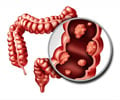
Colorectal Cancer - Types, Causes, Risk Factors, Symptoms, Diagnosis, Treatment, Prognosis & Prevention
Colorectal cancer is a cancer that starts in the colon or the rectum. Colorectal cancer is the third most common cancer in men.
Colorectal cancer is a cancer that starts in the colon or the rectum. Colorectal cancer is the third most common cancer in men.
Among 127,865 individuals, 1,226 incident rectal and colon cancers were identified with available molecular data. The researchers found that regular aspirin use was associated with a significantly lower risk (27 percent) of BRAF-wild-type cancer. Regular aspirin use was not associated with a lower risk of BRAF-mutated cancer. "The association of aspirin use with colorectal cancer risk differed significantly according to BRAF mutation status."
The authors also observed a lower risk of BRAF-wild-type cancer with increasing aspirin tablets per week; however, there was not a significant trend in risk reduction for BRAF-mutated cancer. "The association of aspirin tablets per week with cancer risk differed significantly by BRAF mutation status. Compared with individuals who reported no aspirin use, a significantly lower risk of BRAF-wild-type cancer was observed among individuals who used 6 to 14 tablets of aspirin per week and among those who used more than 14 tablets of aspirin per week."

Colorectal Cancer Screening
Colorectal screening is done using tests to detect blood in stool, colonoscopy or sigmoidoscopy ordouble contrast barium enema or CT colonography.
Colorectal screening is done using tests to detect blood in stool, colonoscopy or sigmoidoscopy ordouble contrast barium enema or CT colonography.
"There was no statistically significant interaction between post-diagnosis aspirin use and BRAF mutation status in colorectal cancer-specific or overall survival analysis. This suggests that the potential protective effect of aspirin may differ by BRAF status in the early phase of tumor evolution before clinical detection but not during later phases of tumor progression," the authors write.

Colorectal Cancer Screening with Colonoscopy
Colonoscopy is a widely used endoscopic procedure to screen individuals for colorectal cancer. It is very sensitive in detecting colorectal cancers.
Colonoscopy is a widely used endoscopic procedure to screen individuals for colorectal cancer. It is very sensitive in detecting colorectal cancers.
Source-Newswise
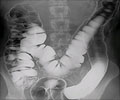
Colorectal Cancer Screening with Double-Contrast Barium Enema
Double-contrast barium enema is a radiological technique that can be used to screen individuals for colorectal cancer and is performed when colonoscopy is not possible.
Double-contrast barium enema is a radiological technique that can be used to screen individuals for colorectal cancer and is performed when colonoscopy is not possible.
 Email
Email