MEDINDIA
 English
 हिन्दी
 Español
 français
 中文
中文
Current therapy for stroke is unfortunately very limited. There is only one drug, tPA, and tPA needs to be administered within hours of onset of a stroke.

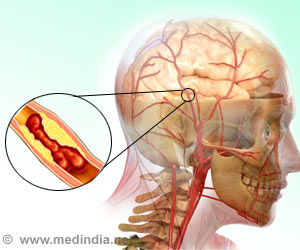
Loss Of Brain Interconnections in Stroke May Impair Speech
Damage to the rich club network of interconnections can impair various speech and reading functions in much the same way as direct damage to brain.
Damage to the rich club network of interconnections can impair various speech and reading functions in much the same way as direct damage to brain.
TOP INSIGHT

Despite public education and the development of stroke centers, only about 7 percent of all ischemic stroke patients nationwide receive tPA therapy.
Cathy Sila, MD, Director of the Comprehensive Stroke Center at UH Case Medical Center, and Professor of Neurology at Case Western Reserve University, was the principal investigator of the study at UH Case Medical Center.
"These results are very promising and this therapy would be an important adjunct to acute stroke care to reduce the amount of brain injury from which patients need to recover," said Dr. Sila. "But the results are still preliminary and need to be reproduced." Since MultiStem therapy seems to be effective when given at 24 to 36 hours after the stroke, it means many more stroke victims would be eligible for treatment, she said.
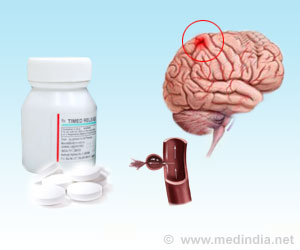
Anti-Stroke Drug Reduces Mortality and Disability Risk of Intraventricular Hemorrhage
Intraventricular hemorrhage has an estimated mortality rate of 60 and 80 percent. Among those who survive, as many as 90 percent become severely disabled.
Intraventricular hemorrhage has an estimated mortality rate of 60 and 80 percent. Among those who survive, as many as 90 percent become severely disabled.
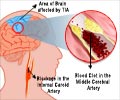
Ischemic stroke is caused by blockage in an artery in or to the brain, that impedes blood flow, and that can result in serious disability or even death. MultiStem® is a proprietary medication made by the Cleveland-based biotech company Athersys.

Diabetes Drug Pioglitazone may Prevent Recurring Strokes
Pioglitazone, a drug used for type 2 diabetes, may prevent recurrent stroke and heart attacks in people with insulin resistance.
Pioglitazone, a drug used for type 2 diabetes, may prevent recurrent stroke and heart attacks in people with insulin resistance.
MultiStem® cells appear to reduce the local inflammatory response and protect neurons in the brain, while modulating the body's general immune response and inflammation which leads to additional damage to the brain in the days immediately following the stroke. This is an entirely new concept for how cell therapies may provide benefit following central nervous system injury.

Oral Bacteria May Increase The Risk Of Certain Types Of Stroke
About 26% of the patients who experienced intracerebral hemorrhage were found to have a specific bacterium in their saliva, cnm-positive Streptococcus mutans.
About 26% of the patients who experienced intracerebral hemorrhage were found to have a specific bacterium in their saliva, cnm-positive Streptococcus mutans.
Source-Eurekalert
 Email
Email