MEDINDIA
 English
 हिन्दी
 Español
 français
 中文
中文
Gene activation tech cuts seizures in mice with SCN2A deficiency, a severe brain disorder causing speech delays and seizures.
Can CRISPR Fix a Childhood Brain Disorder?
Go to source). When brain development gets off to a bad start, the consequences are lifelong.
One example is a condition called SCN2A haploinsufficiency, in which children are born with just one functioning copy of the SCN2A gene — instead of the normal two. They develop defects in the connections, or synapses, between some of their brain cells; they do not learn to speak; and many of them experience seizures.
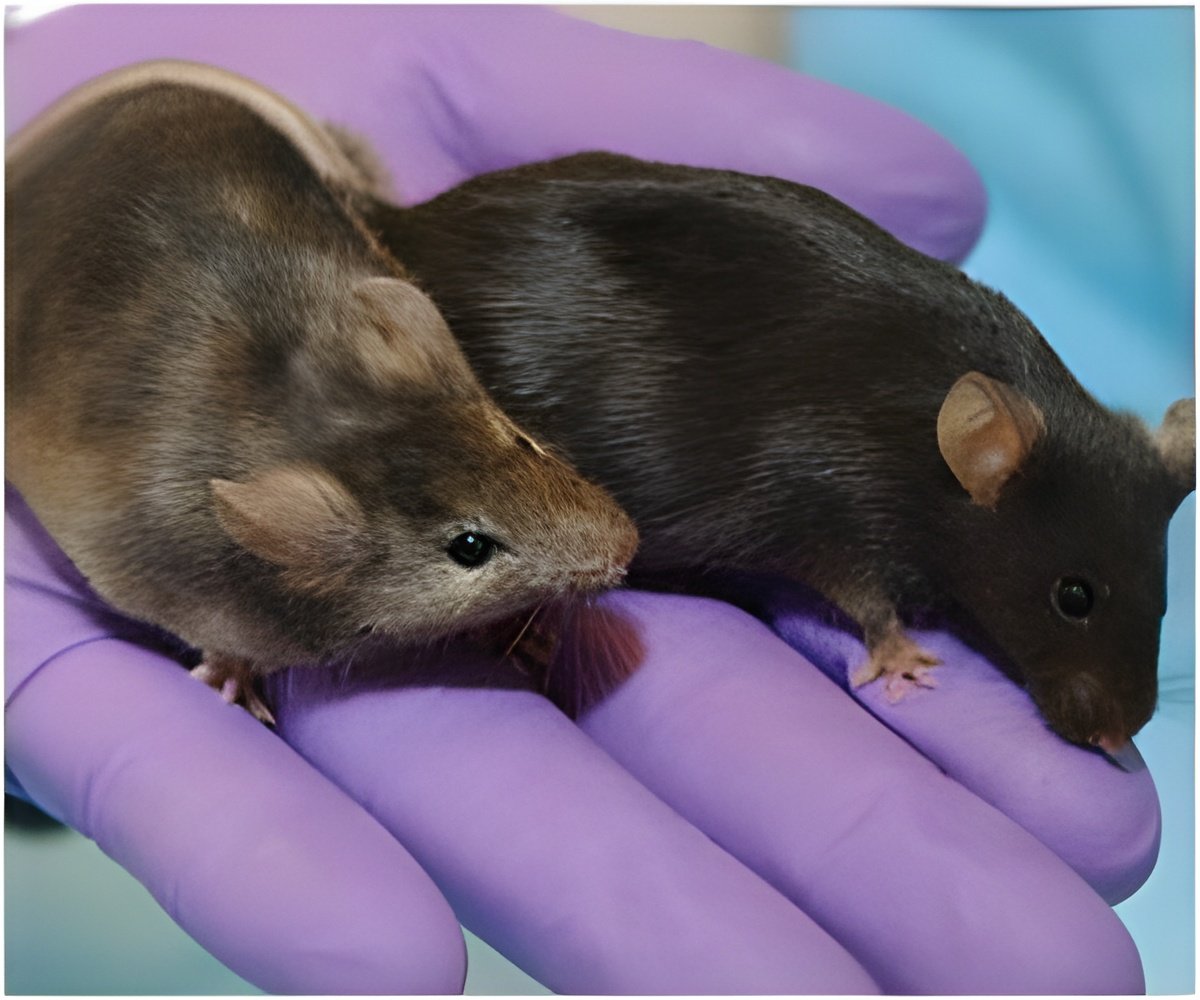
Now, scientists at UC San Francisco have used a version of the gene-editing technology CRISPR to ameliorate some of these problems in mice, which can be engineered to carry the same mutation that humans do. But rather than trying to edit the defective copy of the gene, the scientists just turned up the volume on the healthy one.
The procedure worked in mice that were roughly equivalent in age to 10-year-old children, a clue that the brain may still be amenable to treatment well after much of its development has been completed. This is likely because SCN2A haploinsufficiency compromises how the brain fine-tunes its signals, but it does not affect other aspects of brain development.
The study, which was supported by the National Institutes of Health, appears in Nature on Sept. 17.
“We were surprised to see that the anatomy of the brain is totally intact — the synapses are there, but they fail to mature — when there isn’t enough SCN2A,” said Kevin Bender, PhD, a professor in the UCSF Weill Institute for Neurosciences and co-senior author of the study. “By ramping up SCN2A levels in the brain, we brought those synapses online and restored signaling that prevented seizures.”
CRISPR Technology Helps Identify Genes Involved in Diseases
With a new technology developed by University of Utah Health scientists called MIC-Drop, the zebrafish could be more powerful for large-scale genetic studies.
With a new technology developed by University of Utah Health scientists called MIC-Drop, the zebrafish could be more powerful for large-scale genetic studies.
TOP INSIGHT

Did You Know?
CRISPRa can turn genes ON like a light switch without cutting DNA! Scientists can wake up multiple genes at once, tweak hidden gene switches, and even boost helpful genes, potentially helping fight genetic diseases.#crispra #scn2a #genetherapy #neurodevelopmentaldisorders #medindia
CRISPRa: Precision Gene Activation
More than a decade ago at UCSF, a new type of CRISPR was developed by Jonathan Weissman, PhD. It could find a gene and trigger its expression without creating DNA edits, and was dubbed CRISPRa, for “activation.”“This can compensate for the shortage of a gene that results from having just one good copy,” said Nadav Ahituv, PhD, director of the UCSF Institute for Human Genetics, professor in the Department of Bioengineering and Therapeutic Sciences, and co-senior author of the paper.
In 2018, a team led by Ahituv used CRISPRa to treat a model of severe obesity in mice caused by the loss of one copy of an obesity-related gene.
Bender heard of Ahituv’s success with CRISPRa and obesity and realized it might also resolve the neurodevelopmental issues that come with insufficient SCN2A. The two UCSF scientists teamed up to see if it could work.
World's First CRISPR-Based Gene Therapy for Blood Disorders
UK has given the green light to the world's inaugural gene therapy for sickle-cell disease and thalassemia.
UK has given the green light to the world's inaugural gene therapy for sickle-cell disease and thalassemia.
Understanding SCN2A Haploinsufficiency
SCN2A haploinsufficiency, which means half the normal level of SCN2A, can lead to epilepsy, neurodevelopmental delay, and autism. It’s caused by mutations in the SCN2A gene that cripple its ability to produce a healthy protein.Less SCN2A protein, in turn, means that brain cells, even when they’ve wired together, cannot adjust their signals — like turning the dial of a radio to find the right station. Such adjustment is the basis for how the brain learns.
“This persistent function of SCN2A is critical for your ability to be human and experience and learn about the world,” Bender said.

CRISPR Gene Editing for Common Blood Disorders
CRISPR gene editing could be used to exploit naturally occurring mutations as treatments for blood diseases such as beta-thalassemia and sickle cell disease, revealed researchers.
CRISPR gene editing could be used to exploit naturally occurring mutations as treatments for blood diseases such as beta-thalassemia and sickle cell disease, revealed researchers.
Modeling the Disease in Mice
Last year, Bender's team discovered a quirk in the eye movements of mice engineered to have SCN2A haploinsufficiency — something they later observed in children with the disorder. The quirk could serve as the basis for an easy clinical test for SCN2A haploinsufficiency in humans.The finding also meant they could study the disorder more readily in mice, since, according to Bender, it's rare for mutations that are found in people with autism to result in similar problems in mice.
The Bender laboratory meticulously tested what this lack of SCN2A did to mice. Having less SCN2A made the mice prone to seizures and altered signals in their brain.
“Thanks to the beautiful characterization of physiology and behavior in the mice done by Kevin and his lab, we knew what needed to be restored to show that our CRISPRa approach was working,” Ahituv said.

How Soft CRISPR Offers a Fix for Genetic Defects?
A new method that uses natural DNA repair machinery provides a basis for novel gene treatment strategies with the possibility to cure genetic diseases.
A new method that uses natural DNA repair machinery provides a basis for novel gene treatment strategies with the possibility to cure genetic diseases.
CRISPRa Restores SCN2A and Brain Function
Ahituv’s lab designed the CRISPRa to find the healthy copy of SCN2A and dial it up so it produced the same amount of protein that two copies of the gene would. And Bender’s lab tested it in mice with SCN2A haploinsufficiency.The CRISPRa intervention increased levels of SCN2A throughout the brain. The scientists saw normal amounts of SCN2A in nerve cells. But these animals had grown up with too little SCN2A from birth, and the mice were now a few weeks old, which is akin to a pre-adolescent human.
Remarkably, the additional SCN2A protein gave new life to the existing neural connections in these mice. Their brain signals looked normal, and they no longer were prone to seizures.
The intervention worked both when the CRISPRa was introduced directly to the brain and also when it was injected into the blood. Regel Therapeutics has licensed this technology from UCSF to treat patients with SCN2A haploinsufficiency disorders.
A key consideration will be how the brain responds to adding more SCN2A protein. The team was encouraged to find that it didn’t harm healthy mice, those with two functioning copies of the gene.
"Too much of any protein might cause a lot of trouble,” Ahituv said. "We found that there is a natural limit to levels of this protein in SCN2A mice, but future therapies will need to confirm the safety of the approach in humans.”
For such a severe disorder, the prospect of a treatment that works well into childhood would be miraculous.
“A therapy like this in the clinic could improve their ability to talk and even live independently,” Bender said. “We hope our work can help make these dreams a reality.”
Reference:
- Can CRISPR Fix a Childhood Brain Disorder? - (https://www.ucsf.edu/news/2025/09/430716/can-crispr-fix-childhood-brain-disorder)
Source-University of California - San Francisco
 Email
Email