MEDINDIA
 English
 हिन्दी
 Español
 français
 中文
中文
Shifting to nutritious, eco-friendly diets is essential, and school guidelines help students lower their environmental impact.

Less meat and fish, more legumes and varied cereals in school menus can cut environmental impact by up to 50%.
Go to source)
Within this effort, school dietary recommendations can play a meaningful role by shaping students’ eating habits in ways that lower their environmental footprint.
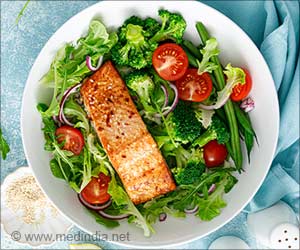
Nutritious Foods Have a Lower Environmental Impact Than Unhealthy Foods
Widespread adaptation of healthier diets would markedly decrease the environmental impact of agriculture and food production, reveals a new study.
Widespread adaptation of healthier diets would markedly decrease the environmental impact of agriculture and food production, reveals a new study.
TOP INSIGHT

Did You Know?
Replacing #rice with #climate_resilient_cereals can cut #environmental impact in #school_meals. The environmental footprint of a single #school_lunch can vary by 300% based on the #protein_source, #legumes produce far lower emissions by fixing nitrogen naturally.
#sustainablefoodsystems #schoolnutrition #environmentalimpact #plantbasedresearch #climatehealth
Evolving School Menu Guidelines and Their Impact
Research by the Universitat Oberta de Catalunya (UOC), the Barcelona Institute for Global Health (ISGlobal) – a "la Caixa" Foundation partnership – , the Public Health Agency of Catalonia (ASPCAT), the UNESCO Chair in Life Cycle and Climate Change ESCI-UPF and the Barcelona School of Management (BSM-UPF) of Pompeu Fabra University (UPF) has analyzed the dietary guidelines for schools published by ASPCAT since 2005 (with updates in 2012, 2017 and 2020), which are used by schools to design healthy menus."This is one of the first articles to focus on school menus, viewing the canteen as a place of learning where children adopt eating habits that can last a lifetime," explained Júlia Benito-Cobeña, one of the authors of the study, whose final project for the UOC's online Master's Degree in Healthy and Sustainable Food is the basis of this research.
She said: "The ASPCAT updated its guidelines in 2020 taking sustainability criteria into account. This study verifies that the environmental impact has indeed decreased, and we have contributed information to design new menus that further reduce the impact of school meals."
The research team was jointly led by Ujué Fresán, researcher at ISGlobal and course instructor at the UOC, and Laura Batlle-Bayer, from ESCI-UPF.
Available in open access in Science of the Total Environment, the study analyzes the four versions of the guidelines, with results that show progressive changes in the environmental impact of school menus for children aged 7 to 12.
The authors compared the environmental impact using 16 environmental indicators, including acidification, water scarcity, human toxicity, use of mineral resources and metals, and use of fossil resources, as well as an indicator of their composite environmental footprint.
Using the 2005 guidelines as a baseline, the updates introduced in 2012, 2017 and 2020 reduced the environmental footprint by 9%, 22% and 40%, respectively. All the individual indicators also showed significantly lower environmental impacts in 2020 compared to 2005, with reductions ranging from 5% to 52%.

Environmental Impact Stamps on Food Will Lead to More Sustainable Choices
When eating out, people tend to make more environment friendly choices if their foods are labeled as sustainable or not.
When eating out, people tend to make more environment friendly choices if their foods are labeled as sustainable or not.
Identifying High-Impact Food Groups
Also involved in the study was Anna Bach, member of the UOC's Faculty of Health Sciences, co-coordinator of the Nutrition, Food, Health and Sustainability (NUTRALiSS) research group, part of the eHealth Centre. With her support, the team analyzed which food groups have the greatest impact on each environmental indicator and proposes changes that maintain both the macronutrient distribution and the nutritional quality of the menus intact.The second courses, mainly meat and fish, were shown to contribute most to the environmental impacts. Including more plant-based proteins and less meat and fish, combined with a more diversified cereal intake, reduces the environmental impacts of meal plans by about 50%.
"Fruit and rice are the main contributors to water consumption, but fruit plays an essential role in healthy eating, which is why it's advisable to eat it in four out of every five meals. Reducing the consumption of fruit would have a negative effect on health," she explained.
The study shows that rice can be replaced by other cereals that are more adaptable to climate change, which would also reduce the environmental impact.

Easy 8 Ideas for Packing Healthier School Lunches
Quick and healthy packed lunch ideas need not be boring, and repetition of the same foods over and over again. Here are a few tips for packing healthier school lunches.
Quick and healthy packed lunch ideas need not be boring, and repetition of the same foods over and over again. Here are a few tips for packing healthier school lunches.
Overcoming Acceptance Barriers and Community Perceptions
As for people's reluctance to accept the changes proposed, especially among families, the study cites the false belief that plant-based menus are bland and nutritionally deficient."There are also barriers to acceptance among children: if they're not cooked and presented attractively, children are less likely to want to eat certain foods, such as vegetables and legumes. To overcome these difficulties, we will have to work together with families, the school's staff and the kitchen," said the author. "It would also be necessary to study the extent to which these guidelines are implemented in schools," she added.

School Lunch, chicken nuggets, whole grain breaded - Nutrition Facts
Know nutrition and calorie facts in 100gms of School Lunch, chicken nuggets, whole grain breaded. Includes - total fat, carbohydrates, proteins, vitamins and minerals.
Know nutrition and calorie facts in 100gms of School Lunch, chicken nuggets, whole grain breaded. Includes - total fat, carbohydrates, proteins, vitamins and minerals.
Implications Beyond Catalonia
Although the study has focused on Catalan guidelines, its results could be extrapolated to the recommendations for the whole of Spain set out in the Royal Decree on the promotion of healthy and sustainable eating in schools, which was published last April by the Ministry of Social Rights, Consumer Affairs and the 2030 Agenda.Reference:
- Less meat and fish, more legumes and varied cereals in school menus can cut environmental impact by up to 50% - (https://www.uoc.edu/en/news/2025/replace-animal-protein-to-reduce-environmental-impact-in-school-diets)
 Email
Email