MEDINDIA
 English
 हिन्दी
 Español
 français
 中文
中文
Psoriasis is a common chronic inflammatory disorder, primarily of the skin which has been associated with major physical and psychosocial health burdens.


Medicare Psoriasis Patients Fail to Continue Long-Term Biologic Treatment
Psoriasis is a common chronic inflammatory disorder, primarily of the skin and its associated with major physical and psychosocial health burdens.
Psoriasis is a common chronic inflammatory disorder, primarily of the skin and its associated with major physical and psychosocial health burdens.
TOP INSIGHT

Interruptions in biologic treatment for psoriasis is associated with poorer outcomes compared to continuous therapy.
In the study, published online in the Journal of the American Academy of Dermatology, Doshi and her colleagues looked at national Medicare claims data for patients with plaque psoriasis, and specifically at the 2,707 moderate to severe plaque psoriasis patients in the cohort who initiated treatment during 2010-2011 with the biologics infliximab (Remicade®), etanercept (Enbrel®), adalimumab (Humira®), or ustekinumab (Stelara®).
The team found that the patients' use of biologics during the year following initiation, on average, translated into medication coverage for only 61 percent of the days in that year. Those patients whose prescriptions covered at least 80 percent of the days were classified as "adherent" to their medication-but only 38 percent reached that threshold. Nearly half of the patients (46 percent) discontinued their medication during the year. Relatively few patients (8 percent) switched to another biologic, and 9 percent restarted biologic therapy after a gap of at least 90 days.
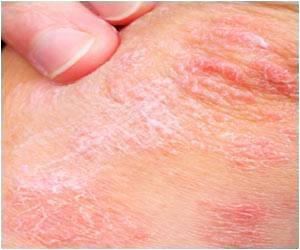
Psoriasis can be Triggered by Environmental Factors As Well
One of the known genetic factors involved in psoriasis is CARD14. Mutations in this gene control the expression of several factors that drive skin inflammation.
One of the known genetic factors involved in psoriasis is CARD14. Mutations in this gene control the expression of several factors that drive skin inflammation.
The team looked at several factors that might have affected adherence and identified higher out-of-pocket costs as a strong possibility: Patients who were ineligible for subsidies under Medicare Part D (and thus responsible for high cost sharing) were more likely to be non-adherent and discontinue their biologic treatment. Female patients also were more likely to be non-adherent.

Novartis Launches Scapho Drug for the Treatment of Psoriasis
The generic name of Scapho is secukinumab, which is an injectable medicine and the first interleukin-17A (IL-17A) inhibitor to be approved in India.
The generic name of Scapho is secukinumab, which is an injectable medicine and the first interleukin-17A (IL-17A) inhibitor to be approved in India.
The team now hopes to conduct studies of patient- and provider-reported reasons for such observed patterns in biologic treatment use. They also hope to explore the long-term health care costs associated with interruptions, discontinuations, and switches in moderate to severe plaque psoriasis biologic treatments. The other co-authors were Junko Takeshita, MD, PhD; Penxiang Li, PhD; Xinyan Yu, MD; and Preethi Rao, all from Penn; and Lionel Pinto and Hema N. Viswanathan, PhD of Amgen, Inc.
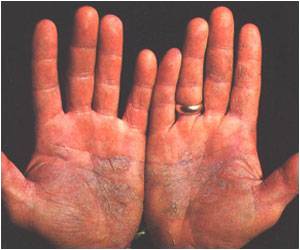
Study Suggests Barriers to Biologic Therapies for Black Patients With Psoriasis
Black patients receiving Medicare are less likely to receive biologic therapies for the treatment of moderate to severe psoriasis than white patients.
Black patients receiving Medicare are less likely to receive biologic therapies for the treatment of moderate to severe psoriasis than white patients.
 Email
Email