MEDINDIA
 English
 हिन्दी
 Español
 français
 中文
中文
Researchers have shown that gestational diabetes can be identified as early as the first trimester of pregnancy, which is typically months before it is typically diagnosed.
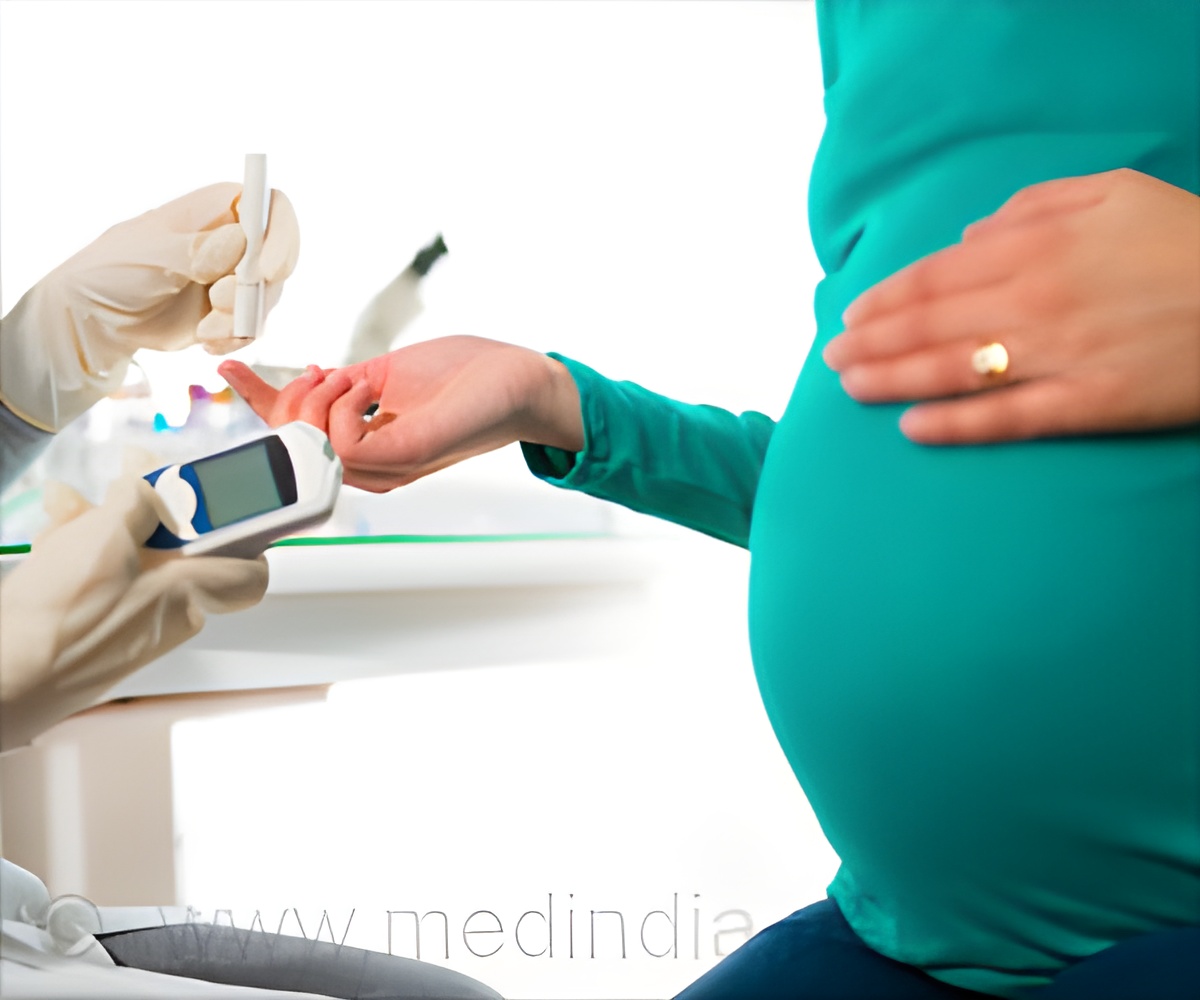

Gestational Diabetes About
The condition is not caused by a lack of insulin, but by the action of hormones produced during pregnancy that blocks the action of insulin.
The condition is not caused by a lack of insulin, but by the action of hormones produced during pregnancy that blocks the action of insulin.
TOP INSIGHT

Gestational diabetes can be detected in the first trimester of pregnancy, months earlier than usual, according to a recent study.
There are marked differences in the first-trimester gut microbiota (the bacterial population found in the guts of humans and animals) of women who do and do not later develop gestational diabetes.
These differences are associated with inflammatory markers, with women who develop gestational diabetes exhibiting higher inflammation and lower levels of beneficial metabolites.
Microbial Link between Gut Health and Gestational Diabetes Mellitus (GDM)
Gut health reflected by gut microbiota helps manage diabetes mellitus in pregnant women known as Gestational Diabetes Mellitus (GDM). Gut microbiota imbalance during pregnancy induces glucose intolerance and, thereby, gestational diabetes.
Gut health reflected by gut microbiota helps manage diabetes mellitus in pregnant women known as Gestational Diabetes Mellitus (GDM). Gut microbiota imbalance during pregnancy induces glucose intolerance and, thereby, gestational diabetes.
Using the results of these characterizations, combined with other collected data, Prof. Yoram Louzoun, from the Department of Mathematics and Gonda (Goldschmied) Multidisciplinary Brain Research Center, built a machine learning model that can accurately predict which women would and would not go on to develop gestational diabetes.
Diabetes - Oral Hypoglycemic Agents and Glycemic Control
Glycemic control in type 2 diabetes is achieved with oral diabetic medications. Combination drugs and insulin therapy is sometimes required.
Glycemic control in type 2 diabetes is achieved with oral diabetic medications. Combination drugs and insulin therapy is sometimes required.
The study findings are not population specific. The microbiome model, for example, could predict GDM in Chinese women, and the mice results were replicated in Finnish and American cohorts.
If gestational diabetes can be prevented, there would be a major reduction in adverse outcomes of gestational diabetes, for the mother and offspring, in both the short and long term, benefiting families worldwide.
Source-Eurekalert
 Email
Email