MEDINDIA
 English
 हिन्दी
 Español
 français
 中文
中文
A new study has revealed that an experimental Ebola vaccine called VSV-EBOV appears safe and generates immune response in a small phase 1 clinical trial.
Ebola Virus Disease | Ebola Hemorrhagic Fever: Cause Symptoms Diagnosis Treatment
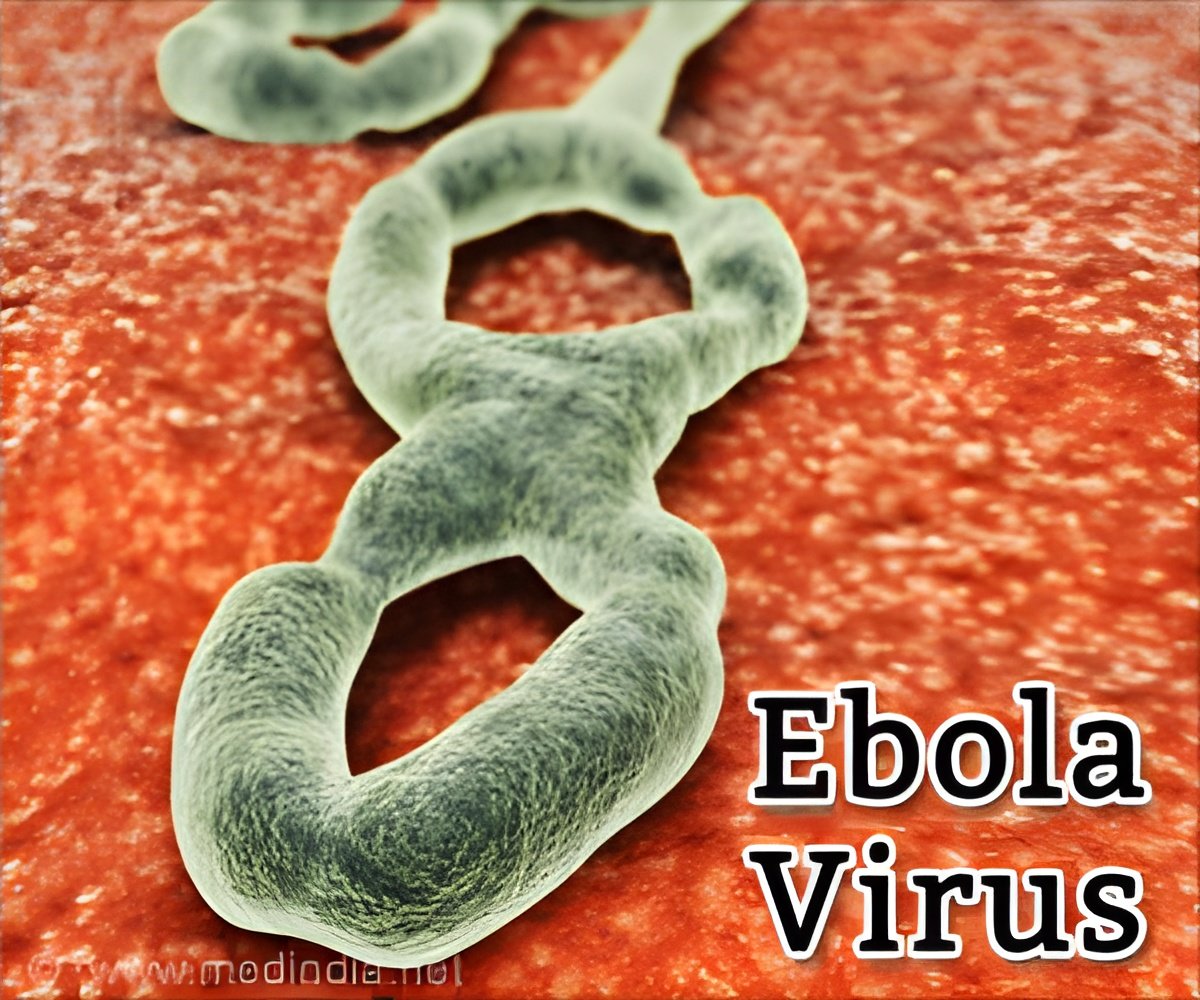
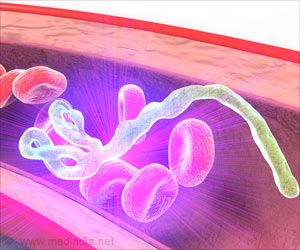
Ebola is caused by a virus via direct contact with body fluids or infected blood. Scientists have identified five types of Ebola or Ebola hemorrhagic fever virus.
Ebola is caused by a virus via direct contact with body fluids or infected blood. Scientists have identified five types of Ebola or Ebola hemorrhagic fever virus.
During the trials, researchers collectively enrolled 52 volunteers who received either the vaccine candidate or a placebo. Volunteers who were given the vaccine received one of two different doses and volunteers were assessed on days 1, 3, 7, 14, and 28 to see if they developed anti-Ebola antibodies. The researchers found that 26 of 28 volunteers in the vaccine group showed the intended Ebola glycoprotein antibody response within two weeks of vaccination, and all of the volunteers had antibodies within 28 days of receiving the vaccine. Researchers saw a higher antibody response in the vaccine recipients who received the higher vaccine dose.
Col. Stephen Thomas, senior author of the study, said, "Researchers saw a robust immune response following a single dose of the vaccine, which could be particularly useful in outbreak interventions. We were able to leverage the WRAIR’s experience in conducting ethical and safe clinical research experiments to meet a global need."

World Support for Ebola: US$35 Million Funding from King Abdallah of Saudi Arabia
Zaire ebolavirus is commonly known as Ebola. It was previously known as ebola haemorrhagic fever and is a deadly human illness.
Zaire ebolavirus is commonly known as Ebola. It was previously known as ebola haemorrhagic fever and is a deadly human illness.
Source-Medindia
Ontario Patient With Symptoms of Ebola Tests Negative at Sunnybrook
The patient had returned to Canada from West Africa 10 days earlier and was put into isolation as a precaution when Ebola-like symptoms began to appear.
The patient had returned to Canada from West Africa 10 days earlier and was put into isolation as a precaution when Ebola-like symptoms began to appear.
Liberia Reports First Ebola Infection After a Month
After suffering over 4,000 deaths due to the deadly virus, Liberia was supposed to be declared Ebola-free by mid-April. A new case is a major setback.
After suffering over 4,000 deaths due to the deadly virus, Liberia was supposed to be declared Ebola-free by mid-April. A new case is a major setback.
 Email
Email