MEDINDIA
 English
 हिन्दी
 Español
 français
 中文
中文
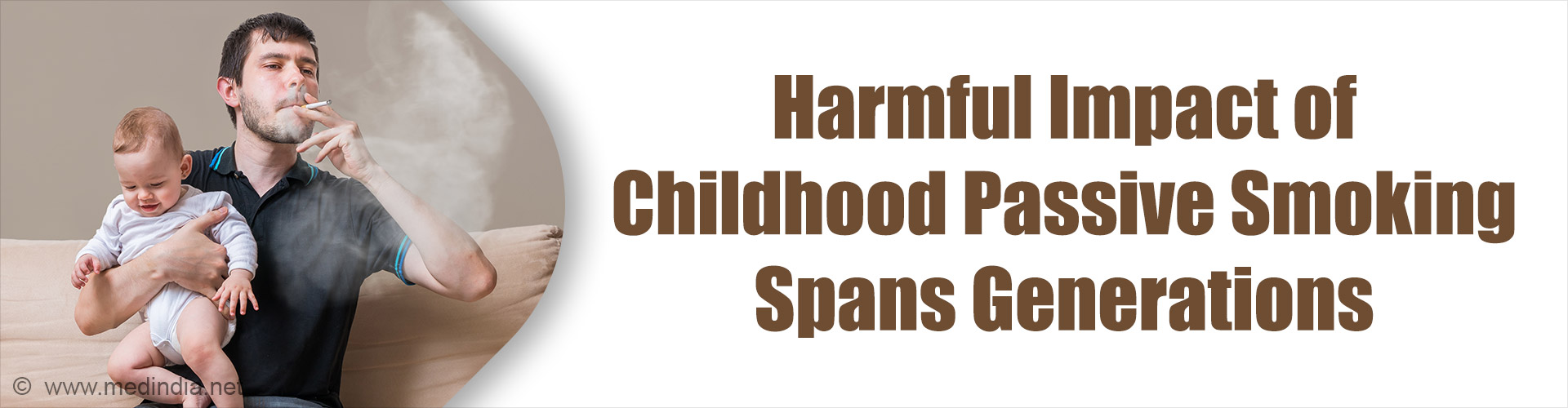
Secondhand smoke exposure in fathers during childhood may lead to poor lung function and increased chronic obstructive pulmonary disease risk in their children.
Highlights:
Children of men who were exposed to secondhand tobacco smoke during childhood may experience reduced lung function throughout life and face an increased risk of chronic obstructive pulmonary disease (COPD), particularly if they too were exposed to secondhand smoke (1✔ ✔Trusted Source- Childhood secondhand smoke exposure in fathers is linked to impaired lung function in their children
- Risk of chronic obstructive pulmonary disease in children doubled if both father and child were exposed to passive smoking
- Harmful effects may be passed through generations due to early genetic changes
Paternal prepubertal passive smoke exposure is related to impaired lung function trajectories from childhood to middle age in their offspring
Go to source). Published in the respiratory journal Thorax, the study emphasizes the lasting intergenerational effects of tobacco smoke, with researchers advocating for fathers to prevent this harmful cycle by refraining from smoking around their children.
Chronic Obstructive Pulmonary Disease
COPD includes respiratory tract disorders that cause obstruction to airflow. These are chronic bronchitis, emphysema and small airway disease.
COPD includes respiratory tract disorders that cause obstruction to airflow. These are chronic bronchitis, emphysema and small airway disease.
TOP INSIGHT

Did You Know?
Children of men exposed to #tobaccosmoke before puberty are twice as likely to develop reduced #lungfunction by middle age, especially if they also grew up around smoke. #passivesmoking #lunghealth #COPD #medindia
Chronic Disease Risk Tied to Generational Smoke Exposure
Chronic obstructive pulmonary disease, which includes conditions such as chronic bronchitis and emphysema, has become the third most common cause of death globally, killing approximately 3 million individuals annually.According to the researchers, several factors throughout life may contribute to reduced lung function and increased chronic obstructive pulmonary disease risk, and there is growing interest in the potential influence of generational exposures.
Previous studies indicated that a father’s exposure to passive smoking during his childhood could be connected to a higher risk of asthma in his children by age 7. However, it remained unclear whether these effects might extend into adulthood or middle age.

Quiz on Chronic Obstructive Pulmonary Disease (COPD)
Chronic obstructive pulmonary disease affects millions of people worldwide and is responsible for numerous deaths due to complications. Here is a quiz on the various aspects of COPD. ...
Chronic obstructive pulmonary disease affects millions of people worldwide and is responsible for numerous deaths due to complications. Here is a quiz on the various aspects of COPD. ...
Longitudinal Data from Tasmania Offers Insight
To investigate further, the researchers analyzed data from 8,022 children who were part of the Tasmanian Longitudinal Health Study, all of whom underwent spirometry testing to measure lung function.Parents initially completed a detailed survey regarding their and their children’s respiratory health. Follow-up assessments occurred when the children were aged 13, 18, 43, 50, and 53, including lung function tests (FEV1 and FVC) and questionnaires covering demographics and respiratory issues.
Drugs for Chronic Obstructive Pulmonary Disease
View list of generic and brand names of drugs used for treatment of Chronic Obstructive Pulmonary Disease( COPD). Find more information including dose, side effects of the Chronic Obstructive Pulmonary Disease( COPD) medicine.
View list of generic and brand names of drugs used for treatment of Chronic Obstructive Pulmonary Disease( COPD). Find more information including dose, side effects of the Chronic Obstructive Pulmonary Disease( COPD) medicine.
Detailed Parental Smoking Histories Explored
Out of 7,243 parents still alive and reachable in 2010, 5,111 were re-surveyed about whether their own parents smoked while they were under age 5 or between ages 5 to 15.Among 5,097 individuals with complete responses, 2,096 were fathers. The final analysis focused on 890 father-child pairs with full data on paternal childhood exposure to passive smoking and lung function results for their children up to age 53.

How Bad is Secondhand Smoking?
Is secondhand smoke worse than smoking? Yes, exposure to secondhand smoke (passive smoking) kills many unknowingly, reveals a new study.
Is secondhand smoke worse than smoking? Yes, exposure to secondhand smoke (passive smoking) kills many unknowingly, reveals a new study.
Link Between Smoke Exposure and Lifelong Lung Health
Almost 69% of the fathers and 56.5% of their children had been exposed to passive smoke during childhood. Around 49% of the children had actively smoked by middle age, and over 5% had developed chronic obstructive pulmonary disease, based on spirometry.After accounting for factors like the father’s age and respiratory history, exposure to secondhand smoke during a father's childhood was associated with 56% higher odds of their child having below-average FEV1 (Forced expiratory volume), a key lung function measure, though not FVC (Forced Vital Capacity).
Decline in Lung Function Linked to Fathers’ Childhood Exposure
Paternal childhood exposure to passive smoking also doubled the odds that their children would show early, rapidly declining FEV1/FVC ratios. These associations remained statistically significant even after adjusting for additional influential factors.While a doubled risk of chronic obstructive pulmonary disease was also observed in the children of exposed fathers, this result lost statistical significance after adjustments.
Compounding Effects of Dual-Generation Exposure
However, children whose fathers had childhood secondhand smoke exposure were twice as likely to have below-average FEV1 if they themselves had also experienced passive smoking during childhood.The researchers found that the link was only minimally influenced by smoking and respiratory conditions in either the fathers or their children, each accounting for less than 15% of the observed associations.
Limitations and Genetic Implications
As an observational study, it cannot confirm direct causality. Additionally, the study lacked data on paternal lung function and genetic information, preventing further analysis of familial health patterns.Childhood passive smoke exposure was defined as living with at least one parent who smoked six days a week, which may have misclassified lighter smokers as non-smokers.
Pre-puberty May be a Critical Window for Long-Term Impact
The period before puberty, particularly for boys, may be a sensitive phase during which exposure to harmful substances could alter gene expression and impair repair mechanisms, changes that may be passed on to offspring.The researchers emphasized that their findings are the first to show that paternal exposure to passive smoking before puberty, not just active smoking, could negatively affect their children’s lung function into middle age.
Call for Preventive Action to Break the Cycle
This carries major public health relevance, as approximately 63% of adolescents are exposed to passive smoking, significantly more than the 7% who actively smoke.They concluded that tobacco exposure can harm not only the individuals directly exposed but potentially their children and grandchildren. Nonetheless, they suggested that fathers who were exposed to passive smoking before puberty might still reduce risks for future generations by avoiding smoking around their children.
To sum up, childhood exposure to secondhand smoke in fathers may have lasting consequences on their children’s lung health, doubling the risk of chronic obstructive pulmonary disease and reduced lung function.
Reference:
- Paternal prepubertal passive smoke exposure is related to impaired lung function trajectories from childhood to middle age in their offspring - (https://thorax.bmj.com/content/early/2025/08/27/thorax-2024-222482)
Source-Medindia
 Email
Email