MEDINDIA
 English
 हिन्दी
 Español
 français
 中文
中文
Different types of food mentioned in stories of newspapers were analyzed and it was statistically correlated with each country's annual body mass index (BMI).


Ideal Body Weight - A Global Issue
India and China, which are epicenters of a booming economy, are now witnessing a steady rise in obesity. Globalization is the prime accused.
India and China, which are epicenters of a booming economy, are now witnessing a steady rise in obesity. Globalization is the prime accused.
"But the less often they are mentioned and the more vegetables are mentioned, the skinnier the public will be," added Davis who analyzed trends from the past 50 years.
This study analyzed all of the different foods mentioned in stories in the New York Times and London Times and statistically correlated them with each country's annual body mass index (BMI).

Washington Post the Most Tweeted Newspaper in 2013
The most content-driven tweets in the year 2013 were reportedly by the newspaper Washington Post
The most content-driven tweets in the year 2013 were reportedly by the newspaper Washington Post
"Newspapers are basically crystal balls for obesity," said study co-author Brian Wansink, director of the Cornell Food and Brand Lab.
Obesity - Causes, Symptoms, Diagnosis, Complications, Treatment
Obesity is a condition where there is excess accumulation of body fat which poses a risk to the health of the individual. It can affect children and adults.
Obesity is a condition where there is excess accumulation of body fat which poses a risk to the health of the individual. It can affect children and adults.
The findings provide public health officials and epidemiologists with new tools to quickly assess the effectiveness of current obesity interventions.
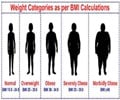
Body Mass Index (BMI)
Body mass index (BMI) is a simple tool that is generally used to estimate the total amount of body fat.
Body mass index (BMI) is a simple tool that is generally used to estimate the total amount of body fat.
Source-IANS
 Email
Email