MEDINDIA
 English
 हिन्दी
 Español
 français
 中文
中文
Scientists have discovered new and potential target for restoring movement after spinal cord injury.
Spinal Cord Injury - Causes, Symptoms, Diagnosis, Treatment & Prevention
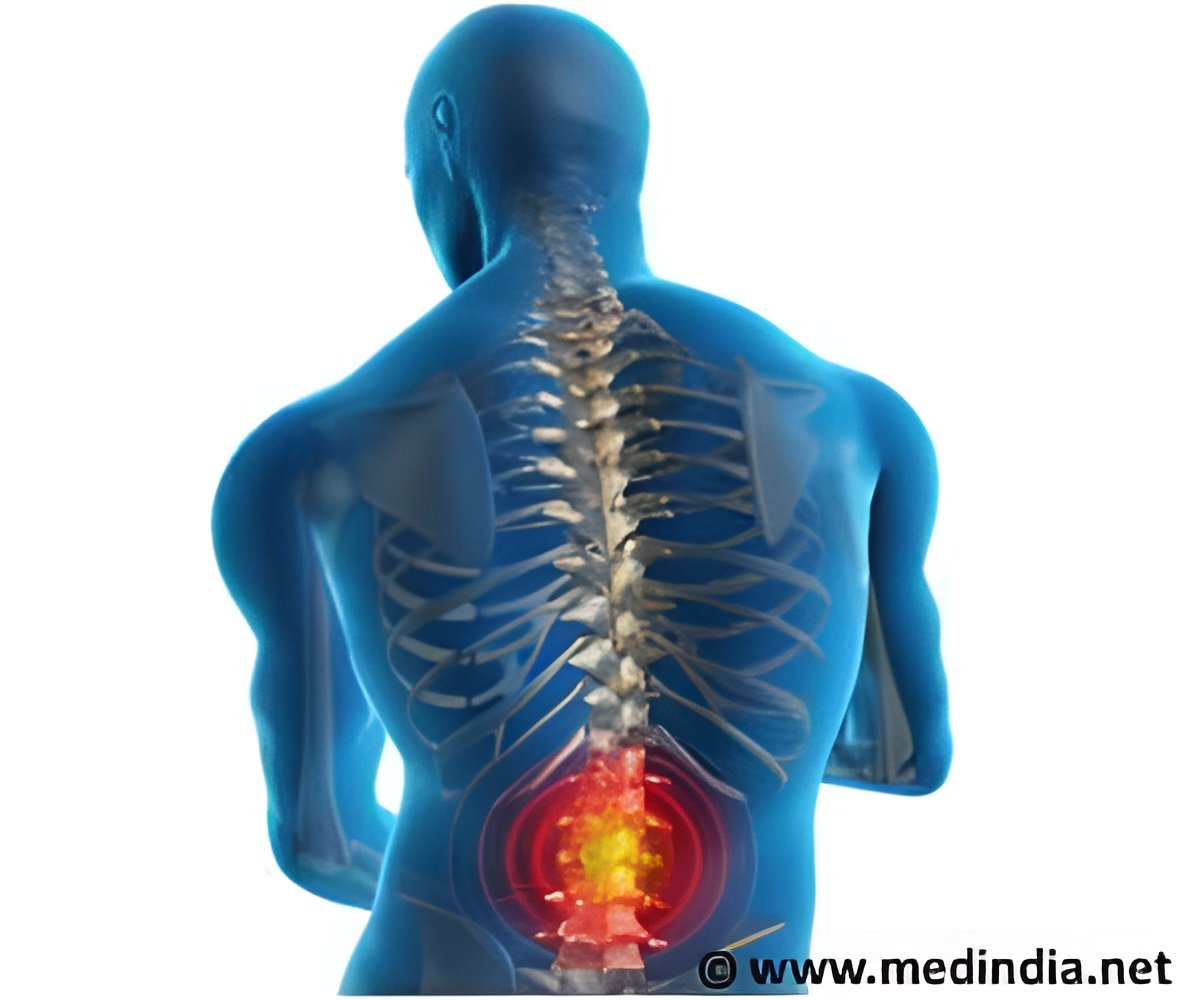
Spinal cord injury is an injury to the spinal cord that results in temporary or permanent changes in its function.
Spinal cord injury is an injury to the spinal cord that results in temporary or permanent changes in its function.
TOP INSIGHT

In animal models scientists lay the groundwork for more NT-3 therapy research to help patients with spinal cord injury in the future.
Previously, the research team was able to improve locomotor recovery and reduce MN dendritic atrophy after a moderate, contusive SCI at the ninth thoracic level, by transporting Neurotrophin-3 (NT-3) to lumbar MNs. NT-3 is known as a trophic factor that contributes neuronal survival and growth. These latest research findings extend the role of NT-3 to modulating propriospinal-MN circuit reorganization, which accounts for improvement of locomotor function after SCI.
Researchers were also able to determine that a moderate injury at the ninth thoracic level stops the corticospinal tract and rubrospinal tract projections down to the spinal cord, but maintains some neural transmissions which can be reinforced by the NT-3 therapy. Additionally, they discovered the spared pathway, made up of a collection of nerve fibers, namely, the descending propriospinal pathway, connecting to the lumbar spinal cord, is functionally associated with NT-3-mediated locomotor recovery after SCI. Their research also suggests that NT-3 supports MN recovery by promoting dendritic regrowth.

Test Your Knowledge on Spinal Cord Injury
Often a sudden traumatic injury or a non-traumatic condition results in a fracture or dislocation of vertebrae which can further cause spinal cord damage. Vertebral injuries may result in a partial or complete transaction of the spinal cord which has a worse prognosis. Spinal cord injury destroys the axons of the nerve cell which links the spinal cord, brain and the rest of our body. Early and aggressive treatment is required with rehabilitation to increase recovery of the patients.
Spinal cord injury is one of the leading causes of permanent disability and death due to the complications.
Often a sudden traumatic injury or a non-traumatic condition results in a fracture or dislocation of vertebrae which can further cause spinal cord damage. Vertebral injuries may result in a partial or complete transaction of the spinal cord which has a worse prognosis. Spinal cord injury destroys the axons of the nerve cell which links the spinal cord, brain and the rest of our body. Early and aggressive treatment is required with rehabilitation to increase recovery of the patients.
Spinal cord injury is one of the leading causes of permanent disability and death due to the complications.
Limb Function Restored After Spinal Cord Injury Using This Drug
Upper limb function after a spinal cord injury could be restored by using commonly prescribed drug for nerve pain, which could also help restore functions in mice, research suggests.
Upper limb function after a spinal cord injury could be restored by using commonly prescribed drug for nerve pain, which could also help restore functions in mice, research suggests.
Frailty Affects Outcomes After Traumatic Spinal Cord Injury
In patients younger than 75 years, frailty was a predictor of adverse events, acute length of stay, and in-hospital mortality, stated researchers.
In patients younger than 75 years, frailty was a predictor of adverse events, acute length of stay, and in-hospital mortality, stated researchers.
 Email
Email