MEDINDIA
 English
 हिन्दी
 Español
 français
 中文
中文
Researchers have developed a new three-drug delivery system for cancer treatment, especially metastatic melanoma.
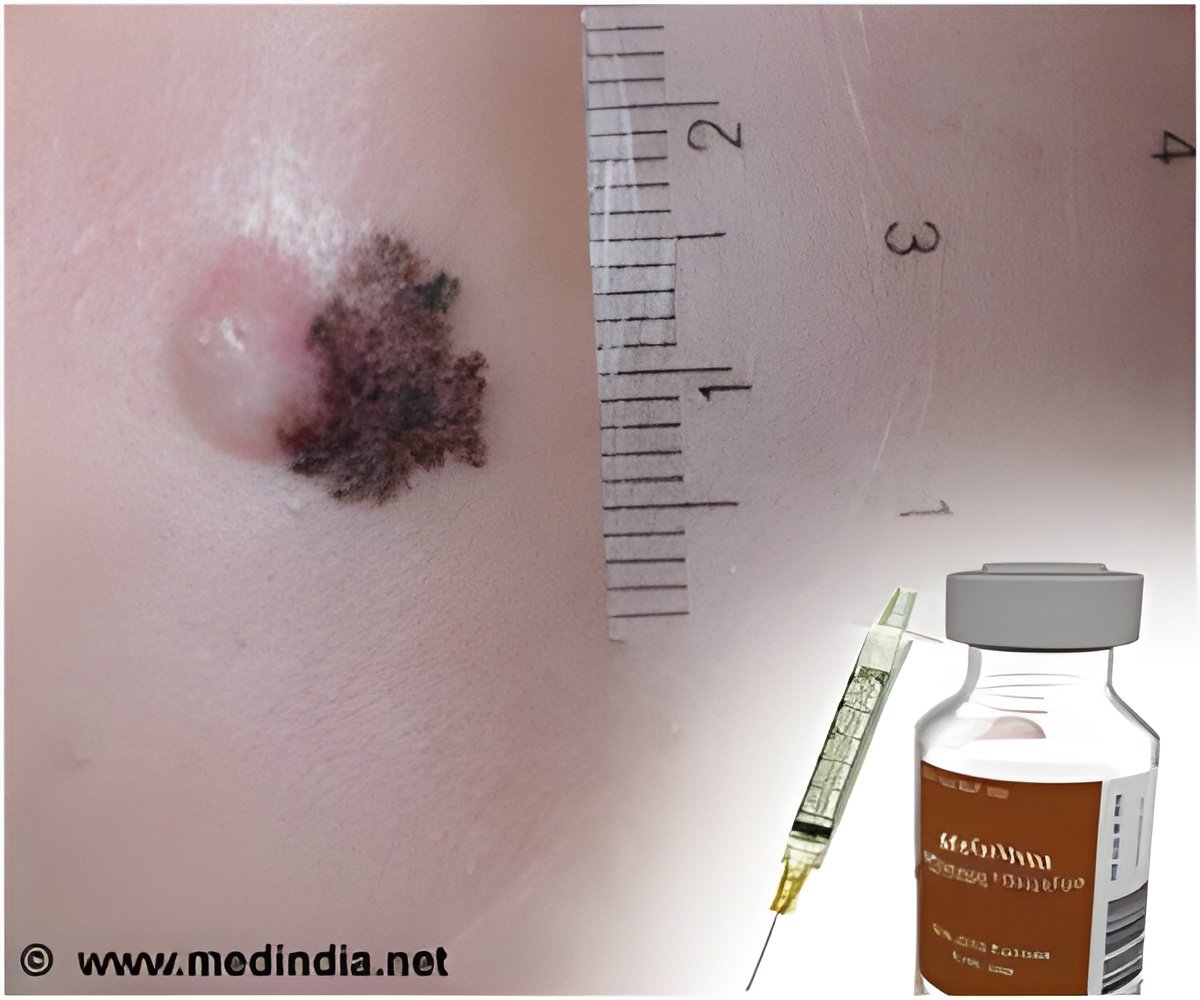
Melanoma - Causes, Symptoms, Diagnosis, Treatment & Prevention
Melanoma of the skin is a dangerous type of skin cancer that usually appears as a cancerous mole due to exposure to the sun’s damaging UV rays.
Melanoma of the skin is a dangerous type of skin cancer that usually appears as a cancerous mole due to exposure to the sun’s damaging UV rays.
TOP INSIGHT

The three-drug delivery system takes advantage of nanoparticles that increases the effectiveness of an attack on cancer cells in the body's lymph nodes. It can also reduce the development of drug resistance.
Adam Alani, an assistant professor in the Oregon State University/Oregon Health & Science University College of Pharmacy, and lead author on this research, "Melanoma can be a very difficult cancer to treat because it often metastasizes and travels through the lymphatic system. Melanoma has a high mortality rate because the lymph nodes tend to act as a haven for cancer cells, and allow them to resist treatment through chemotherapy."
The new OSU research, however, was able to combine three anti-cancer drugs at the same time into a nanoparticle delivery system. After injection, these nanoparticles primarily migrated to lymph nodes, acted in a synergistic manner that was more powerful than any one drug could be separately, and were able to maximize their impact in those locations while minimizing the development of drug resistance and overall toxicity.

Red Hair Pigment May Increase Risk of Melanoma, Skin Cancer
Recent animal studies suggest that pigment responsible for red hair in fair-skinned people might play a role in triggering skin cancer.
Recent animal studies suggest that pigment responsible for red hair in fair-skinned people might play a role in triggering skin cancer.
More research with animals, experiments with more aggressive forms of cancer, and eventually human clinical trials will still be needed for any treatment is available for use.
Improved Survival in BRAF-Mutated Melanoma With Trametinib
Trametinib, a MEK inhibitor, promotes survival in advanced melanoma patients with mutations in serine–threonine protein kinase B-RAF (BRAF).
Trametinib, a MEK inhibitor, promotes survival in advanced melanoma patients with mutations in serine–threonine protein kinase B-RAF (BRAF).
The researchers said, "Up to 80% of melanomas metastasize through the lymphatic system, and the tumor cells even secrete growth factors to further streamline their progress. The enlarged lymphatic vessels act as a freeway for the metastatic cells to gain access and spread to distal lymph nodes and organs."

Vemurafenib Improves Survival in Advanced Malignant Melanoma
Vemurafenib is a new oral drug that improves survival in advanced malignant melanoma.
Vemurafenib is a new oral drug that improves survival in advanced malignant melanoma.
The nanoparticles used to carry these cancer drugs are stable, increase the drug circulation time, and can deliver multiple drugs in a single step to the desired target, the research showed. They offer a novel therapeutic option for effective melanoma treatment, the scientists wrote in their conclusion.
Source-Eurekalert
 Email
Email