MEDINDIA
 English
 हिन्दी
 Español
 français
 中文
中文
By combining local radiation therapy and anti-cancer vaccines with checkpoint inhibitors it is possible to increase the response rate for immunotherapy agents.
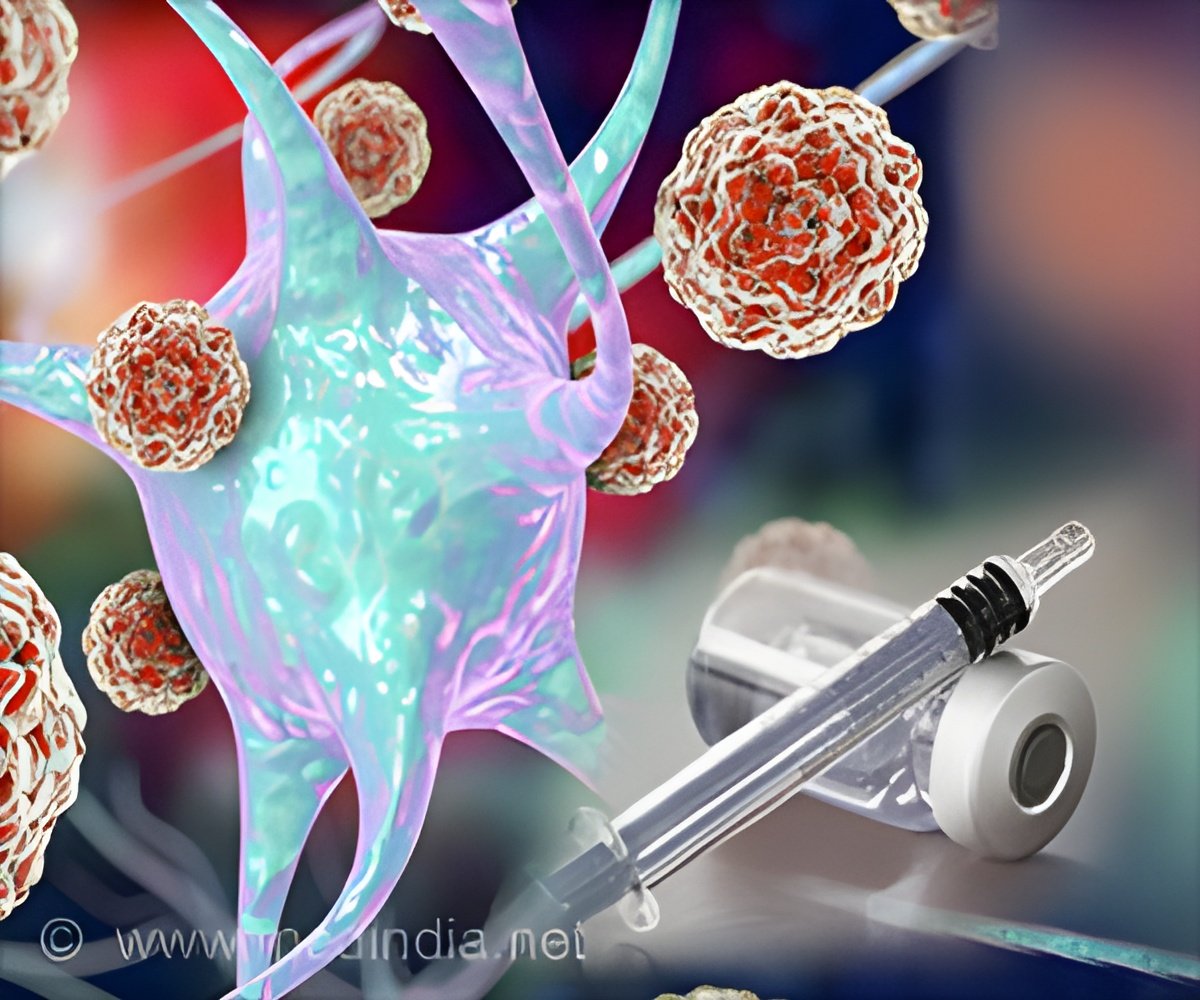
Brain Cancers may be Tackled by Immune Checkpoint Inhibitors
Dr Anna Sophie Berghoff presented new evidence that immune checkpoint inhibitors may work in glioblastoma and brain metastases at the ESMO Symposium.
Dr Anna Sophie Berghoff presented new evidence that immune checkpoint inhibitors may work in glioblastoma and brain metastases at the ESMO Symposium.
TOP INSIGHT

By combining local radiation therapy and anti-cancer vaccines with checkpoint inhibitors, researchers were able to increase the response rate for immunotherapy agents.
"Our results provide a step-by-step strategy to break the immune barriers that protect aggressive tumors by converting so-called 'cold', or non-T cell inflamed tumors, to a 'hot', or T cell-inflamed phenotype," said study author Ralph Weichselbaum, co-director of the University of Chicago Ludwig Center for Metastasis Research and chairman of Radiation and Cellular Oncology at the University. "By promoting T cell infiltration, radiation therapy improved the efficacy of tumor vaccines and checkpoint inhibitors."
The researchers chose a difficult animal model, mice that had fragments of murine pancreatic cancer implanted in their flanks. Results from immunotherapy trials in human patients with pancreatic cancer have been dismal. The only checkpoint inhibitor to show any activity in pancreatic cancer produced a partial response in eight percent of patients.

Immunotherapy Agent Can Reduce Viral Levels in SIV-Infected Monkeys
SIV-infected monkeys treated with anti-PD-1 antibody after antiretroviral therapy showed more rapid viral suppression and more active antiviral T cells.
SIV-infected monkeys treated with anti-PD-1 antibody after antiretroviral therapy showed more rapid viral suppression and more active antiviral T cells.
Efforts to boost the immune response with a vaccine designed to provoke an immune response had little impact on tumor growth, even when paired with checkpoint blockade.
Immunotherapy Drug on Clinical Trial Shrinks Neuroblastoma Tumors
The experimental antibody hu14.18K322A reduced the growth of primary tumor in 80% patients and stopped the growth in the remaining patients.
The experimental antibody hu14.18K322A reduced the growth of primary tumor in 80% patients and stopped the growth in the remaining patients.
"These results suggest that radiation stimulated the recruitment of vaccine-primed T cells while anti-PD-L1 therapy protected these T cells from local immune suppression," the authors wrote. "This may be a promising therapy."
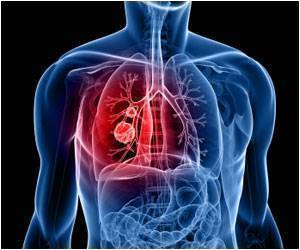
Rationale for Use of Targeted Immunotherapy in Sarcomatoid Lung Carcinomas Highlighted
Rare subtypes of poorly differentiated non–small-cell lung carcinomas of high grade and aggressive behavior are observed in sarcomatoid carcinomas of the lung.
Rare subtypes of poorly differentiated non–small-cell lung carcinomas of high grade and aggressive behavior are observed in sarcomatoid carcinomas of the lung.
The researchers acknowledge some limitations. The work was done in mice and research on cancer vaccines is still in its infancy. But they argue that the combination of local radiation and vaccination to induce T cell infiltration, followed by a checkpoint inhibitor to disable PD-L1-mediated immunosuppression could increase the odds of tumor control.
"We feel confident that our model, with further testing, can covert unresponsive "cold" cancers to something more responsive to treatment, leading to improved outcomes for more patients," Weichselbaum said. "This study, based on a very challenging animal model, opens up a new strategy that could make immunotherapy more effective for more cancer types. Intriguingly, the study demonstrates new anti-tumor effects of radiation therapy in addition to the direct cytotoxic effects of radiation on tumor cells."
Source-Newswise
 Email
Email