MEDINDIA
 English
 हिन्दी
 Español
 français
 中文
中文
LIGHT is an immune-stimulating chemical messenger previously found to have low levels of expression in patients with colon cancer metastases.


Diet to Prevent Colon Cancer - Health Tips - Glossary
Diet and lifestyle play an important role in reducing the risk and delaying the onset of cancer. Incorporating and eliminating certain other foods may reduce the risk of acquiring colon cancer.
Diet and lifestyle play an important role in reducing the risk and delaying the onset of cancer. Incorporating and eliminating certain other foods may reduce the risk of acquiring colon cancer.
TOP INSIGHT

Tumors exposed to LIGHT demonstrated an influx of T-cells that resulted in rapid and sustained tumor regression, even after expression of the cytokine stopped.
The results are published in Cancer Research.
"For most patients with colon cancer that has spread to the liver, current treatments are palliative and not curative," says Dr. Ajay Maker, associate professor of surgery in the UIC College of Medicine and corresponding author on the paper. "And while studies have suggested that immunotherapy may be a promising approach for advanced cancers, the use of such treatments for advanced gastrointestinal metastases have not yet been very successful."
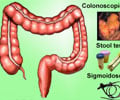
Colorectal Cancer Screening
Colorectal screening is done using tests to detect blood in stool, colonoscopy or sigmoidoscopy ordouble contrast barium enema or CT colonography.
Colorectal screening is done using tests to detect blood in stool, colonoscopy or sigmoidoscopy ordouble contrast barium enema or CT colonography.
Maker and his colleagues established colon cancer tumors in a mouse model, in which the animals had an intact and unedited immune system. Once tumors were sizable, the mice were randomized into two groups - one group had the cytokine LIGHT turned on in the tumors, and the other served as a control group for comparison.

A Cup of Cranberry Extracts Daily can Fight Off Colon Cancer And Other Cancers
Chemicals derived from cranberry extracts could selectively kill off colon tumor cells in laboratory dishes. This is approximately equivalent to one cup a day.
Chemicals derived from cranberry extracts could selectively kill off colon tumor cells in laboratory dishes. This is approximately equivalent to one cup a day.
"We demonstrated that delivery of a therapeutic immune-stimulating cytokine caused T-cells to traffic to tumors and to become activated tumor-killing cells," Maker said. "This activity is especially exciting because it resulted in a profound anti-tumor immune response without any other chemotherapy or intervention. The treatment manipulates our natural defenses to fight off the tumor in the same way it has been trained to attack other foreign invaders in our body."

Current National Screening Guidelines may Miss 10 Percent of Colon Cancers
When current national screening guidelines are followed for people with a family history of adenomas (colon polyps that lead to colon cancer), up to 10 percent of colorectal cancers could be missed.
When current national screening guidelines are followed for people with a family history of adenomas (colon polyps that lead to colon cancer), up to 10 percent of colorectal cancers could be missed.
Source-Eurekalert
 Email
Email