MEDINDIA
 English
 हिन्दी
 Español
 français
 中文
中文

Ginger helps reduce inflammation, control blood sugar, fight oxidative stress, and ease nausea during pregnancy.
Highlights:
Ginger isn’t just a flavorful kitchen spice, it actually helps reduce inflammation, lower blood sugar, fight damage from stress in the body, and ease nausea during pregnancy. These findings come from a recent review published in Frontiers in Pharmacology, where scientists from two U.S. medical schools looked at five major studies that pulled together results from dozens of clinical trials (1✔ ✔Trusted Source- Ginger reduces blood sugar and glycosylated hemoglobin levels in people with type 2 diabetes
- It improves antioxidant status by reducing oxidative stress and increasing enzyme activity
- Ginger relieves nausea during pregnancy but is less effective for vomiting compared to vitamin B6
Pharmacological properties of ginger (Zingiber officinale): what do meta-analyses say? a systematic review
Go to source). They found solid evidence that ginger supplements can lower key markers of inflammation, improve blood sugar levels in people with type 2 diabetes, increase antioxidant activity, and reduce feelings of nausea in pregnant women. However, it doesn't seem to help much with vomiting, and in some studies, vitamin B6 worked better overall for pregnancy symptoms.

Health Benefits of Ginger
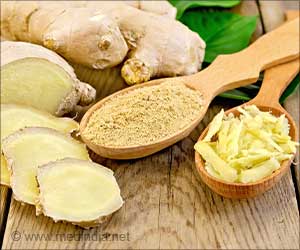
Ginger used in cooking has many health benefits and contains many vitamins and minerals like manganese and copper, which are important for proper functioning of the body.
Ginger used in cooking has many health benefits and contains many vitamins and minerals like manganese and copper, which are important for proper functioning of the body.
TOP INSIGHT

Did You Know?
Ginger supplementation can lower fasting blood glucose effectively and reduce inflammation markers, making it more than just a kitchen spice. #gingerbenefits #naturalhealing #medindia
Ginger Has Been Used for Centuries, Now Science is Catching Up
For thousands of years, herbs and spices have been used for healing. Ginger, with its strong, zesty flavor, is among the most popular natural remedies. Its active compounds—gingerols and shogaols—are thought to drive its health effects.Modern science has been working to confirm these ancient claims. Ginger has been studied for its ability to help with diabetes, oxidative stress (a kind of internal damage linked to aging and disease), and nausea during pregnancy. But since different studies often give different results, it’s been hard to know for sure how helpful ginger really is, or how much to take.
To clear things up, researchers did a high-level review by combining results from five top-quality meta-analyses. These are big reports that look at several clinical trials at once, which makes their results more reliable.
These five studies focused on four major health areas: inflammation, type 2 diabetes, oxidative stress, and pregnancy-related nausea and vomiting. The team pulled together the findings, doses used, and overall strength of the evidence to get a clear picture of ginger’s effects.
Spice Up Your Health With The Healing Magic of Ginger Juice
Curious about a morning ritual that supercharges health? Discover the secrets of ginger juice – your new wellness elixir! Why the buzz? Find out now!
Curious about a morning ritual that supercharges health? Discover the secrets of ginger juice – your new wellness elixir! Why the buzz? Find out now!
How Ginger Helps with Inflammation and Blood Sugar
One of the included reports, which looked at 16 trials, found that ginger helped lower levels of substances in the body linked to inflammation, like C-reactive protein and tumor necrosis factor. These are known to play a role in chronic illnesses. However, the results were very mixed between the studies, which makes the conclusion less strong.Another report, based on 10 trials, showed that ginger made a real difference for people with type 2 diabetes. It lowered fasting blood sugar by over 21 mg/dL and also reduced long-term blood sugar (known as glycosylated hemoglobin or HbA1c) by 1.00, which is a significant improvement. These results were consistent and reliable.

Pungent Compound in Ginger Puts Immune System on Alert
The claim that ginger is good for immunity may be substantiated by a new study.
The claim that ginger is good for immunity may be substantiated by a new study.
Ginger Boosts Antioxidants in the Body
Ginger was also found to help the body’s fight against oxidative stress, a process that can damage cells and lead to aging or disease. In a report analyzing 12 trials, ginger lowered levels of a harmful compound called malondialdehyde and increased a helpful antioxidant enzyme known as glutathione peroxidase.However, ginger didn’t seem to raise the body’s overall antioxidant capacity, showing that while it helps in specific ways, it’s not a complete solution. Still, the evidence for its antioxidant benefits is strong and promising.

Post-Exercise Muscle Strain Reduced With Raw Ginger
A new study has shown that taking raw ginger in small amount every day reduces the strain on muscles after a workout.
A new study has shown that taking raw ginger in small amount every day reduces the strain on muscles after a workout.
Ginger for Pregnancy Nausea Works, But Has Limits
For morning sickness, ginger performed well in easing nausea. A review of 12 trials showed it was significantly better than a placebo. But when it came to reducing vomiting, results were less convincing.Another analysis found ginger and vitamin B6 were equally effective against vomiting, but vitamin B6 offered better relief for both nausea and vomiting together. A minor downside: ginger was linked to more frequent belching in some participants.
How Much Ginger is Enough and What are the Gaps?
The doses used in the studies varied. For pregnancy nausea, the range was 500 to 1,500 milligrams per day. For things like inflammation, diabetes, or antioxidant effects, the doses ranged from 1 to 3 grams per day. But because the doses and forms of ginger weren’t standardized, it’s hard to know exactly what’s best for everyone.Researchers also pointed out that not all studies were high quality. Some had issues like inconsistent methods or small sample sizes. That means we still need better studies to confirm how well ginger works and what doses are safest and most effective.
Ginger Shows Promise as a Natural, Safe Health Booster
Overall, the review found that ginger is safe and may help with a variety of health issues. It has solid evidence backing its ability to reduce inflammation, help manage blood sugar in type 2 diabetes, improve antioxidant activity, and ease pregnancy-related nausea.However, its effects on vomiting are not always strong, and vitamin B6 may be more effective for full relief of morning sickness symptoms. The review strongly recommends more large-scale studies and better guidelines to help people use ginger in the best way possible.
In short, ginger is more than a culinary spice—it’s a natural supplement with science-backed health benefits. From blood sugar control and inflammation reduction to antioxidant protection and pregnancy support, ginger shows real promise as a safe, effective addition to healthy living.
Reference:
- Pharmacological properties of ginger (Zingiber officinale): what do meta-analyses say? a systematic review - (https://www.frontiersin.org/journals/pharmacology/articles/10.3389/fphar.2025.1619655/full)
Source-Medindia
 Email
Email