MEDINDIA
 English
 हिन्दी
 Español
 français
 中文
中文
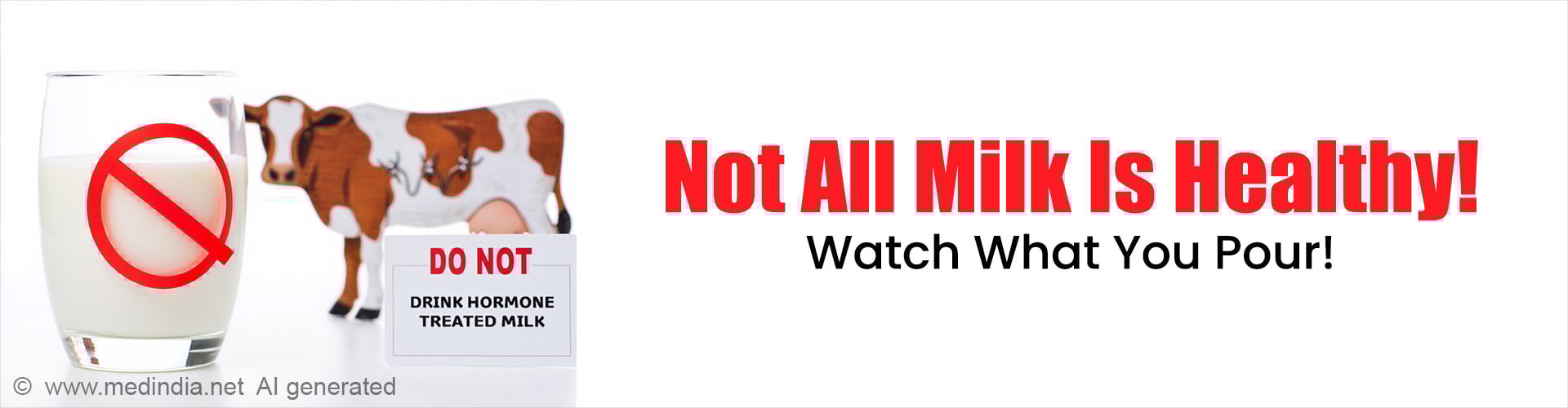
Explore the risks of rBGH milk, from elevated IGF-1 and cancer concerns to ethical issues in animal welfare and global regulatory bans.
Highlights:
Milk is often hailed as nature’s perfect food, rich in calcium, protein, and essential nutrients. Apart from these health advantages, is there anything dangerous that could be concealed in milk? The synthetic hormone - rBGH in milk increases IGF-1, potentially raising cancer risks
- Countries like the EU and Canada have banned rBGH for public health and animal welfare
- Consumer demand for hormone-free milk is driving changes in the dairy industry
Drinking Too Much Milk can Increase Prostate Cancer Risk
Men at a higher-than-average risk of prostate cancer should be highly cautious about dairy intake.
Men at a higher-than-average risk of prostate cancer should be highly cautious about dairy intake.
TOP INSIGHT

Did You Know?
Over 30 countries have banned rBGH due to animal cruelty and cancer concerns! #cancer #milk #diaryproducts #rbghfree #medindia
What Exactly Is rBGH?
Recombinant Bovine Growth Hormone (rBGH) is a genetically modified version of naturally occurring bovine somatotropin hormone; hence the name recombinant Bovine Somatotropin (rBST). Developed by Monsanto in the 1990s and marketed under the name Posilac, rBGH is injected into dairy cows to increase milk production by 10-15%. This increase is attained by increasing the production of Insulin-like Growth Factor 1 (IGF-1), a growth-promoting hormone that also plays a role in human cell division and proliferation (1✔ ✔Trusted SourceRecombinant Bovine Growth Hormone (rBGH)
Go to source).
While the U.S. FDA approved its use in 1993, countries including Canada, the EU, Japan, and Australia banned it, citing concerns about animal welfare and potential human health risks (2✔ ✔Trusted Source
The Promise and Challenges of Determining Recombinant Bovine Growth Hormone in Milk
Go to source).
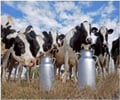
Cows Milk-Nutrient quality
Encyclopedia section of medindia briefs about the nutrient quality of the Cows Milk
Encyclopedia section of medindia briefs about the nutrient quality of the Cows Milk
IGF-1: Under the Microscope!
Insulin-like Growth Factor 1 (IGF-1) is not completely harmful; it is essential for human growth But elevated levels can increase the risk of cancers, including The cancer risk is attributed to IGF-1 acting like a fertilizer for the existing cancer cells, encouraging them to grow and divide. The Journal of Clinical Oncology published research indicating that elevated IGF-1 levels in certain populations raise premenopausal breast cancer by 7 times (3✔ ✔Trusted SourceThe Dairy and Cancer Controversy: Milking the Evidence
Go to source).
Regulatory bodies, including the FDA, the WHO, and the American Cancer Society, maintain that milk-derived IGF-1 gets digested in human digestive tracts and does not substantially impact humans at a systemic level. However, the potential cumulative exposure to vulnerable populations continues to raise public concerns.
Animal Welfare and the Hidden Antibiotic Toll
Human health stands as only one severe consequence amid several others. Milk production from cows that receive rBGH treatment results in elevated mastitis occurrences, which produces milk with pus content, necessitating additional antibiotic usage. A second health risk resulting from the widespread use of rBGH is the emergence of bacteria that are resistant to antibiotics. The European Commission recognized the serious health effects on cows caused by rBGH injections, which led to their decision to ban the substance (4✔ ✔Trusted Source
Report on Public Health Aspects of the Use of Bovine Somatotrophin - 15-16 March 1999
Go to source).
Cow's Milk-rBGH: recombinant bovine growth hormone
Encyclopedia section of medindia briefs about Recombinant Bovine Growth Hormone (rBGH)
Encyclopedia section of medindia briefs about Recombinant Bovine Growth Hormone (rBGH)
Global Divides: Why Some Nations Say No!
Different countries have taken vastly different approaches:| Region | Status | Key Points |
|---|---|---|
| United States | Approved |
|
| Canada | Banned |
|
| European Union | Banned |
|
| Japan, Australia, New Zealand | Banned / Not Approved |
|
Many producers in the U.S. display rBGH-free labels on their goods because of customer interest despite lacking any official federal labeling standards.
Cow's Milk-Retracing Footsteps In Time
Encyclopedia section of medindia explains about the consumption of cows milk, which dates back to about 6000 to 8000 B.C.
Encyclopedia section of medindia explains about the consumption of cows milk, which dates back to about 6000 to 8000 B.C.
What Can You Do as a Consumer?
The following steps can prevent exposure to rBGH:- Choose Organic: Organic milk production follows legal requirements to exclude rBGH.
- Check Labels: Look for “rBGH-free” or “No rBST” claims on the label.
- Support Local Dairies: Choose to buy from small-scale farms as they avoid rBGH use.
- Stay Updated: Follow research from WHO, ACS, and peer-reviewed journals.
References:
- Recombinant Bovine Growth Hormone (rBGH) - (https://www.cancer.org/cancer/risk-prevention/chemicals/recombinant-bovine-growth-hormone.html)
- The Promise and Challenges of Determining Recombinant Bovine Growth Hormone in Milk - (https://pmc.ncbi.nlm.nih.gov/articles/PMC8834339/)
- The Dairy and Cancer Controversy: Milking the Evidence - (https://pubmed.ncbi.nlm.nih.gov/38289521/)
- Report on Public Health Aspects of the Use of Bovine Somatotrophin - 15-16 March 1999 - (https://food.ec.europa.eu/document/download/14f3d449-0ff2-4f7e-8d7f-98bc56f4444b_en)
Source-Medindia
 Email
Email