MEDINDIA
 English
 हिन्दी
 Español
 français
 中文
中文
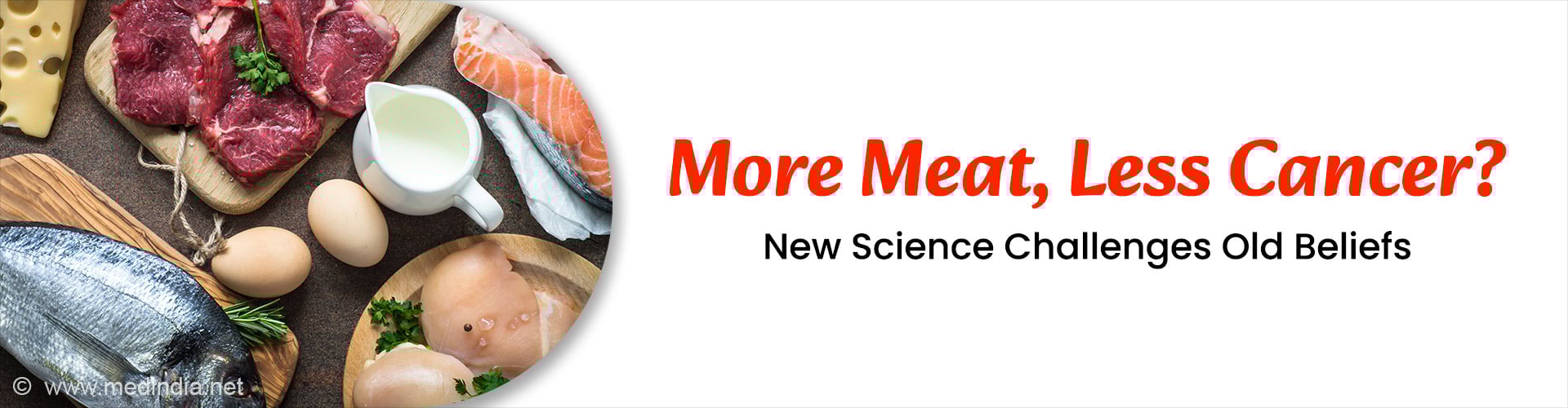
Animal protein intake showed a modest reduction in cancer mortality risk, while neither plant nor animal proteins were linked to all-cause or cardiovascular disease mortality.
Highlights:
A modest inverse relationship was observed between animal protein intake and the risk of cancer-related death, with no significant associations found between mortality risks and protein types, plant or animal, according to a study published in Applied Physiology, Nutrition, and Metabolism (1✔ ✔Trusted Source- Animal protein consumption was modestly linked to lower cancer mortality
- No connection was found between plant protein intake and any mortality risk
- Insulin-like growth factor 1 levels were not associated with mortality outcomes
Animal and plant protein usual intakes are not adversely associated with all-cause, cardiovascular disease-, or cancer-related mortality risk: an NHANES III analysis
Go to source). While earlier studies have linked animal protein intake with increased cancer and cardiovascular mortality, the current findings present a nuanced view, indicating a potential protective effect of animal proteins against cancer death.
In the United States and Canada, dietary protein recommendations set the recommended allowance at 0.8 grams per kilogram of body weight per day. However, the acceptable macronutrient distribution range allows for significantly higher intake.
The precise benefits of elevated protein intake, especially among older adults, remain uncertain. Previous studies have indicated that high animal protein consumption might raise mortality risks from cancer and cardiovascular disease, while plant proteins have been linked to health benefits and reduced mortality.
Protein Intake Calculator
Protein Intake Calculator provides the amount of dietary protein for different age groups and bodybuilders. Protein Intake Calculator lists protein rich foods.
Protein Intake Calculator provides the amount of dietary protein for different age groups and bodybuilders. Protein Intake Calculator lists protein rich foods.
TOP INSIGHT

Did You Know?
People who regularly consumed #animalprotein had lower risk of #cancer death, while those consuming more #plantprotein saw no difference in mortality from cancer. #cancermortality #proteinintake #medindia
Concerns About Insulin-Like Growth Factor 1 and Protein Intake
A prior investigation using the 1988–1994 Third National Health and Nutrition Examination Survey dataset found higher overall protein consumption to be associated with increased overall mortality. Particularly, individuals aged 50 to 65 who consumed more protein faced up to a fourfold increase in cancer mortality risk, especially when protein was animal-derived. This effect was mechanistically tied to increased insulin-like growth factor 1 levels, which tend to rise linearly with protein intake and are believed to promote cancer cell growth.However, evidence from meta-analyses points to a U-shaped relationship between insulin-like growth factor 1 and mortality, where both low and high levels are associated with increased death risk. The conflicting outcomes from existing literature underline the need for further studies examining how different sources and levels of protein affect overall and disease-specific mortality risks across age groups.

Nutrition Face-Off: Plant Protein Vs. Animal Protein - Who is the Winner?
Discover the ultimate protein source debate: Plant vs. Animal. Unravel the truth behind which is truly best for your health!
Discover the ultimate protein source debate: Plant vs. Animal. Unravel the truth behind which is truly best for your health!
Evaluating Protein Intake and Mortality Using National Health Survey Data
This recent analysis aimed to evaluate whether animal protein increases mortality risk, especially in middle-aged adults and whether plant protein intake may offer a protective effect. Researchers also sought to determine if insulin-like growth factor 1 levels were linked to mortality.The dataset was drawn from the National Health and Nutrition Examination Survey conducted between 1988 and 1994, which included adults aged 19 and older. After applying exclusion criteria such as unreliable responses, lack of follow-up, and pregnancy or lactation, the final sample included 15,937 participants (7,483 men and 8,454 women).
Nutrient intake was estimated using the United States Department of Agriculture Nutrient Database for Standard Reference. Total calories, protein, animal protein, plant protein, fats, and carbohydrates were modeled using a multivariate Markov Chain Monte Carlo method. Only individuals with a complete set of covariates were included in hazard models. Although the National Cattlemen’s Beef Association funded the project, the authors confirmed that the sponsor did not influence the design, analysis, or interpretation of findings.

New AI Tool Predicts Cancer Aggressiveness With Protein Data
Protein-focused AI tool predicts tumor aggressiveness to enhance cancer detection and therapy.
Protein-focused AI tool predicts tumor aggressiveness to enhance cancer detection and therapy.
Protein Type and Mortality Risks in Adults
The study found no association between animal or plant protein intake and increased risk of death from any cause, cardiovascular disease, or cancer. Nonetheless, age, smoking habits, and low physical activity were confirmed as key risk factors for overall mortality. Importantly, regular consumption of animal protein showed a small but statistically significant association with reduced cancer mortality.No meaningful links were identified between plant protein intake and mortality risks from any cause, cardiovascular disease, or cancer. This remained consistent across both younger (19–65 years) and older (65+ years) age groups. When examined by 5- or 10-gram daily increments, plant protein intake still showed no correlation with mortality risk. Likewise, animal protein intake did not relate to all-cause or cardiovascular mortality on a per-gram basis, but it did show a notable inverse relationship with cancer mortality.
Cancer Fight Boosted With Cell-destroying Protein
A death protein that eliminates rogue cells has been discovered by Australian and British scientists who believe that this would boost the fight against cancer, malaria and diabetes.
A death protein that eliminates rogue cells has been discovered by Australian and British scientists who believe that this would boost the fight against cancer, malaria and diabetes.
No Significant Link Between Insulin-Like Growth Factor 1 and Mortality
Analysis of insulin-like growth factor 1 concentrations revealed no meaningful association with all-cause, cancer-related, or cardiovascular mortality risks, even among older participants. Hazard ratio evaluations also did not indicate any statistically significant correlation between regular protein intake, either plant or animal, and mortality outcomes.Furthermore, the inclusion of both protein types in a single hazard model did not alter the results. Across age groups, the consumption of either plant or animal proteins was not associated with higher or lower risks of death from any cause, cardiovascular issues, or cancer. These findings contrast with earlier research that indicated protective health effects from plant-based proteins.
Need for Further Research and Biomarker Integration
Although previous findings favored plant proteins, the current analysis observed no protective effects against mortality. On the contrary, usual intake of animal protein showed a minor protective effect against cancer death. The researchers acknowledged several limitations, including the exclusion of comparator nutrients and the restricted insulin-like growth factor 1 data to a subset of participants, which might understate mortality event occurrences.To better understand how dietary proteins affect health outcomes, future studies should incorporate biomarkers such as urinary urea nitrogen. Such additions may clarify the role of different protein sources in influencing long-term mortality risks across various populations.
To sum up, the study found no connection between either animal or plant protein intake and all-cause or cardiovascular disease mortality. Interestingly, a modest protective link was identified between animal protein consumption and reduced cancer mortality, with no similar benefit observed for plant protein. Insulin-like growth factor 1 levels were not associated with mortality outcomes.
Reference:
- Animal and plant protein usual intakes are not adversely associated with all-cause, cardiovascular disease-, or cancer-related mortality risk: an NHANES III analysis - (https://cdnsciencepub.com/doi/10.1139/apnm-2023-0594)
Source-Medindia
 Email
Email