MEDINDIA
 English
 हिन्दी
 Español
 français
 中文
中文
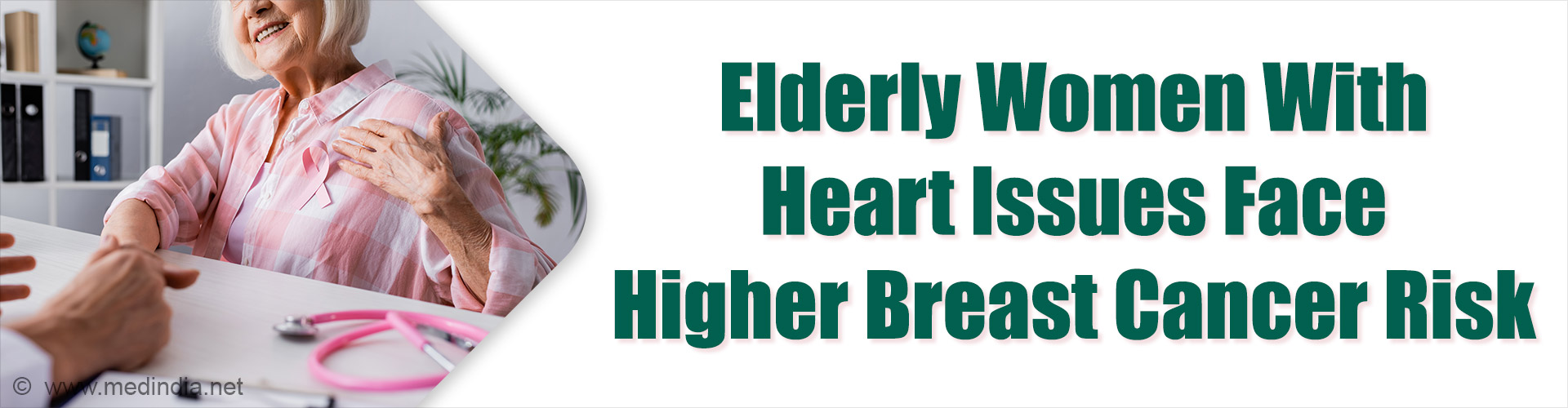
Excess body weight raises breast cancer risk in postmenopausal women, especially those with heart disease, according to a major European study.
Highlights:
A new European study, published in the journal Cancer, reveals that postmenopausal women who are both overweight and have heart disease face a significantly higher risk of developing breast cancer compared to their healthier peers. The findings highlight an important intersection between obesity, cardiovascular health, and cancer risk (1✔ ✔Trusted Source- Obesity increases postmenopausal breast cancer risk
- Women with heart disease face a higher combined risk
- Diabetes did not significantly alter the cancer link
Body mass index and breast cancer risk among postmenopausal women with and without cardiometabolic diseases: Findings from two prospective cohort studies in Europe
Go to source).

Body Mass Index
The BMI calculator helps you assess your weight indicating if it is normal or if you are underweight or overweight, based on your height.
The BMI calculator helps you assess your weight indicating if it is normal or if you are underweight or overweight, based on your height.
TOP INSIGHT

Extra weight and #heartdisease together amplify #breastcancer risk. #BreastCancerAwareness #HeartHealth #Medindia #WomenHealth #Obesity
Key Statistics Linking BMI, Cardiovascular Disease, and Breast Cancer Risk
Researchers analyzed data from over 168,000 postmenopausal women across Europe and found a striking link between body mass index (BMI) and breast cancer risk, especially in those with cardiovascular disease (CVD) . For every 5 kg/m² increase in BMI, women with CVD saw a 31% higher risk of breast cancer, compared to a 13% increase in those without CVD.Being overweight or obese (BMI ≥25) and having CVD together led to 1.53 additional cases of breast cancer per 1,000 women per year than expected. Interestingly, type 2 diabetes did not significantly affect the risk, showing that heart health, rather than diabetes, amplifies the danger of excess weight.

Breast Cancer - Causes, Risks, Symptoms, Diagnosis, Staging, Treatment, Prevention & Prognosis
Breast cancer is a cancer that affects the breasts or mammary glands. Early detection and lifestyle changes help in controlling breast cancer.
Breast cancer is a cancer that affects the breasts or mammary glands. Early detection and lifestyle changes help in controlling breast cancer.
How Obesity and CVD Interact with Breast Cancer Risk
Carrying extra weight after menopause is already a known risk factor for breast cancer. This happens partly because fat tissue produces more estrogen, which can fuel the growth of certain breast tumors. When cardiovascular disease is added to the picture, the body experiences even greater inflammation, hormonal changes, and metabolic stress. This combination seems to create a more favorable environment for cancer cells to grow and spread.Women without heart problems still have an increased risk with higher BMI, but the impact is much less pronounced. This suggests that maintaining both a healthy weight and a strong cardiovascular profile may be essential for long-term breast health.
Quiz on Breast Cancer
Breast cancer is one of the leading causes of cancer deaths among women. It is often said that a woman who breast-feeds is at a lower risk of developing cancer compared to another who does not .Are these mere old wives tales or is there some truth ...
Breast cancer is one of the leading causes of cancer deaths among women. It is often said that a woman who breast-feeds is at a lower risk of developing cancer compared to another who does not .Are these mere old wives tales or is there some truth ...
Why Diabetes Does Not Show the Same Effect
The study also looked at type 2 diabetes (T2D) , which often goes hand in hand with obesity. Surprisingly, diabetes did not significantly change the relationship between BMI and breast cancer risk. This finding suggests that the mechanisms behind CVD, such as vascular damage and chronic inflammation, may play a more direct role in triggering cancer than blood sugar levels alone.
Quiz on Obesity
“We are indeed much more than what we eat, but what we eat can nevertheless help us to be much more than what we are”. - Adelle Davis There are thousands out there battling ‘the bulge’. With childhood obesity on the rise ...
“We are indeed much more than what we eat, but what we eat can nevertheless help us to be much more than what we are”. - Adelle Davis There are thousands out there battling ‘the bulge’. With childhood obesity on the rise ...
What This Means for Postmenopausal Women
For postmenopausal women, the study reinforces the need for a comprehensive approach to health. Combining weight management, heart health monitoring, and routine cancer screenings could help detect potential risks earlier.This research also underscores the importance of tailored prevention strategies. Women with a history of heart disease may need closer breast cancer screening, especially if they are overweight. Doctors might also consider more aggressive lifestyle interventions in this group, focusing on nutrition, exercise, and cardiovascular care.
How Obesity, Heart Disease, and Breast Cancer Risks Are Linked
This discovery is a reminder of how interconnected our health systems are. Obesity, heart disease, and cancer do not exist in isolation. They often share common pathways, including inflammation and hormonal imbalances. By addressing one condition, such as heart disease, we may reduce the chances of developing another, like breast cancer.It also highlights the importance of looking beyond traditional risk factors. While family history and genetics are well-known, lifestyle-related conditions like CVD may amplify cancer risks in ways we are only beginning to understand.
The study sends a powerful message: postmenopausal women who are both overweight and living with heart disease face a much higher risk of breast cancer compared to others. Maintaining a healthy weight and protecting your heart health could do more than just prevent heart attacks. It may also lower your chances of developing one of the most common cancers in women.
If you or someone you care about is postmenopausal, now is the time to talk to a doctor about heart health, weight management, and breast cancer screening. Taking proactive steps today could protect your future in more ways than one.
Reference:
- Body mass index and breast cancer risk among postmenopausal women with and without cardiometabolic diseases: Findings from two prospective cohort studies in Europe - (https://acsjournals.onlinelibrary.wiley.com/doi/full/10.1002/cncr.35911)
Source-Medindia
 Email
Email