MEDINDIA
 English
 हिन्दी
 Español
 français
 中文
中文

Barbie introduces its first-ever doll with type 1 diabetes to empower and represent children managing chronic conditions.
Highlights:
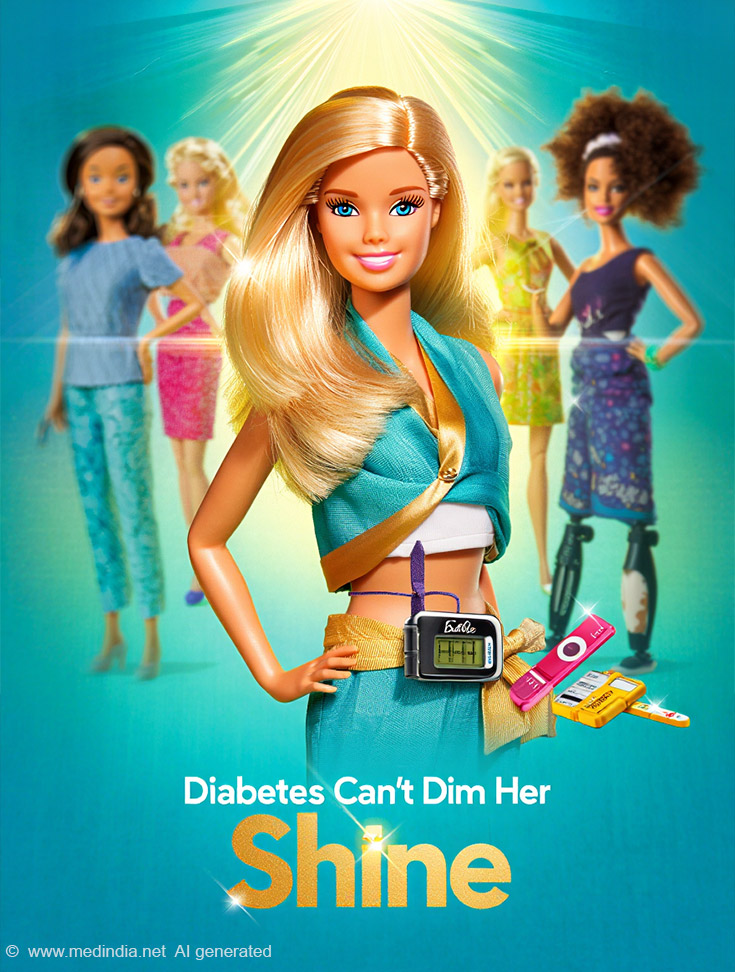
Barbie has now made a transformative move toward being more representative of a diverse society by introducing an extraordinary new member to its timeless collection of dolls—the first-ever Barbie doll with Type 1 diabetes. It is not merely a doll but a representation of feeling seen, heard, and empowered for children with chronic conditions through this thoughtful launch. Barbie continues its promise to be more reflective of the real world and to make every child feel represented by recognizing and celebrating health diversity (1✔ ✔Trusted Source- First-ever Barbie doll with an insulin pump, made in collaboration with JDRF
- Helps normalize Type 1 diabetes for children
- Expands the Barbie Fashionistas line to reflect real-world health diversity
Barbie® Introduces First-Ever Barbie Doll with Type 1 Diabetes to Expand Representation and Inspire More Children
Go to source).

Quiz on Diabetes
Diabetes has replaced every other condition to become the fastest growing lifestyle disease, globally. This disease also impacts children. Some people are more inclined to develop diabetes than others. Do you belong to the high- risk group? Spend 5 ...
Diabetes has replaced every other condition to become the fastest growing lifestyle disease, globally. This disease also impacts children. Some people are more inclined to develop diabetes than others. Do you belong to the high- risk group? Spend 5 ...
TOP INSIGHT

Did You Know?
Barbie's latest look? Bold, stylish, and real. With a #glucose monitor and #insulin pump, the new Type 1 Diabetes Barbie gives 300,000+ kids a chance to see themselves in the spotlight. #type1diabetes #representationmatters #matel #inclusivetoys #medindia
Barbie Gets Real About Diabetes
The 65-year-old brand has finally created a doll that comes with a type 1 diabetes management product, an insulin pump visible on her waist for the first time in the record of company, and it is named Barbie in a Wheelchair. Developed in partnership with JDRF, the largest and globally recognized Type 1 diabetes research and advocacy organization, this new Barbie represents a game-changer in how children are represented in toys.It is more than just a matter of play; it is a healthy and empowering way for children to normalize their health differences and see themselves reflected in the toys they use.

Diabetes Risk Assessment Calculator
Almost one-third of the people are unaware of the risk factors of diabetes. Find out if you run the risk of diabetes by using Diabetes Risk Assessment calculator.
Almost one-third of the people are unaware of the risk factors of diabetes. Find out if you run the risk of diabetes by using Diabetes Risk Assessment calculator.
Bridging Play and Real Life
Type 1 diabetes (T1D) is an autoimmune disease affecting approximately 1.45 million Americans, including more than300,000 children. Living with T1D can be lonely, especially for children who must manage daily insulin injections, glucose monitoring, and dietary restrictions. However, the sight of a doll with the same insulin pump or with the same condition can:- Normalize the experience of managing diabetes.
- Eliminate the stigma on medical devices.
- Spark meaningful conversations between kids and parents. .
- Encourage empathy among peers without the condition..

Barbie’s Bolder Move: Flats Over Heels, Power Over Pose!
Barbie’s evolving foot posture and careers reflect shifting gender norms, encouraging young girls to embrace empowerment, realism, and confidence.
Barbie’s evolving foot posture and careers reflect shifting gender norms, encouraging young girls to embrace empowerment, realism, and confidence.
Designed with Care To Connect
The T1D Barbie did not come about by chance. Mattel worked closely with JDRF and consulted families living with type 1 diabetes to ensure the representation was accurate and sensitive to the condition. The doll is fitted with an insulin pump that is subtle and at the same time realistic so that children and adults with T1D can relate it to the real-life equipment that they wear.In addition, the doll has been part of the Barbie Fashionistas line, which has, over the years, evolved to be more inclusive, featuring dolls with vitiligo, prosthetic limbs, hearing aids, and wheelchairs, making Barbie the figure of diversity and inclusion.

Type 1 Diabetes: From Cause to Treatment
An overview of type 1 diabetes, its contributing factors, management and adopting a healthy lifestyle to cope with it.
An overview of type 1 diabetes, its contributing factors, management and adopting a healthy lifestyle to cope with it.
Community Celebrates the Launch
The response of the community of diabetics has been excessively positive. On social media, numerous parents have posted moving tales on how the new doll has not only brought happiness but also tears as these parents use the doll as an effective learning method with their children.JDRF CEO Dr. Aaron Kowalski welcomed the move, saying:
“This Barbie doll is a wonderful step in helping kids with T1D feel seen and helping others understand what it’s like to live with the condition.”
In the Pursuit of a More Inclusive World
This launch isn't just about one doll—it's a broader cultural shift. By making medical diversity visible in mainstream toys, Mattel is encouraging a more compassionate and aware generation of children.The hope is that future toy shelves will be filled with dolls and figures representing every kind of ability, background, and health condition, turning playtime into a moment of empowerment and empathy.
Barbie has once again proved that she is more than a fashion icon; she is a representation of the world we live in and the people who shape it. Mattel is extending emotional support to children across the globe with the launch of the Type 1 Diabetes Barbie.
Reference:
- Barbie® Introduces First-Ever Barbie Doll with Type 1 Diabetes to Expand Representation and Inspire More Children - (https://corporate.mattel.com/news/barbie-introduces-first-ever-barbie-doll-with-type-1-diabetes-to-expand-representation-and-inspire-more-children)
Source-Medindia
 Email
Email