MEDINDIA
 English
 हिन्दी
 Español
 français
 中文
中文
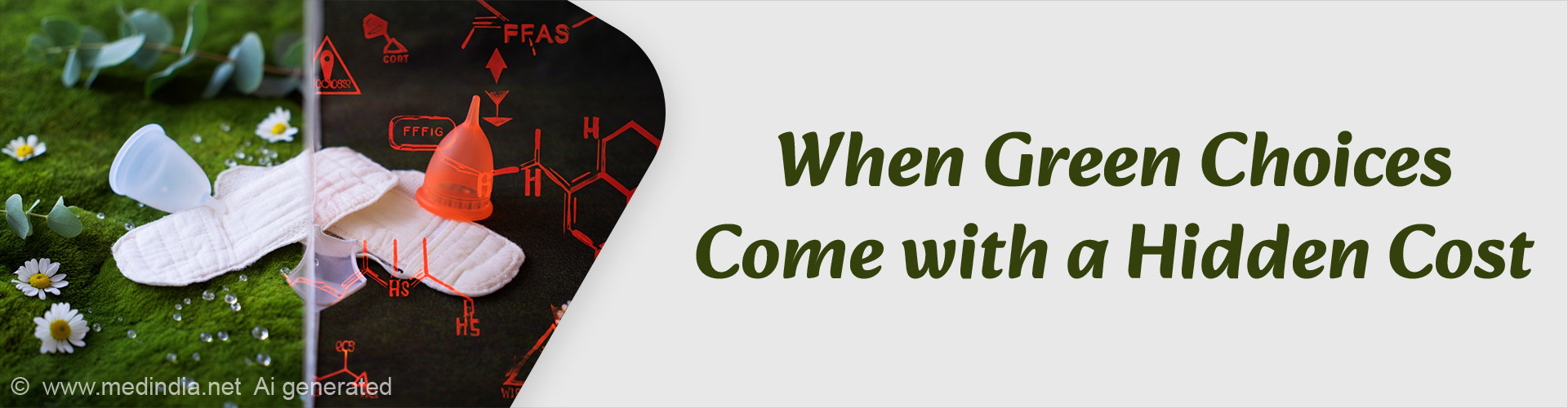
Reusable menstrual products may be eco-friendly—but recent studies reveal toxic PFAS contamination, raising serious health and regulatory concerns.
Highlights:
Reusable menstrual products, such as cloth pads and menstrual cups, have become a symbol of sustainability, affordability, and empowerment. They are marketed as environmentally friendly alternatives to disposable menstrual pads and are increasingly popular among eco-conscious consumers. Nevertheless, recent scientific investigations have raised a serious concern about the presence of per- and polyfluoroalkyl substances (PFAS), a class of persistent and potentially toxic chemicals, in some reusable feminine hygiene products (1✔ ✔Trusted Source- PFAS found in cloth pads marketed as water- or stain-resistant
- PFAS exposure is linked to cancer, immune dysfunction, and hormone issues
- Experts urge chemical transparency, product testing, and safer standards
Per- and Polyfluoroalkyl Substances in Reusable Feminine Hygiene Products
Go to source).

Painful Menstrual Periods / Dysmenorrhea - Symptom Evaluation
Dysmenorrhea or painful menstrual periods can be due to primary or secondary causes.
Dysmenorrhea or painful menstrual periods can be due to primary or secondary causes.
TOP INSIGHT

Did You Know?
Some "eco-friendly" reusable menstrual pads contain #PFAS-chemicals linked to #cancer and hormonal disruption.
#foreverchemicals #menstrualcups #sanitarynapkins #bleedsafe #menstruation #medindia
What Are PFAS, and Why Should We Worry?
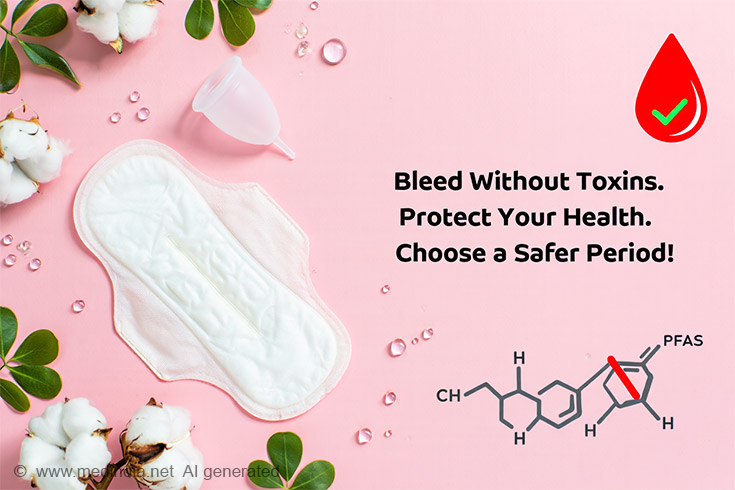
PFAS are a group of synthetic chemicals valued for their unique properties, which include water resistance, stain resistance, and grease resistance. They are used to make a wide range of products, from nonstick cookware to firefighting foams.These substances are commonly referred to as “Forever Chemicals” because they do not easily break down; instead, they accumulate over time and can cause harm, including:
- Hormonal disruption
- Immune system impairment
- Increased risk of certain cancers
- Reproductive and developmental toxicity
Period or Menstrual Cycle Calculator
Period or Menstrual Cycle Calculator informs you of expected date of next 3 menstrual periods and helps find if you have missed your period. Use this tool to plan special occasions and track ovulation.
Period or Menstrual Cycle Calculator informs you of expected date of next 3 menstrual periods and helps find if you have missed your period. Use this tool to plan special occasions and track ovulation.
PFAS in Reusable Pads
A 2024 report published in Environmental Science & Technology Letters found that reusable cloth menstrual pads from various brands, especially those marketed as water- or stain-resistant, contained PFAS.PFAS are commonly used to create moisture barriers. However, their use in intimate products raises serious safety concerns. The study team employed a non-destructive technique known as Particle-Induced Gamma-ray Emission (PIGE) spectroscopy to detect the presence of fluorine, a key indicator of PFAS, while also ensuring that the product was not damaged.
Elevated fluorine levels suggested that some reusable pads were either treated with PFAS during manufacturing or contaminated through component materials.
From Pads to Cups: The Ultimate Guide to Period Freedom
Menstrual cups are gaining popularity as they are sustainable, environment-friendly, and leak-free.
Menstrual cups are gaining popularity as they are sustainable, environment-friendly, and leak-free.
Safety Starts with Clarity
The most concerning issue, among others, is prolonged skin contact; these chemicals can permeate menstrual pads. Consumers are often misled by the label "reusable" without questioning whether these products are genuinely healthier and more sustainable alternatives. This research demonstrates the necessity of immediate transparency in product labeling, stricter regulation of chemical safety, and independent testing of menstrual products so that eco-friendliness is not achieved at the expense of women's health.The problem is further complicated by inconsistent regulation of chemical safety, especially in low- and middle-income countries.
Biodegradable Sanitary Pads ‘Safe’ For Women As Well as Eco-friendly
Biodegradable, eco-friendly sanitary napkins are now available to Indian women. These pads are made in India and completely natural, free from plastic, safe and do not cause allergies, itching or infections.
Biodegradable, eco-friendly sanitary napkins are now available to Indian women. These pads are made in India and completely natural, free from plastic, safe and do not cause allergies, itching or infections.
Barriers to Bleeding Clean
The reusable products are especially preferred in these resource-constrained settings. However, despite their affordability and sustainability benefits, health risks remain a serious concern. Switching to safer alternatives is not easy, as multiple barriers persist, according to the study “Reusable sanitary napkins—time to revisit.”- Hygiene concerns in areas with poor water access
- Cultural stigma and lack of menstrual education
- Drying and storage difficulties due to privacy limitations
Reusable sanitary napkins-time to revisit
Go to source).
Menstrual hygiene is not a trade-off but rather a human right. Mandatory safety testing and clear labeling are crucial as reusable menstrual products gain popularity.
Manufacturers must bear the responsibility of ensuring these products are free from PFAS and other harmful substances.
Consumers deserve safe choices that align with their values—without risking their health in the name of environmental good.
References:
- Per- and Polyfluoroalkyl Substances in Reusable Feminine Hygiene Products - (https://pubs.acs.org/doi/10.1021/acs.estlett.5c00553)
- Reusable sanitary napkins-time to revisit - (https://academic.oup.com/jpubhealth/article/44/2/356/5983392)
Source-Medindia
 Email
Email