MEDINDIA
 English
 हिन्दी
 Español
 français
 中文
中文

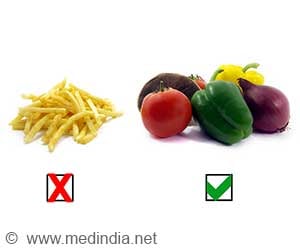
Eating more fruits, vegetables, and whole grains during the day leads to deeper, less interrupted sleep that same night.
Highlights:
Eating a diet rich in fruits and vegetables during the day significantly improves sleep quality at night. Sleep disruptions have widespread effects, from increased health risks to reduced productivity and emotional well-being (1✔ ✔Trusted Source- Eating more fruits and vegetables improves sleep that very night
- Daily intake of whole grains reduces nighttime sleep interruptions
- Five cups of fruits and vegetables a day boost sleep by 16 percent
Higher daytime intake of fruits and vegetables predicts less disrupted nighttime sleep in younger adults
Go to source). Countless approaches like white noise machines, counting sheep, or weighted blankets have aimed to enhance sleep. Yet, a powerful and natural solution has long been present in our diets—particularly in the produce aisle.

Six Essential Habits for Better Sleep
Discover the 6 habits to help you sleep better, from consistent sleep schedules to stress management techniques.
Discover the 6 habits to help you sleep better, from consistent sleep schedules to stress management techniques.
TOP INSIGHT

Did You Know?
Eating five cups of fruits and vegetables in a day can improve your sleep quality by up to 16 percent that same night. #medindia #sleep #healthyeating
Fresh Produce Shows Real-Time Sleep Benefits
New findings from the University of Chicago Medicine and Columbia University reveal a direct connection between daily dietary choices and nighttime sleep patterns. The key detail: what people eat during the day can shape how well they sleep that same night.“This is a new, natural and cost-effective approach to improving sleep,” shared Esra Tasali, director of the University of Chicago Sleep Center. “This is a meaningful leap in understanding how lifestyle affects sleep.”

Sleep - Overview and Definition
Sleep is a behavioral state of restricted physical activity. It is controlled by our internal biological clock.
Sleep is a behavioral state of restricted physical activity. It is controlled by our internal biological clock.
Nutritional Choices Influence Sleep Cycle
Past findings have shown that poor sleep leads to increased cravings for sugary and fatty foods. However, less has been known about how nutritious food choices directly affect sleep quality and patterns.Although earlier reports linked high fruit and vegetable intake with better self-reported sleep, this is the first time scientists have recorded a day-to-night impact using objective sleep-tracking tools.
Tracking Sleep Through Daily Diet
Participants, who were healthy young adults, logged their meals through an app and wore wrist monitors that captured their sleep activity. Researchers specifically focused on “sleep fragmentation,” a measure that captures how often someone wakes or shifts between light and deep sleep during the night.Each day’s food intake had a noticeable effect on sleep quality. Participants who consumed more fruits, vegetables, and healthy whole grains experienced more continuous and deeper sleep that same night.

Sleep Debt Calculator
Calculate your sleep debt! Track your nightly shortfall, and see how those lost hours add up fast. Use Medindia’s simple Sleep Debt calculator.
Calculate your sleep debt! Track your nightly shortfall, and see how those lost hours add up fast. Use Medindia’s simple Sleep Debt calculator.
Quantifying the Sleep Boost
Through data analysis and modeling, the team found that people who eat five cups of fruits and vegetables daily, matching government health recommendations, could experience up to a 16 percent improvement in their sleep quality compared to those who consume none.“Sixteen percent is a major difference,” said Tasali. “To see such results within just one day is truly remarkable.”
Long-Term Health and Sleep Connection
While further work is needed to confirm cause-and-effect and to test the results in broader populations, current evidence strongly supports a lasting link between diet and sleep. Understanding the underlying biology behind this connection will be a major step forward.Still, the practical advice remains the same: regularly eating fruits, vegetables, and complex carbohydrates can naturally support better, healthier sleep.
“People often ask what they can eat to sleep better,” said Marie-Pierre St-Onge, co-senior contributor and director at Columbia. “Now we know small dietary changes can make a real difference. That’s powerful—better sleep is within reach.”
In conclusion, boosting sleep quality may be as simple as filling your plate with more fruits, vegetables, and whole grains. These dietary choices not only enhance health in the long term but can offer almost immediate improvements in nighttime rest, making quality sleep a deliciously reachable goal.
Reference:
- Higher daytime intake of fruits and vegetables predicts less disrupted nighttime sleep in younger adults - (https://www.sleephealthjournal.org/article/S2352-7218(25)00089-0/fulltext)
Source-Medindia
 Email
Email