MEDINDIA
 English
 हिन्दी
 Español
 français
 中文
中文
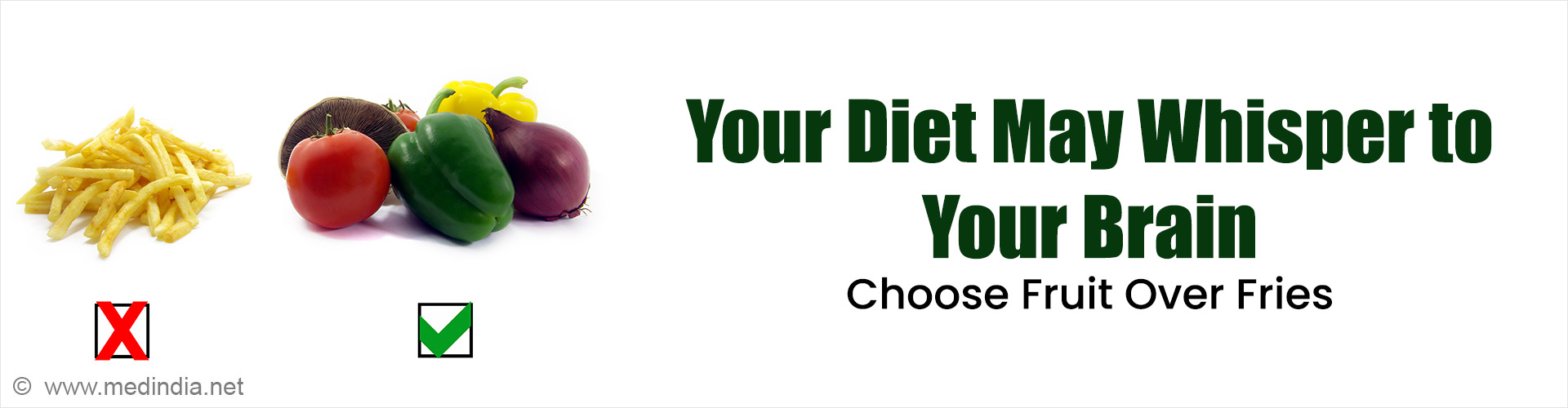
Diets rich in sweets and processed meats increase Parkinson’s disease risk, while fruit, especially citrus, offers protective effects.
Highlights:
Can what’s on your plate affect your brain decades later? A new Italian study published in the Journal of Parkinson’s Disease suggests that daily eating habits—not just genes or environmental toxins—may influence the risk of developing Parkinson's disease (PD) (1✔ ✔Trusted Source- Diets rich in sweets, red meat, and cured meats raise Parkinson’s odds
- Fruit-rich diets, especially citrus, show protective effects
- Study compared 680 Parkinson’s patients and 612 controls in Italy
The impact of diet on Parkinson's disease risk: A data-driven analysis in a large Italian case-control population
Go to source). Researchers found that people who frequently consumed sweets, red meat, and cured meats had significantly higher odds of Parkinson’s, while fruit-rich diets, especially those with citrus, appeared to offer protection.

Dementia Risk Calculator
Dementia Risk Calculator is a tool to find out the risk of dementia among people over the age of 65.It also provides diet tips on Dementia.
Dementia Risk Calculator is a tool to find out the risk of dementia among people over the age of 65.It also provides diet tips on Dementia.
TOP INSIGHT

Did You Know?
Daily food choices may subtly shape the brain’s future - while #sweets and #processed meats raise #Parkinson’s odds, fruit may help shield neurons. #parkinsonsdisease #dietandbrain #nutritionscience #neurohealth #medindia
Gut-Brain Axis: The Missing Link Between Food and Parkinson’s
Parkinson’s is a progressive neurodegenerative disorder characterized by tremors, rigidity, and movement difficulties. Scientists are now exploring the gut-brain connection — how diet-driven inflammation and oxidative stress may damage dopaminergic neurons over time.The study’s authors argue that understanding entire dietary patterns rather than isolated nutrients is crucial to unravel how food contributes to brain health or disease.

Nutritional Management of Parkinson's Disease
Parkinson's disease is a brain disorder which leads to many other related effects. Nutrition plays an important role in management of the disease.
Parkinson's disease is a brain disorder which leads to many other related effects. Nutrition plays an important role in management of the disease.
Inside the Study: A Data-Driven Look at Italian Diets
Conducted across six neurology centers in Italy between 2018 and 2019, the study included 1,292 participants — 680 with Parkinson’s and 612 healthy controls. Participants completed a 77-item Food Frequency Questionnaire (FFQ) tailored to Italian cuisine, detailing their diet before symptom onset.To identify patterns, researchers used Principal Component Analysis and Exploratory Factor Analysis, grouping foods into seven dietary clusters — sweets, fruits, red meat, salads, cruciferous vegetables, cured meats, and alcohol.

Can a Healthy Diet Prolong the Onset of Parkinson’s Disease?
High adherence to a healthy diet rich in legumes, vegetables, and nuts lower the risk of having three or more symptoms that precede Parkinson's disease. Some preceding symptoms include non-motor symptoms such as constipation, daytime sleepiness, and ...
High adherence to a healthy diet rich in legumes, vegetables, and nuts lower the risk of having three or more symptoms that precede Parkinson's disease. Some preceding symptoms include non-motor symptoms such as constipation, daytime sleepiness, and ...
Key Findings: Fruit Protects, Sweets Harm
After statistical adjustments, four dietary factors remained independently linked to Parkinson’s:- Sweets: 20% higher odds per intake increase
- Red meat: 15% higher odds
- Cured meats: 32% higher odds
- Fruit: 16% lower odds, with citrus showing the strongest effect

Extra Weight, Extra Worry: How Body Fat Influences Parkinson’s Risk
Your body composition might affect your risk of dementia or Parkinson’s disease. Higher fat levels in the arms and belly are linked to an increased risk.
Your body composition might affect your risk of dementia or Parkinson’s disease. Higher fat levels in the arms and belly are linked to an increased risk.
Environmental vs. Dietary Risk: A Matter of Scale
The researchers noted that environmental toxins—like pesticides and petroleum oils —carried stronger risks than diet alone.However, the protective effect of fruit intake was similar in magnitude to the benefits of coffee consumption and smoking history, both known to modestly lower PD risk.
They suggest that reducing sweets and processed meats while increasing fruit consumption could offer a practical, everyday prevention strategy — one that families can act on immediately, unlike genetic or occupational factors.
What’s Next: From Association to Action
Although the study’s retrospective design means it cannot prove causality, it provides strong evidence that eating habits and neurodegeneration are intertwined. Future prospective studies and intervention trials will be needed to confirm whether altering diet can reduce Parkinson’s risk or slow disease progression.Researchers conclude that “emphasizing fruit and dialing down sweets and processed meats” could complement established preventive measures that target environmental exposures.
Reference:
- The impact of diet on Parkinson's disease risk: A data-driven analysis in a large Italian case-control population - (https://journals.sagepub.com/doi/10.1177/1877718X251388058)
Source-Medindia
 Email
Email