MEDINDIA
 English
 हिन्दी
 Español
 français
 中文
中文
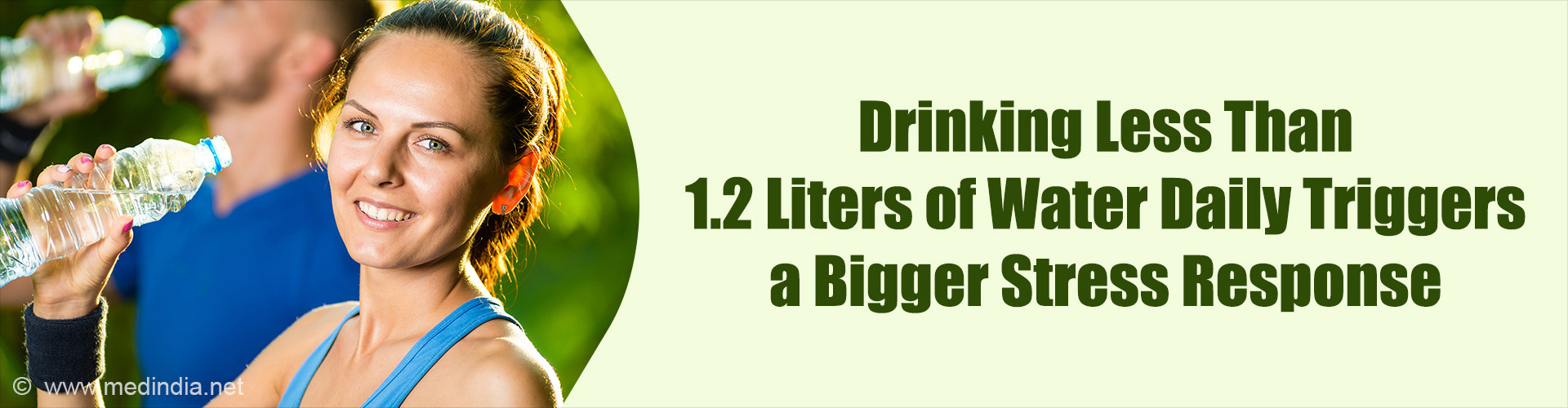
People who drink less water and remain suboptimally hydrated show heightened cortisol responses to psychosocial stress, which may affect long-term health.
Highlights:
Consistently consuming less water than recommended can lead to suboptimal hydration, typically reflected in darker, more concentrated urine and decreased urine output. Scientific evidence links habitual low fluid intake to increased risks of metabolic, renal, and cardiovascular diseases (1✔ ✔Trusted Source- Suboptimal hydration leads to greater cortisol reactivity during stress
- Higher hydration levels are associated with lower cortisol spikes
- Long-term low fluid intake may raise risk for metabolic and cardiovascular issues
Habitual fluid intake and hydration status influence cortisol reactivity to acute psychosocial stress
Go to source). Chronic low water consumption may also elevate hormones responsible for water regulation, such as arginine vasopressin, which may stimulate the release of the stress hormone cortisol. Although cortisol is known to spike during acute stress and follow a daily rhythm, disruptions or exaggerated responses can impair immune function, metabolism, and inflammation.
Previous findings suggest that individuals who are not well-hydrated and drink under 1.2 liters of fluids daily tend to show higher cortisol levels, though the connection between hydration and cortisol remains unclear.

Daily Water Intake
Calculate how much glasses of water you need to drink each day to avoid dehydration using this daily water intake calculator.
Calculate how much glasses of water you need to drink each day to avoid dehydration using this daily water intake calculator.
TOP INSIGHT

Did You Know?
People who drink less than 1.2 liters of fluids daily show stronger #cortisol spikes during psychosocial #stress, potentially raising long-term health risks. #hydration #drink_water #stressresponse #medindia
Examining Cortisol Reactivity and Fluid Consumption
Due to the intertwined biological pathways between cortisol release and fluid regulation, the aim was to determine whether individuals with suboptimal hydration and consistently low fluid intake display heightened cortisol reactivity in response to acute psychosocial stress.Participants were healthy, non-smoking adults between the ages of 18 and 35, with no known immune, cardiovascular, metabolic, or sleep conditions. They were categorized into LOW and HIGH fluid intake groups using national consumption data thresholds.
Each group had 16 participants. During a 7-day screening period, participants logged their daily fluid intake and were matched in pairs to control for confounding variables. Those with high caffeine or alcohol consumption were excluded. Participants then continued their regular drinking habits for another 7 days under observation, which provided a more reliable insight than a single observation.

Water Matters: Why You Need to Drink Enough Water Everyday
Water is essential to balance body fluids, boost brain function, improve digestion, prevent kidney stones, regulate body temperature, and control cholesterol. The required water intake for adult men and women is 3.7 and 2.7 liters per day.
Water is essential to balance body fluids, boost brain function, improve digestion, prevent kidney stones, regulate body temperature, and control cholesterol. The required water intake for adult men and women is 3.7 and 2.7 liters per day.
Stress Test and Biomarker Assessment
Following the observation period, all participants underwent the Trier Social Stress Test, after which saliva samples were collected and analyzed for cortisol. Urine samples were assessed for urine osmolality and color, while blood samples were tested for copeptin as an additional hydration marker.The Trier Social Stress Test is a standardized laboratory procedure designed to induce acute psychological stress in human participants by exposing them to social-evaluative threat and uncontrollable tasks. It typically involves a simulated job interview with public speaking, followed by a difficult mental arithmetic task, all performed in front of an evaluative panel.
The HIGH fluid intake group had consistently lower levels of urine osmolality, urine color concentration, and plasma copeptin compared to the LOW group. However, there were no notable differences in thirst sensation or plasma osmolality between the groups. Based on a urine osmolality cutoff of 500 milliosmoles per kilogram of water, 15 out of 16 participants in the LOW group were considered suboptimally hydrated on the morning of the stress test. While 14 out of 16 in the HIGH group were adequately hydrated.

The Surprising Benefits of Hydration
Hydration offers surprising health benefits, from improving skin and energy levels to boosting brain function and digestion. Drink up for better well-being!
Hydration offers surprising health benefits, from improving skin and energy levels to boosting brain function and digestion. Drink up for better well-being!
Heart Rate, Anxiety, and Cortisol Patterns During Stress
Both groups showed clear increases in heart rate and reported anxiety levels in response to the stress test, though the magnitude of change was similar between them. Interestingly, fewer participants in the LOW group reported a meaningful spike in state anxiety, yet they had higher baseline saliva cortisol levels than the HIGH group.Following a standardized 25-minute rest period before the stress test, both groups' saliva cortisol levels aligned. However, when baseline cortisol was factored in as a covariate in statistical models, the stress test still caused a notable cortisol spike, with levels peaking after the test in both groups.

How Much Water is Too Much? The Hidden Danger of Overhydration
Can drinking too much water be dangerous? Yes! Learn about water intoxication, its risks, and how to hydrate safely.
Can drinking too much water be dangerous? Yes! Learn about water intoxication, its risks, and how to hydrate safely.
Suboptimal Hydration Linked to Stronger Cortisol Spikes
When looking at individuals whose cortisol or anxiety shifts exceeded normal daily fluctuations, both groups had a similar proportion of “responders.” Despite this, those in the LOW fluid intake group consistently exhibited greater cortisol reactivity.A significant interaction was noted between group and time, with saliva cortisol rising notably after the stress test only among those in the LOW group. In contrast, those in the HIGH group showed blunted cortisol reactivity, which aligned with better hydration status as reflected in urine osmolality measurements.
Implications for Health and Need for Further Research
These findings indicate that individuals with low habitual water intake and poor hydration status show a stronger cortisol response to acute psychosocial stress. This pattern may contribute to the link between hydration habits and long-term health risks.Despite being prospectively monitored, the study design was cross-sectional and thus cannot establish causation. Additionally, its short duration limits understanding of long-term health outcomes. Since low fluid consumption is also associated with risks for metabolic and cardiovascular conditions, further long-term research is needed to assess whether stress-related cortisol reactivity plays a role in these associations.
To sum up, individuals with low daily fluid intake and suboptimal hydration are more likely to experience heightened cortisol responses during psychosocial stress. These findings highlight the potential long-term health implications of inadequate hydration, especially in relation to stress-related disorders.
Reference:
- Habitual fluid intake and hydration status influence cortisol reactivity to acute psychosocial stress - (https://journals.physiology.org/doi/full/10.1152/japplphysiol.00408.2025)
Source-Medindia
 Email
Email