MEDINDIA
 English
 हिन्दी
 Español
 français
 中文
中文
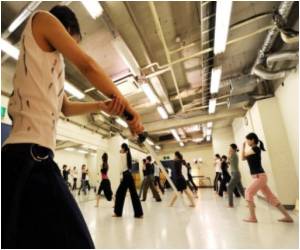
Fitness enthusiasts struggle with the same question: Does the order of cardio- and resistance training influence the effectiveness of a training program?

Exercise and Fitness - Benefits - Classification - Options - Kick Off
Exercise is about revamping your lifestyle, not just weight loss. Exercise to get healthy – that way, you’ll last longer at it and get better results.
Exercise is about revamping your lifestyle, not just weight loss. Exercise to get healthy – that way, you’ll last longer at it and get better results.
The participants of these studies (Schumann et al. 2014a, 2014b) were 18-40 years old men and performed either supervised cardio- immediately followed by strength training or vice versa for 24 weeks (2-3 combined cardio- and resistance sessions per week). The researchers were interested to investigate whether the immediate anabolic effects of one single exercise session would differ between the two training orders and whether these differences would be reflected in the physiological adaptations induced by 6 months of training. As prolonged aerobic performance may "weaken" the exercised muscles and essentially reduce the ability to lift heavy loads during the subsequent resistance training session, the researchers expected to observe less favorable anabolic effects resulting in compromised adaptations in muscle strength and mass in the "cardio first" group compared to the group which started each session with resistance training.
Despite differences in recovery time training order did not affect long-term adaptations

The amount and/or frequency of training may play a key role

Self-Rated Physical Fitness in Midlife an Indicator of Future Dementia Risk
Rate your own physical fitness. Is it good, satisfactory or maybe even poor? Surprisingly, your answer may reveal your future risk of getting dementia.
Rate your own physical fitness. Is it good, satisfactory or maybe even poor? Surprisingly, your answer may reveal your future risk of getting dementia.
Source-Eurekalert

Pine Bark Supplement for Athletes Helps in Fitness, Pain Relief
Struggling with your fitness routine? Research reveals the bark from pine trees could help in keeping you fit, reduce oxidative stress and muscular pain.
Struggling with your fitness routine? Research reveals the bark from pine trees could help in keeping you fit, reduce oxidative stress and muscular pain.
 Email
Email