MEDINDIA
 English
 हिन्दी
 Español
 français
 中文
中文
Computerized tomography scanning (CT scan) appears to help in the diagnosis of gout.
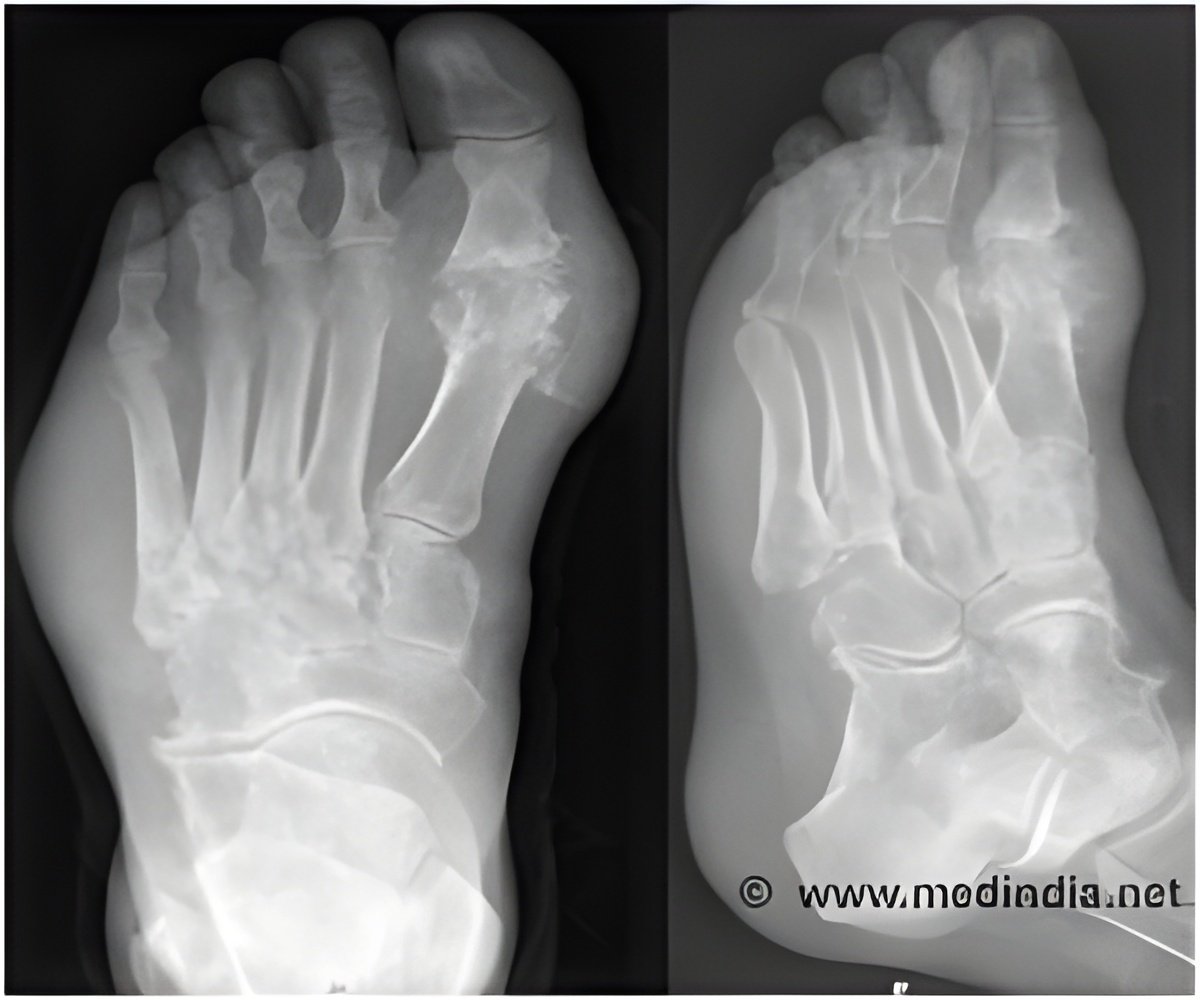

About Gout
High levels of uric acid in blood and recurring attacks of joint inflammation are the main symptoms of gout. Lifestyle changes like weight loss, increasing fluid intake and dietary changes can help.
High levels of uric acid in blood and recurring attacks of joint inflammation are the main symptoms of gout. Lifestyle changes like weight loss, increasing fluid intake and dietary changes can help.
"We wanted to really challenge the new method by including patients who were only a few days into their first flare of gout," Dr. Bongartz says.
Dr. Bongartz notes that CT scans are significantly more expensive than the standard test for diagnosing gout. He also cautions that, while highly accurate overall, in one subgroup of patients studied -- those with very acute gout -- the CT scan failed to identify 30 percent of cases. The new tool is most helpful when joint fluid cannot be obtained or the fluid analysis comes back negative even when gout is strongly suspected, he says.
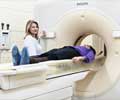
Computed Tomography Scan (CT Scan)
Computed Tomography (CT) scan is a type of medical examination that uses X-rays and computer processing to create sectional images of the body to provide more efficient results than X-rays.
Computed Tomography (CT) scan is a type of medical examination that uses X-rays and computer processing to create sectional images of the body to provide more efficient results than X-rays.
Source-Eurekalert

Poor Footwear Choices Increase Foot Impairment and Disability in Gout Patients
New research shows that gout patients who make poor footwear choices experience higher foot-related pain, impairment and disability.
New research shows that gout patients who make poor footwear choices experience higher foot-related pain, impairment and disability.
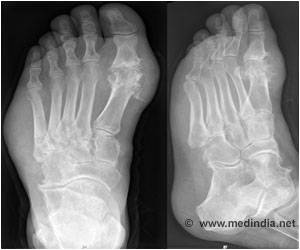
New Gout Drug Proves Effective
Patients with chronic gout who received the medication pegloticase showed greater improvements in uric acid measures as well as physical function and quality of life, shows study.
Patients with chronic gout who received the medication pegloticase showed greater improvements in uric acid measures as well as physical function and quality of life, shows study.
 Email
Email