MEDINDIA
 English
 हिन्दी
 Español
 français
 中文
中文
Research indicates a potential correlation between SARS-CoV-2 infection and fetal situs inversus, a congenital condition.

Association of SARS-CoV-2 Infection during Early Weeks of Gestation with Situs Inversus
Go to source). Situs inversus totalis (SIT) is a rare //congenital abnormality characterized by a mirror-image transposition of both the abdominal and the thoracic organs. This is a global defect of situs orientation and failure to generate normal left-right asymmetry. Frequency of situs inversus is 1:10,000 to 1:20,000 and is more frequent in males.
Surge in Fetal Situs Inversus Cases During COVID-19
Writing in a report published in the New England Journal of Medicine, the team stated that cases of fetuses with the rare congenital condition rose four-fold in the first seven months of 2023 post COVID. “We noted a striking increase in the number of cases of fetal situs inversus that were diagnosed by means of ultrasonography at our hospital several months after the “zero-COVID” policies in China were lifted,” said the researchers including from Tongji University and Shanghai Jiao Tong University in Shanghai, China.
COVID in Children
Covid-19 virus has affected many children during the second wave. Many factors play a role in COVID in children and the management of COVID in children. Therefore, it is highly essential for parents to know and understand the symptoms in children.
Covid-19 virus has affected many children during the second wave. Many factors play a role in COVID in children and the management of COVID in children. Therefore, it is highly essential for parents to know and understand the symptoms in children.
TOP INSIGHT

A notable fourfold increase in congenital abnormalities, particularly cases of fetal situs inversus, has been reported in China following the COVID-19 pandemic. #covid #birthdefects
The incidence peaked in April 2023 and remained elevated through June 2023. Overall, 56 cases of situs inversus were identified from January 2023 through July 2023 (52 cases of situs inversus totalis and 4 cases of partial situs inversus).
“The increase followed the surge of SARS-CoV-2 infections that occurred after the zero-COVID policies were discontinued,” the researchers said. However, “no conclusions can be made regarding causality”, they added.

Test your Knowledge on Coronavirus (COVID-19)
Coronavirus is a large positive-strand RNA virus that is surrounded by a protein envelope. The virus obtains its name from the S protein spikes on its surface, which resemble a crown. The overall pattern of increasing coronavirus cases is shown to ...
Coronavirus is a large positive-strand RNA virus that is surrounded by a protein envelope. The virus obtains its name from the S protein spikes on its surface, which resemble a crown. The overall pattern of increasing coronavirus cases is shown to ...
- Association of SARS-CoV-2 Infection during Early Weeks of Gestation with Situs Inversus - (https://www.nejm.org/doi/pdf/10.1056/NEJMc2309215)
Source-IANS
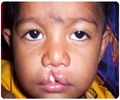
Multifactorial Birth Defects
Encyclopedia section of medindia gives in brief General Info about About Multifactorial Birth Defects.
Encyclopedia section of medindia gives in brief General Info about About Multifactorial Birth Defects.
Birth Defect - Genetic
Achondroplasia is a genetic disorder which is one of the leading causes of dwarfism
Achondroplasia is a genetic disorder which is one of the leading causes of dwarfism
 Email
Email