MEDINDIA
 English
 हिन्दी
 Español
 français
 中文
中文
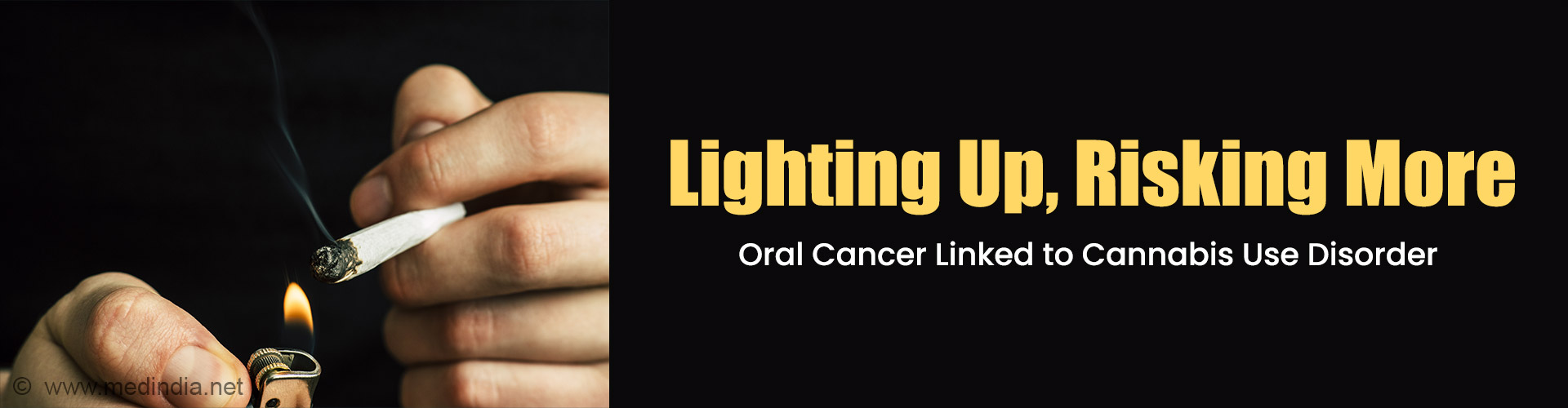
Cannabis use disorder is associated with over three times higher likelihood of oral cancer within five years, even after controlling for smoking and other factors.
Highlights:
Individuals with cannabis use disorder face over three times greater risk of developing oral cancer within five years than those without the disorder, according to a new study. This finding show the potential long-term health consequences linked to problematic cannabis use (1✔ ✔Trusted Source- Cannabis use disorder increases oral cancer risk by more than threefold over five years
- Tobacco smokers with cannabis use disorder face over sixfold greater oral cancer risk
- Risk remains significant after accounting for tobacco use and standard demographic factors
Cannabis use disorder and five-year risk of oral cancer in a multicenter clinical cohort
Go to source). In 2022, 17.7 million individuals reported using cannabis daily or almost daily. Although a formal diagnosis is required for cannabis use disorder and not all users develop it, recent studies indicate that around 3 out of every 10 cannabis users may eventually meet the criteria for the disorder.

Oral Cancer | Mouth Cancer - Types, Causes, Symptoms, Diagnosis, Treatment & Prevention
Oral cancer is a cancer that develops in any part of the mouth. It is more common in men over 40.
Oral cancer is a cancer that develops in any part of the mouth. It is more common in men over 40.
TOP INSIGHT

Did You Know?
People developing cannabis use disorder face over 325 percent greater odds of oral cancer within five years compared to those without disorder. #oralhealth #cancerawareness #medindia
Widening Cannabis Use Sparks Health Concerns
As cannabis becomes more accessible and socially accepted, it's crucial to explore the potential health risks associated with its use. Although it’s often considered a safer alternative to tobacco or alcohol, there are still significant gaps in our understanding—especially when it comes to its link with cancer.This particular study examined whether cannabis use disorder is associated with an elevated risk of oral cancer, a condition already strongly tied to tobacco use. Like tobacco smoke, cannabis smoke contains carcinogens that can damage the epithelial tissues lining the mouth, potentially increasing cancer risk.
These findings contribute to a growing body of evidence suggesting that chronic or excessive cannabis use—particularly when combusted—may heighten the risk of cancer in tissues exposed to smoke.

Could Cannabis Be Making Colon Cancer More Deadly?
Heavy cannabis use may worsen colon cancer outcomes.
Heavy cannabis use may worsen colon cancer outcomes.
Evidence from Large-Scale Patient Records
Raphael Cuomo, Ph.D., associate professor in the Department of Anesthesiology at University of California San Diego School of Medicine and a member of UC San Diego Moores Cancer Center, conducted an analysis of electronic health records from more than 45,000 patients. Among these, 949 individuals were diagnosed with cannabis use disorder.After adjusting for variables including age, sex, body mass index, and smoking status, those with cannabis use disorder had a 325 percent higher likelihood of developing oral cancer within five years compared to individuals without the disorder.
Among tobacco smokers, those with cannabis use disorder were found to be 624 percent more likely to develop oral cancer within the same time frame than tobacco smokers who did not have the disorder.

Oral Cancer Risk Spikes With High Sugar Drinks
High sugar-sweetened beverage (SSB) intake is linked to a 4.87x higher risk of oral cavity cancer (OCC) in women. Even nonsmokers and light drinkers face increased risk.
High sugar-sweetened beverage (SSB) intake is linked to a 4.87x higher risk of oral cavity cancer (OCC) in women. Even nonsmokers and light drinkers face increased risk.
Potential Role of Immune Suppression by THC
The persistent association between cannabis use disorder and oral cancer—even after accounting for tobacco use—suggests that factors beyond smoke inhalation may be at play. One possible contributor is tetrahydrocannabinol (THC), the primary psychoactive compound in cannabis, which is known to suppress immune function.This immune suppression could reduce the body’s ability to detect and combat abnormal cell growth, thereby increasing the risk of cancer development.
While further studies are needed to fully understand the biological mechanisms behind this link, the findings already raise important considerations for public health and clinical practice. Notably, the study highlights the need to:
- Broaden cancer screening protocols for individuals with cannabis use disorder
- Incorporate oral health education into substance use treatment programs
- Cannabis use disorder and five-year risk of oral cancer in a multicenter clinical cohort - (https://www.sciencedirect.com/science/article/pii/S2211335525002244?via%3Dihub)
Source-Medindia

Cannabis Use Disorder is On Decline Among Youths
Prevalence of cannabis use disorder decreased from 2002 to 2016 among frequent users.
Prevalence of cannabis use disorder decreased from 2002 to 2016 among frequent users.
 Email
Email