MEDINDIA
 English
 हिन्दी
 Español
 français
 中文
中文
Broadband near-infrared spectroscopy tracks brain metabolism by measuring cytochrome c oxidase, aiding dementia detection.
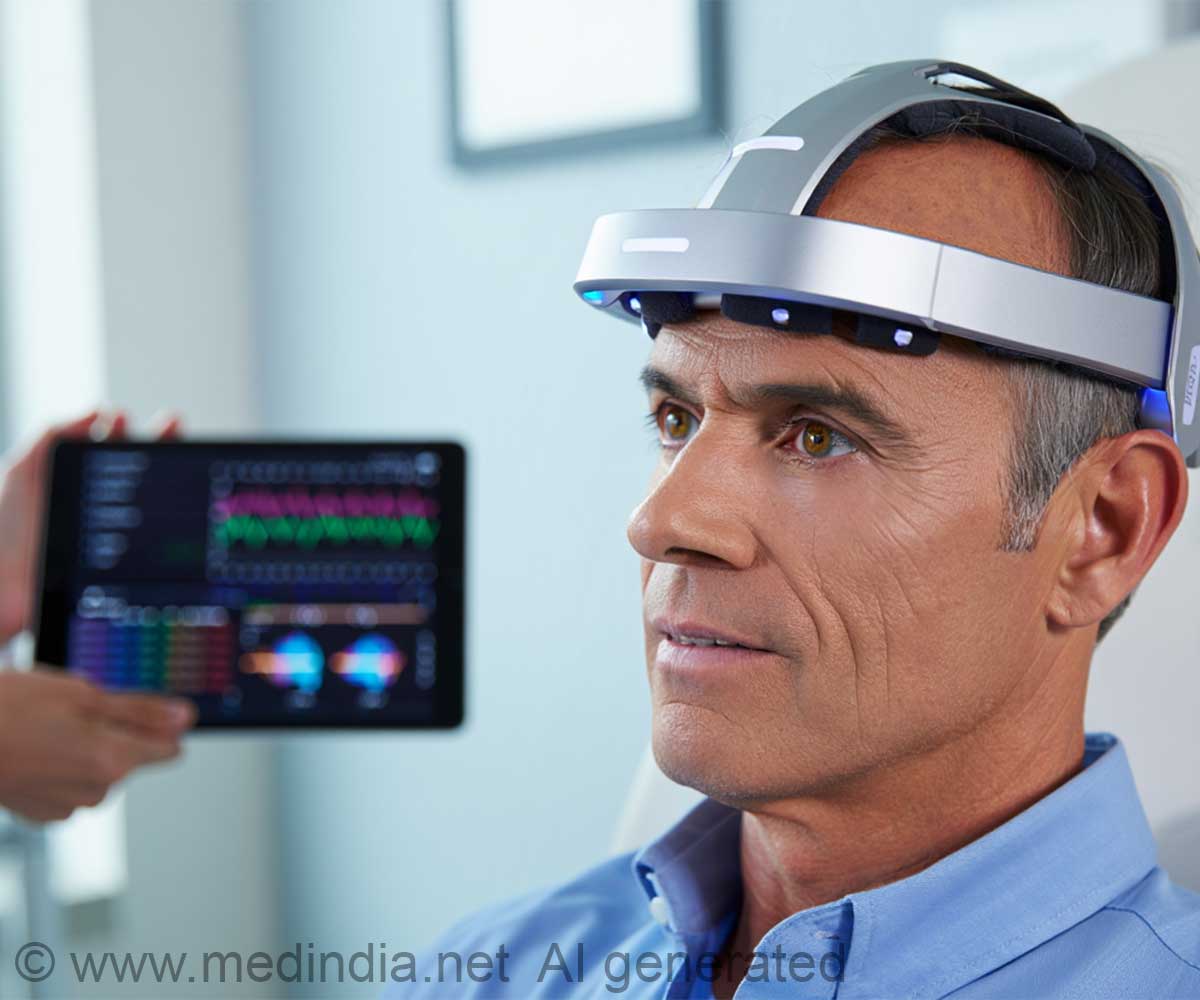
Mapping functional hemodynamic and metabolic responses to dementia: a broadband spectroscopy pilot study
Go to source).
Harnessing Light for Early Alzheimer's Detection
Now, researchers in the UK have showcased a promising alternative: broadband near-infrared spectroscopy (bNIRS). This compact, noninvasive technology has shown potential in detecting subtle brain changes associated with Alzheimer's disease, offering a more accessible method for early diagnosis.
Dementia
Dementia has become a very big concern as we have an aging population across the world. Dementia is also terrifying to us because of its disturbing symptoms and limited treatment options.
Dementia has become a very big concern as we have an aging population across the world. Dementia is also terrifying to us because of its disturbing symptoms and limited treatment options.
TOP INSIGHT

Beyond fMRI: Broadband near-infrared #spectroscopy (bNIRS) could join the #dementia diagnostic toolkit. Its low cost and noninvasive nature make it an exciting complement to current #neuroimaging techniques. #Neurology #DementiaDiagnosis #bNIRS
Unlike conventional near-infrared spectroscopy, which typically tracks only oxygenated and deoxygenated hemoglobin, the broadband approach also measures the oxidation state of cytochrome c oxidase (oxCCO), a key mitochondrial enzyme involved in cellular energy production.
Previous work has shown that oxCCO activity is reduced in Alzheimer’s disease, making it a promising biomarker for early detection.

Test Your Knowledge on Dementia
Dementia is a leading cause of disability in older people. It is a condition where brain cells are permanently damaged or functionally impaired. Till 2015, about 47.5 million people suffer from dementia across the globe. There are various conditions ...
Dementia is a leading cause of disability in older people. It is a condition where brain cells are permanently damaged or functionally impaired. Till 2015, about 47.5 million people suffer from dementia across the globe. There are various conditions ...
Measuring Brain Responses to Light: A Checkerboard Approach to Dementia Diagnosis
Using a simple checkerboard visual stimulus, the team recorded changes in blood oxygen levels and oxCCO activity from the visual cortex. They then compared these brain responses with standard cognitive test scores.
Top 10 Interesting Facts About Dementia
Alzheimer's disease is the most common type of dementia, accounting for 60-70% of cases. Here are some interesting facts about dementia.
Alzheimer's disease is the most common type of dementia, accounting for 60-70% of cases. Here are some interesting facts about dementia.
But when oxCCO-related measures were excluded, the correlation dropped significantly (r = 0.687). This finding suggests that including oxCCO improves the ability of bNIRS to capture clinically relevant brain changes.

Caring for Alzheimers disease patients
Alzheimer's disease is a complex brain disorder that triggers the most common form of dementia. The slide show will show how patients need support and care as dementia progresses.
Alzheimer's disease is a complex brain disorder that triggers the most common form of dementia. The slide show will show how patients need support and care as dementia progresses.
“Our work is the first to noninvasively measure oxCCO during functional tasks in people with dementia, using a wearable system,” the authors write. They suggest that with further development, bNIRS could become part of the diagnostic toolkit for dementia, offering a low-cost, noninvasive, and patient-friendly complement to existing imaging methods.
Reference:
- Mapping functional hemodynamic and metabolic responses to dementia: a broadband spectroscopy pilot study - (https://www.spiedigitallibrary.org/journals/journal-of-biomedical-optics/volume-30/issue-S2/S23910/Mapping-functional-hemodynamic-and-metabolic-responses-to-dementia--a/10.1117/1.JBO.30.S2.S23910.full)
Source-Eurekalert
 Email
Email