MEDINDIA
 English
 हिन्दी
 Español
 français
 中文
中文
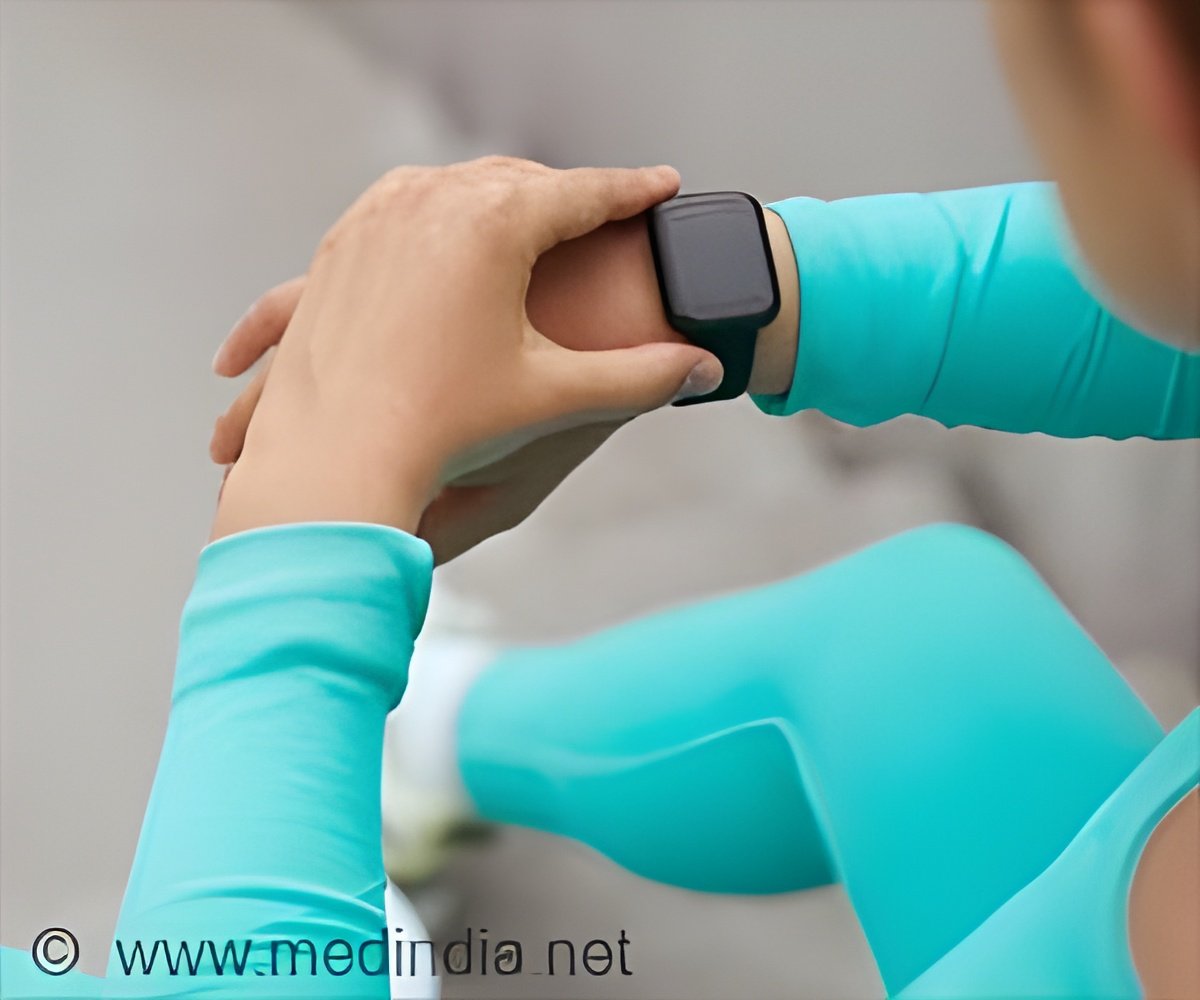
New AI app transforms Apple Watch into an advanced sleep monitor, eliminating the need for complex lab equipment.
AI-Driven Sleep Staging Using Instantaneous Heart Rate and Accelerometry: Insights from an Apple Watch Study
Go to source). Developed by a team led by professor Joyita Dutta at the University of Massachusetts Amherst, the system uses AI to analyze sleep patterns with high precision. The researchers note that this smartwatch-based method offers a cost-effective and user-friendly alternative to traditional sleep studies, which typically require complex equipment and expensive clinical protocols.

Alzheimer's Risk Assessment Calculator
Alzheimer’s Risk Assessment Calculator is a tool to measure the level of Alzheimer’s disease. It also provides tips to prevent Alzheimer’s disease.
Alzheimer’s Risk Assessment Calculator is a tool to measure the level of Alzheimer’s disease. It also provides tips to prevent Alzheimer’s disease.
TOP INSIGHT

Did You Know?
Your #AppleWatch might be doing more than tracking steps - it could be spotting early signs of Alzheimer’s. Subtle shifts in #sleep, #heartrate, and movement may reveal early brain changes long before symptoms appear. #smartwatchhealth #alzheimersawareness #wearabletech #medindia
Purpose and Vision Behind the Technology
“Our goal was to get as rugged as possible with a non-specialized consumer wearable device, which is the Apple Watch,” says Dutta, professor of biomedical engineering in the Daniel J. Riccio Jr. College of Engineering and senior author of the research, published in IEEE Transactions on Biomedical Engineering. She envisions researchers can use this app to monitor people with sleep disorders at home, without costly lab-based sleep studies.Dutta designed this app specifically for her research into the connection between sleep disruptions and the development of Alzheimer's disease.
Limitations of Traditional Sleep Studies
Currently, the gold standard for sleep studies is through lab-based assessments, which are complex, expensive and require manual data analysis by a specialist. Even at-home assessments can be complicated, asking participants to sleep with electrodes on their heads.Because of the cost, complexity and discomfort, the duration of most sleep studies is only one night, meaning researchers don’t have the benefit of analyzing data from multiple sessions over time.
Dutta also notes that, for her ongoing Alzheimer’s research, existing monitoring technology cannot capture sleep data from naps, which are largely unplanned. In contrast, the broad availability and round-the-clock wearability of smartwatches make them particularly well-suited for studying all forms of sleep.

Quiz On Alzheimer’s Disease
Alzheimer’s disease (AD) is the most common form of dementia. Participate in this quiz to find out how much you know about this debilitating ...
Alzheimer’s disease (AD) is the most common form of dementia. Participate in this quiz to find out how much you know about this debilitating ...
Creation of the BIDSleep App
With this in mind, Dutta and her team created software to turn the widely available Apple Watch into a robust sleep-staging technology.The app, called BIDSleep, collects data on instantaneous heart rate, since this measure varies depending on the sleep stage. Heart rate is slower during deep sleep and higher during more active periods, like REM sleep.
These data feed into the researchers’ new AI model, which is available to other researchers.
Accuracy and Performance of the AI Model
On average, their model accurately identified the correct sleep stage 71% of the time, outperforming other well-known approaches used by the sleep research community.Dutta also notes that their model is even more accurate at identifying deep sleep, which is important because aging is associated with more pronounced decline in deep sleep than total sleep.
“Overall accuracy matters, but sometimes we also need to look at the clinical metrics like sleep efficiency and sleep onset latency, total sleep time,” adds Tzu-An Song, a postdoctoral research fellow in Dutta’s lab and first author on the paper. Accuracy along these measures provides further insights into the app’s effectiveness at predicting clinically important sleep parameters.
“Our method works better for basically all of these metrics,” he says. The AI model, using data collected by BIDSleep, produced results closest to the gold standard of EEG-based sleep staging compared to other modeling approaches.
Comparison with Existing Smartwatch Technology
Dutta notes that they did not compare their technology to the Apple Watch’s native sleep-staging capabilities because that feature was not available at the time of their study. They plan to conduct a full head-to-head comparison in the future.She is optimistic that their app will be more accurate because it provides richer data, collecting heart rate information at a denser rate than the native features built into Apple Health.
“Ultimately, we’d love for researchers and clinicians to use this app, which is why we created it in a style where you can easily port the data and get multi-night information out of it,” says
Reference:
- AI-Driven Sleep Staging Using Instantaneous Heart Rate and Accelerometry: Insights from an Apple Watch Study - (https://ieeexplore.ieee.org/document/11173983)
Source-University of Massachusetts Amherst
 Email
Email